
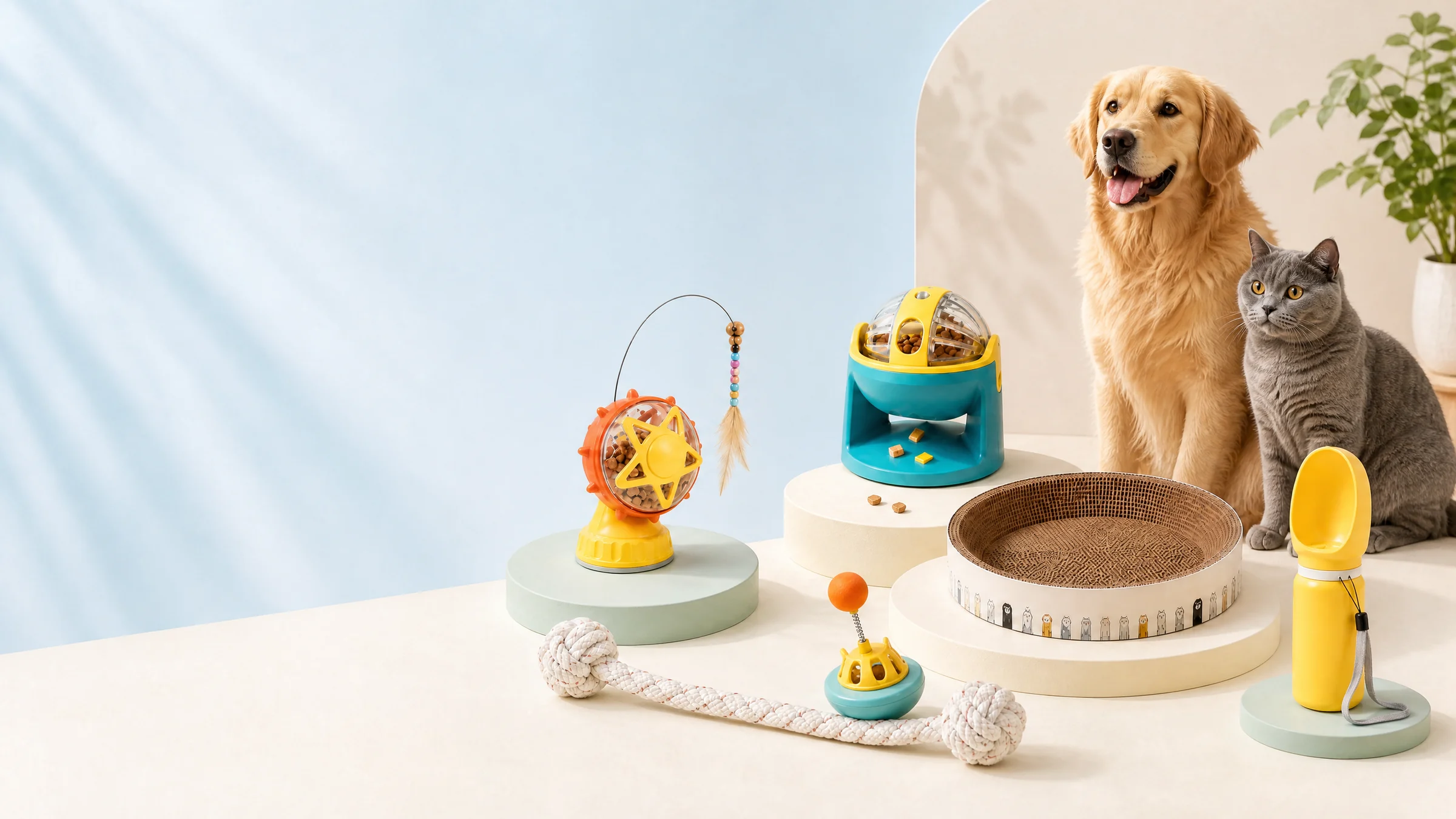
For an importer, retailer, distributor, or private-label buyer, “premium” is a purchasing hypothesis rather than a proven product attribute. A premium accessory should have a clear use case, understandable shelf communication, suitable construction, and verifiable commercial terms. It should fit the intended channel, from specialist pet shops to marketplaces and gift assortments.
Retail value is not created by appearance alone. A product may photograph well but be difficult to explain, package, inspect, or replenish. A neutral process helps buyers compare interactive puzzle toys, slow-feeding bowls, cat scratchers, teaser toys, grooming tools, cotton rope tug toys, and travel water bottles without unsupported rankings or supplier promises.
What Does Retail Value Mean for a Wholesale Buyer?
Retail value is the relationship between a shopper’s understandable benefit and the effort required to sell the item. Buyers should ask whether the function is quickly communicated, whether the form supports the price tier, and whether packaging gives enough channel information. Consider carton efficiency, display format, return risk, labeling, and destination-market documentation.
The word “premium” should not replace evidence. Define review points before sampling, including dimensions, materials, surface finish, attachments, packaging, warnings, inspection criteria, and target-market requirements. Every specification, compliance document, customization option, price, MOQ, and lead time should be confirmed with the supplier and buyer for the specific SKU.
Which Product Groups Should Buyers Compare First?
Interactive puzzle toys can offer a readily demonstrable retail story because the buyer can show the operating principle and intended interaction. The product brief should describe the mechanism, materials, dimensions, cleaning instructions, packaging, and appropriate-use language. Avoid assuming behavioral, developmental, or health outcomes unless the buyer has suitable evidence and approval for the destination market.
A slow feeder or slow-feeding bowl can be presented as a non-food pet accessory designed around a product-use format, not as a nutritional or medical solution. The buyer should review the surface layout, stability, cleanability, material declaration, dimensions, packaging, and intended-use instructions. Marketing should not provide food, recipe, feeding-quantity, nutrition, allergy, medical, or veterinary advice. Any use and safety wording must be confirmed with the supplier and buyer.
Cat scratchers and teaser toys can support a coordinated cat assortment, but visual cohesion should not be confused with verified durability. Confirm the board or surface construction, stability, attachment points, fiber or covering materials, dimensions, colors, warnings, and pack configuration. Grooming tools should be assessed through handling, edge or contact-surface design, care instructions, and intended use. Cotton rope tug toys require confirmation of fiber composition, construction, size, warnings, and packaging. Travel water bottles require confirmation of capacity, materials, closure design, cleaning instructions, and any leak-resistance test method.
| Product group | Neutral retail story | Merchandising route | Confirm with supplier and buyer |
|---|---|---|---|
| Interactive puzzle toys | Demonstrable play accessory | Demo area, gift grouping, feature display | Mechanism, materials, dimensions, instructions, warnings, packaging |
| Slow-feeding bowls | Non-food accessory with a structured-use format | Feeding-accessory section or themed set | Surface layout, stability, cleanability, materials, dimensions, use wording |
| Cat scratchers | Cat-focused scratching accessory | Cat collection, seasonal color grouping | Surface construction, stability, size, covering, carton, warnings |
| Teaser toys | Visually communicative play accessory | Add-on display or themed assortment | Handle, attachment, materials, intended use, warnings, pack format |
| Grooming tools | Functional at-home accessory | Grooming aisle or cross-sell display | Contact surfaces, dimensions, materials, care instructions, labels |
| Rope tug toys | Interactive dog play accessory | Dog-play wall or multi-item set | Fiber composition, construction, size, intended use, packaging |
| Travel water bottles | Portable outing accessory | Travel display or seasonal range | Capacity, materials, closure, cleaning, testing, labeling |
How Should Buyers Review Packaging and Compliance?
Packaging is part of the product specification. It should identify the item accurately, communicate intended use, accommodate the buyer’s language requirements, and leave space for warnings, traceability information, and other market-specific information where applicable. For products sold in the European Union, the European Commission describes the General Product Safety Regulation as a framework intended to ensure that only safe products are placed on the market.[1] The buyer should determine which obligations apply to the product, seller, importer, and destination before approving artwork.
For the United States, the Consumer Product Safety Commission provides regulatory and compliance resources for businesses and regulated products.[2] This does not mean that every pet accessory has one universal test or certificate. Requirements may depend on product construction, intended use, materials, packaging, claims, and jurisdiction. Confirm the applicable rules, test plan, labeling, warnings, technical file, and responsible economic operator with the supplier and buyer.
A useful review pack may include an approved sample, product specification sheet, material declaration, packaging artwork, carton details, inspection checklist, photographs of packed goods, and product-specific test reports where required. Do not treat a catalog image, generic certificate, or old report as proof for a new SKU. Product-specific documentation and its validity should be checked before ordering.
How Can Importers Protect Margin Without Unsupported Claims?
Landed economics should be reviewed instead of focusing only on an ex-factory quotation. The buyer can model unit cost, inner and master-carton dimensions, freight assumptions, import charges, inspection, marketplace or retailer requirements, expected returns, translation, and promotional allowances. Prices, MOQ, production capacity, payment terms, and delivery timing must remain subject to written confirmation for the selected product, destination, and order conditions.
Assortment planning should begin with the channel and shopper rather than with a claim that one item is “best” or “bestselling.” A buyer might create a compact play group, a cat-focused collection, an outdoor-travel theme, or a practical grooming section. The final group should be based on samples, confirmed specifications, packaging compatibility, and a realistic replenishment process. PawViso should not be assumed to offer any particular customization, certification, customer reference, market result, production capacity, price, MOQ, or lead time until the current commercial brief is reviewed directly.
What Is a Practical Sourcing Workflow?
First, define the destination market, channel, target price architecture, packaging language, and documentation needs. Second, shortlist products according to a specific retail story. Third, request samples and compare actual construction and presentation with the brief. Fourth, record every open point in a confirmation sheet covering specifications, materials, packaging, testing, labels, warnings, customization, carton data, inspection, price, MOQ, and delivery. Fifth, approve the final sample and artwork before production. Finally, retain the agreed inspection criteria and shipping documents for later reorders.
This workflow separates brand presentation from assumptions about performance and makes supplier comparisons consistent. Where a requirement is unclear, ask the supplier and buyer to confirm it in writing.
Frequently Asked Questions
What makes a pet accessory premium for wholesale?
A premium position can be supported by differentiated presentation, a clear use case, suitable construction, and channel-appropriate packaging. The actual material, dimensions, finish, quality criteria, and commercial terms must be confirmed with the supplier and buyer for each SKU.
Can a slow-feeding bowl be described as a food or health product?
For this article, it should be described only as a non-food pet accessory. Do not provide food, recipe, feeding-quantity, nutrition, allergy, medical, or veterinary guidance. Confirm intended-use wording, material information, cleaning instructions, and market-specific labeling with the supplier and buyer.
Does PawViso offer private-label packaging or customization?
Packaging, artwork support, customization scope, MOQ, price, production conditions, and delivery timing are commercial questions that require direct confirmation for the selected product and market. Buyers should approve a final sample and artwork before placing an order.
What should an importer confirm before ordering?
Confirm the product specification, materials, dimensions, packaging, labeling, warnings, testing plan, carton details, inspection criteria, price, MOQ, payment terms, and shipping conditions. Also identify destination-market obligations before artwork approval.
Discuss a Retail-Ready Brief with PawViso
If you are evaluating premium pet accessories for retail, distribution, import, or private label, send PawViso your target market, sales channel, product group, packaging direction, and documentation requirements. The appropriate next step is a buyer-led review of samples and open specifications—not an assumption about capability, certification, pricing, MOQ, lead time, or market performance. Contact PawViso to discuss the requirements that need confirmation before sampling and quotation.
References
[1]: European Commission, “Product Safety”
[2]: U.S. Consumer Product Safety Commission, “Business Guidance”
本文为采购评估草稿;所有产品参数、材料、包装、测试、认证、定制、产能、价格、MOQ、交期与商业条件均须由供应商与买方针对具体 SKU 和目的市场确认。