
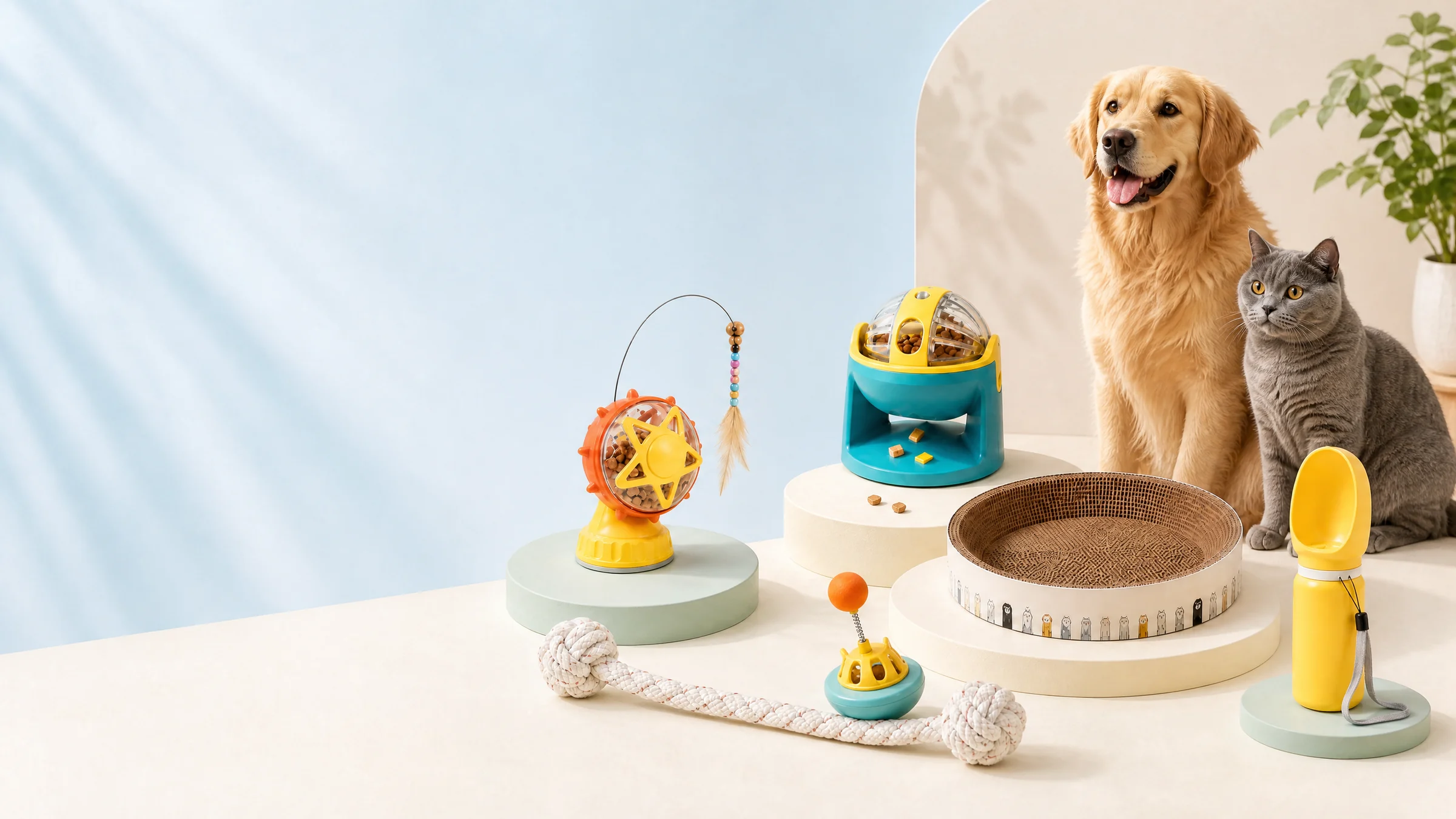
For importers, retailers, distributors, and private-label buyers, selecting pet accessories is a process of defining use, controlling variation, and documenting decisions. Attractive colors and a competitive quotation matter, but they do not replace a product brief, an approved sample, or a clear inspection method. The same principle applies across interactive puzzle toys, slow-feeding accessories treated as non-food pet accessories, scratching boards, teaser toys, grooming tools, cotton-rope tug toys, and travel water bottles.
A practical sourcing program should avoid promises such as “risk-free,” “indestructible,” or “universally compliant.” Instead, it should connect the intended use, construction, materials, warnings, packaging, and destination-market requirements. The European Commission describes product-safety obligations as part of the framework for ensuring that safe products are available on the EU market 1. The buyer and supplier should confirm how that framework applies to the final SKU.
What should “safe and durable” mean in a wholesale brief?
“Safe” and “durable” are procurement criteria, not automatic marketing claims. A written brief should identify the intended animal size or use context, foreseeable misuse, removable components, cords, loops, seams, closures, coatings, abrasive edges, and cleaning or storage instructions. The brief should also state the destination countries and sales channels, because labeling and documentation requirements can differ.
Durability must be defined by function. For a rope toy, the buyer may need consistent knotting, fiber control, and end treatment. For a grooming tool, the review may focus on secure retention of pins or teeth. For a scratching board, the buyer may examine stability, bonding, wrapping, and edge finishing. For a travel bottle, the review may focus on closure operation and an agreed leak-check method. Dimensions, materials, load limits, and test cycles should never be inferred from a category name; each parameter must be confirm with supplier/buyer before approval.
ASTM has noted that dedicated, unified testing protocols and safety thresholds for non-edible pet products remain limited, while standards work has addressed product categories including toys, collars, harnesses, crates, and cat trees 2. This is a reason to define a product-specific review plan, not a reason to make unsupported compliance claims.
Which construction details should buyers inspect first?
Begin with foreseeable failure modes that could lead to complaints, returns, or injury concerns. Ask whether parts can loosen, detach, fray, crack, leak, or expose an unfinished edge during the agreed use and misuse checks. The exact method, sample size, and acceptance criteria must be confirm with supplier/buyer for the final design.
| Product family | Construction questions | Evidence to request | Commercial status |
|---|---|---|---|
| Interactive puzzle toys | Are moving parts retained, and is the surface cleanable as specified? | Approved sample, component list, inspection photos, test plan | Confirm with supplier/buyer |
| Slow-feeding accessories | Are contact surfaces smooth and stable, with no detachable decorative parts? | Drawings, finish standard, cleaning instructions, sample review | Confirm with supplier/buyer |
| Cat scratching boards | Is the base stable and are bonded or wrapped surfaces consistently secured? | Material or adhesive information, edge criteria, carton test plan | Confirm with supplier/buyer |
| Teaser and grooming tools | Are handles, pins, bells, strings, and fasteners retained under the agreed method? | Assembly checklist, component list, golden sample | Confirm with supplier/buyer |
| Cotton-rope tug toys | Are knots, loops, fibers, and end treatments consistent across the lot? | Work instructions, defect standard, sampling records | Confirm with supplier/buyer |
| Travel water bottles | Does the closure operate consistently and is the leak-check method defined? | Function record, seal-check record, packaging specification | Confirm with supplier/buyer |
A buyer should ask which tests apply to the final materials and design, which are performed on a production lot, and which documents relate only to a similar item. Photographs can support a decision, but they should not replace written criteria or traceable records.
How can importers verify materials and documentation?
Request a controlled bill of materials for the exact SKU. It should cover the main substrate, coatings, adhesives, trims, hardware, packaging, inks, and surface treatments where applicable. Ask how purchased components are controlled and how substitutions are approved. For a private-label program, artwork version control is equally important: a packaging revision can change warnings, care instructions, product identification, or importer information without changing the physical product.
Useful records may include a specification sheet, component list, sample-approval record, risk assessment, incoming-material check, in-process checklist, final inspection report, and applicable laboratory report. Whether a particular test or document is required must be confirm with supplier/buyer according to the destination market, product classification, claims, and channel. A generic report, logo, or supplier statement should not be treated as proof that every SKU complies with every market.
For U.S. sales, distinguish pet accessories from children’s products and confirm the applicable legal framework with a compliance adviser. The U.S. Consumer Product Safety Commission explains that children’s products have specific testing and certification requirements 3. That information does not automatically classify a pet accessory as a children’s product. Intended use, claims, packaging, and product-page language should remain consistent.
What quality-control gates should a private-label buyer use?
A four-gate process is practical for many wholesale programs. First, freeze the written brief and approve a reference sample. Second, inspect incoming materials and record deviations before assembly. Third, check critical points during production, including seams, bonding, knotting, attachment, finishing, closure function, and artwork application. Fourth, conduct a final inspection against the agreed sampling plan, carton configuration, barcode, labels, and approved sample.
The purchase documentation should explain what happens when a result fails. A corrective-action record can identify the defect, affected lot, containment decision, rework or replacement proposal, and approval owner. If the design or material changes, review whether the sample, risk assessment, packaging, or testing scope must also change. All acceptance limits, sampling levels, and commercial remedies must be confirm with supplier/buyer.
How should packaging and product claims be reviewed?
Packaging should identify the product, explain intended use, and present relevant warnings or care information in language appropriate for the destination market. Avoid absolute claims such as “100% safe,” “non-toxic,” or “indestructible” unless the buyer has a defensible, product-specific basis and the wording is permitted. A durability statement should describe a design feature or agreed test context rather than imply unlimited service life.
Before mass production, confirm with supplier/buyer the required languages, responsible-operator or importer information, batch or lot identification, barcode, country-of-origin marking, instructions, carton marks, and packaging dimensions. The European Commission provides business information on obligations associated with selling safe products 1. The buyer’s compliance team should review the final artwork and claims before release.
How can buyers structure a PawViso sourcing discussion?
A buyer can prepare a concise brief covering target countries, product families, intended sales channel, artwork needs, preferred materials, packaging constraints, retailer checklists, and required evidence. The discussion should then separate confirmed facts from open parameters. Product specifications, customization scope, samples, packaging, inspection checkpoints, compliance documents, pricing, minimum order quantities, lead times, and other commercial terms must all be confirm with supplier and buyer for the specific project. This article does not make assumptions about PawViso’s product range, certifications, capacity, customers, or commercial terms.
Frequently Asked Questions
Does this guide describe any PawViso product as indestructible?
No. It provides a buyer framework only. Intended use, materials, dimensions, test cycles, load limits, and service expectations must be confirm with supplier/buyer for each SKU, and any public claim should be supported by appropriate product-specific evidence.
Can one report cover an entire pet-accessories range?
Not automatically. Applicability depends on design, materials, components, claims, destination market, and sales channel. Request traceable evidence for the item under review and confirm the required scope with the supplier and compliance adviser.
What should a private-label buyer approve before production?
Approve the written specification, reference sample, artwork, packaging, labeling language, inspection criteria, change-control process, and document list. Also confirm the applicable market requirements and the commercial terms before placing an order.
Are pet accessories regulated exactly like children’s toys?
No automatic equivalence should be assumed. CPSC guidance addresses children’s products 3, while ASTM describes pet-product standards as an evolving area 2. Confirm classification and obligations for each product and market.
Request a buyer-ready sourcing review
Send your target market, product categories, private-label artwork requirements, estimated assortment, and retailer documentation checklist through the PawViso contact page. The supplier and buyer can use the brief to confirm specifications, samples, inspection points, documentation, packaging, and commercial terms before any wholesale or private-label order proceeds.