
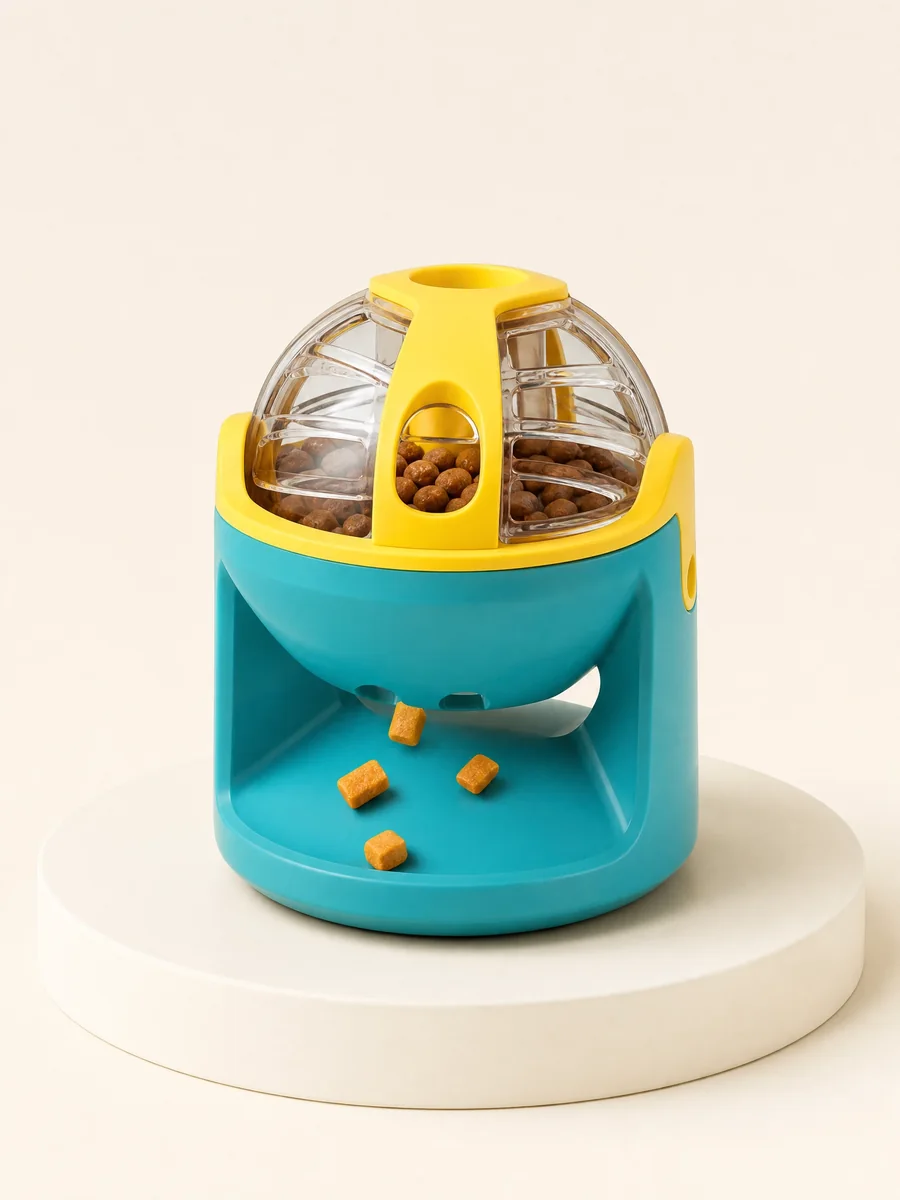
Introduction: What is the practical way to launch private label pet products?
The practical route is to start with a focused assortment, choose only the customization that creates commercial value, and approve the product, materials, packaging and quality evidence as one controlled project. Buyers should not treat “private label,” “OEM” or “ODM” as complete specifications. The written scope must state what already exists, what may change, who owns each decision and what evidence is required before production and shipment.
A retailer may need only a logo and shelf-ready packaging on an established pet product. A specialist brand may need a custom color, material, dimension, mechanism or coordinated family. These projects have different development work, MOQ drivers, testing needs and intellectual-property questions even when suppliers use the same label.
This guide explains how to plan a PawViso-compatible assortment across interactive feeding, cat play and scratch, grooming, dog play and travel accessories without publishing unverified universal MOQs or lead times. Every commercial figure should be confirmed for the selected SKU, color, packaging and quantity.
What do white label, private label, semi-custom, OEM and ODM mean?
These terms are used inconsistently. A useful definition is the work scope, not the marketing label. One pet-industry comparison notes that suppliers may use the same term for different starting products, permitted changes, ownership and approval responsibilities.1
| Route | Typical starting point | Buyer decisions | Main advantage | Main control question |
|---|---|---|---|---|
| White label | Existing product and standard options | Brand, label and available pack choices | Lower development complexity | Can other buyers purchase the same configuration? |
| Private label | Established product with selected changes | Brand, color, pack and agreed product variables | More differentiation without full redevelopment | Which changes and documents are included? |
| Semi-custom | Existing platform with a controlled combination of changes | Color, component, feature, artwork or bundle | Focused differentiation | Which change triggers new MOQ, testing or tooling? |
| OEM | Detailed buyer brief, benchmark or specification | Broader product and technical requirements | Stronger control over the target | Who owns files, tooling and approvals? |
| ODM | Supplier-proposed or jointly developed concept | Market, channel, price and concept selection | More concept support | What remains proprietary to the supplier? |
The best route is the simplest one that satisfies the product strategy. Deeper customization is not automatically more valuable. It may increase sampling, tooling, material commitments, testing and change risk without improving the customer proposition.
Does private label automatically mean exclusivity or ownership?
No. A branded product does not automatically transfer ownership of a structure, formula, mold, pattern, manufacturing method or supplier know-how. Exclusivity may be limited by product version, market, channel, time, quantity or geography.
WIPO explains that trade-secret protection generally depends on confidential information having commercial value, being known to a limited group and being protected through reasonable steps such as confidentiality agreements and access controls.2 Before exchanging confidential designs or benchmarks, define what is confidential, who may access it, how long obligations last and what happens at project end. Obtain qualified legal advice for agreements and IP ownership.
How should a buyer choose the first product range?
Start with the buyer’s channel and consumer task, not a long supplier catalogue. A coherent launch range is easier to explain, photograph, merchandise, inspect and replenish than unrelated products selected only because they are available.
For example, a cat-play route might combine a scratch lounge, a light teaser and a grooming item. An enrichment route might combine an interactive treat puzzle and slow feeder. A dog-play and travel route might combine a cotton tug toy with a travel water bottle. The exact range should reflect target customer, shelf space, price architecture and packaging capacity.
A useful launch matrix includes:
| Decision | Buyer question |
|---|---|
| Hero product | Which item most clearly communicates the range promise? |
| Supporting SKU | Which product solves a related need without duplicating the hero item? |
| Price ladder | Is there a clear opening, core and optional premium position? |
| Visual system | Can colors, packaging and photography make the range feel related? |
| Operational fit | Can the planned quantities, carton sizes and launch timing be managed? |
| Reorder logic | Which items can be replenished independently if sales differ? |
Do not force every product into the first purchase order. A small range with controlled evidence is often a better test than many low-volume SKUs, especially when each color or packaging version creates a separate material or printing commitment.
What information belongs in a private-label RFQ?
An RFQ should allow each supplier to quote the same work. It needs commercial information, product requirements and approval responsibilities.
State the target market, channel, SKU list, estimated quantity per SKU and color, product dimensions, material preferences, logo method, color standard, retail packaging, barcode responsibility, export packing, testing expectations, delivery term and requested timeline. Attach artwork only when its revision status is clear.
Separate three categories:
- Fixed requirements are necessary for the product or channel.
- Preferred options may change if the supplier explains cost, MOQ or risk.
- Open questions require supplier proposals before quotation approval.
This structure prevents a supplier from silently replacing a fixed requirement with a standard option. It also creates a written record for later sample review and shipment inspection.
What determines MOQ for private label pet products?
MOQ is not a property of the brand name. It results from the highest practical commitment created by the product and supply chain. The supplier should explain the constraint rather than provide only one number.
| MOQ driver | Why it creates a threshold | Questions to ask |
|---|---|---|
| Existing finished product | Stock may be limited by available colors or batch status | Is the quoted inventory current and consistent? |
| Resin, textile, board or rubber color | Raw-material suppliers may require a minimum batch | Can an existing color be used? Is color shared across SKUs? |
| Printing process | Plates, screens, setup and sheet utilization create minimum runs | Is the MOQ per artwork, language or color? |
| Custom component | Hardware, electronics, molded parts or accessories may have separate commitments | Which component controls the total MOQ? |
| Packaging | Printed boxes, cards, inserts and labels have different minimums | Can stock packaging plus a label support a pilot order? |
| Assembly efficiency | Line setup and process validation require a viable batch | Can related SKUs share assembly preparation? |
| Testing | A material or configuration change may require additional samples or reports | Which versions require separate test coverage? |
Ask for MOQ by SKU, color, size, artwork and packaging version. A quotation that says “MOQ 500” is incomplete if it does not state whether 500 units can be split among four colors or require 500 of each color.
Price breaks should also identify what changes. A lower unit price may assume a larger raw-material batch, faster packing method or different carton utilization. Confirm that the product and quality scope remain identical.
How should material and sample approval work?
Material approval begins with the intended product application. A feeder, scratch product, textile tug, grooming tool and travel bottle should not use one generic checklist.
The project file should identify major materials and components, color references, surface finish, dimensions, weight, assembly method and critical tolerances. For EU-bound goods, REACH places responsibility on industry to manage chemical risks and provide relevant safety information.3 The importer should determine the current substance, article and information obligations for the actual product. “REACH compliant” should not appear as an unsupported blanket statement.
Use a staged sample path:
1. Appearance or material sample
This stage confirms color, texture, print, board grade, textile construction or other inputs before a complete product is made. It is useful when a material choice drives MOQ or test scope.
2. Functional prototype or pre-production sample
This stage checks dimensions, assembly, movement, fit, use, cleaning and packaging interaction. Record every deviation; do not approve only by message or unmarked photograph.
3. Golden sample
The golden sample represents the approved production target. It should be linked to the current specification, artwork and revision date. The buyer and supplier should retain controlled references where practical.
4. Pilot or first-article confirmation
For a new process, tool, component or packaging line, confirm an early production unit before the full run advances. This does not replace final inspection, but it can identify interpretation or setup problems while correction is still practical.
Mid-article CTA — Send Your Requirements
Planning a private-label range? Send PawViso the target product categories, sales market, estimated quantity, preferred colors, logo files and packaging direction. We will organize the open MOQ, material, sample and packaging questions for project confirmation. Email info@PawViso.com.
What packaging information must be approved?
Retail packaging is both a consumer-facing design and a controlled supply-chain item. Approve content, structure and item data separately.
The artwork file should identify product name, brand, model or SKU, quantity, material or care information where applicable, warnings or instructions, origin statement, responsible economic-operator information where required, barcode, recycling or disposal marks where applicable, and artwork revision. Legal and retailer wording must be confirmed by the responsible importer or brand owner.
GS1 defines measurement rules from the consumer unit through cases and intermediate packaging levels, supporting consistent exchange of dimensions and weights between trading partners.4 GS1 US distinguishes the consumer “each,” inner pack, case, mixed case, pallet and display shipper.5 A private-label approval should therefore record:
| Level | Typical approval fields |
|---|---|
| Consumer unit | Product identifier, barcode, dimensions, weight, artwork and pack count |
| Inner pack | Quantity, arrangement, protection and label |
| Case | Case identifier where required, quantity, dimensions, gross/net weight and shipping marks |
| Pallet or unit load | Case count, pattern, total dimensions, weight, wrapping and labels |
The brand owner should control GTIN allocation. GS1 provides separate rules for new products and changes involving function, net content, dimensions or gross weight, primary brand, certification marks, pack quantity and assortments.6 Confirm whether a change requires a new identifier before printing production packaging.
Who should approve barcodes and artwork?
The brand owner should approve the data, while the supplier should confirm print feasibility and apply the approved controlled file. Before production, verify the barcode number, symbology, size, quiet zone, contrast, position and scan result using the buyer’s GS1 organization or retailer requirements.
Do not ask the factory to invent regulatory statements, warning language, claims or ownership data. The supplier can identify manufacturing constraints, but the responsible seller and importer must approve market-facing content.
How should packaging be prepared for the distribution route?
Packaging that survives palletized import may fail individual parcel fulfillment. The project brief should state the route from factory to port, distribution center, retail shelf or end customer.
ISTA explains that its 1-Series procedures are screening tests, while 3-Series procedures simulate damage-producing transport conditions. Examples include 3A for parcel-delivery shipments up to 70 kg, 3F for distribution-center-to-retail shipments, 3K for European retail supply chains and 3M for international direct import from Asia-Pacific manufacturing sites to US distribution or fulfillment centers.7
These examples do not mean every project requires an ISTA procedure. They show why the test method should match the actual package and route. A buyer may begin with controlled drop, vibration, compression or pack-out trials and then use an accredited laboratory or retailer-specific protocol where required.
Packaging approval should also check how the product is installed or assembled. If a wall grooming item needs surface preparation, mounting spacing or an adhesive cure period, installation preparation belongs in the instructions and test plan. If a scratch product includes catnip or accessories, confirm containment and pack-out. If a bottle includes multiple seals or valves, verify assembly and leakage protection.
Which compliance and traceability decisions belong in the project file?
Compliance should be mapped by SKU, market and sales channel. The EU General Product Safety Regulation has applied since 13 December 2024 and includes broader product coverage, lifecycle risk assessment and an EU-based responsible economic operator for covered consumer products.8 This does not mean every pet product needs CE marking. It means the responsible parties should identify applicable legislation, risks, traceability and online-offer information.
For US imports, 19 CFR Part 134 generally requires foreign-origin articles, or their permitted containers, to show the English country of origin conspicuously, legibly, indelibly and as permanently as the article or container permits, subject to exceptions.9 Include origin marking in artwork approval and shipment inspection rather than adding it after goods reach the port.
A useful compliance file can contain the approved specification, bill of materials, risk assessment, supplier declarations, applicable test reports, label and instruction versions, traceability method, golden sample record and change history. Confirm required retention periods and responsible parties for the destination market.
How can buyers prevent uncontrolled changes during production?
Change control protects the relationship between the approved sample and production. The purchase order should require written notice before changes to material supplier, resin or textile grade, colorant, coating, adhesive, component, tool, subcontractor, assembly method, artwork, pack quantity or test method.
Define three outcomes: changes that require notification, changes that require a new sample, and changes that require new testing or formal approval. The supplier should not decide coverage alone when the importer, retailer or laboratory is responsible for compliance.
Production records should trace the approved revision to the lot. ISO 9001 describes quality management through documented processes, operational control, performance evaluation and continual improvement.10 Whether or not a supplier is certified, these working controls are more useful than a generic promise of “same quality.”
What does “retail ready” mean before shipment?
A product is retail ready when the finished unit and data are prepared for the actual channel, not simply when assembly is complete.
Before shipment, confirm that the product matches the golden sample; function and factory testing are complete; artwork, labels and barcodes match approved revisions; retail and export packaging are correct; carton dimensions, weights and quantities are verified; required documents are current; and the release decision is documented through shipment inspection.
Retail readiness also includes digital information. Product name, dimensions, materials, included components, warnings, instructions and images should match the physical item. Inconsistent online claims can create returns even when the product itself is correctly made.
Frequently asked questions
What is a typical MOQ for private label pet products?
There is no universal MOQ. It depends on the SKU, color, material batch, custom component, printing process, packaging and assembly route. Ask the supplier to identify the controlling constraint and state MOQ per SKU, color and artwork version.
What information does a manufacturer need for an accurate quote?
Provide the product or benchmark, target dimensions and materials, market, quantity by configuration, branding method, packaging, testing expectations, delivery term and approval timeline. Mark requirements, preferences and open questions separately.
How many sample rounds should a private-label project include?
Use as many as needed to close material, function, appearance, packaging and compliance questions. A simple label project may need fewer rounds than a custom mechanism or new material. Do not set an arbitrary number before the scope is understood.
Who should own the barcode and packaging artwork?
The brand owner should control identifiers and approve market-facing data. Contracts should state ownership and permitted use of editable artwork, photography, tooling and confidential technical files. A supplier may support execution but should not guess brand or regulatory information.
Can one test report cover several colors or models?
Only when the responsible laboratory, importer and applicable requirement accept the family rationale. Coverage depends on materials, components, suppliers, colors and risk. Obtain the decision before testing and keep it in the project file.
How long does a private-label project take?
Timing depends on product route, open decisions, sample rounds, tooling, material availability, packaging, testing and buyer response time. Build a dependency schedule rather than request one universal lead time. Production timing should start only after the agreed approvals are complete.
Conclusion
A strong private-label pet-product line is built through controlled choices. Select a focused range, choose the least complex customization that supports the commercial position, understand the real MOQ constraint, approve representative samples, control packaging data and connect testing to the target market and distribution route.
The result is not merely a product with a logo. It is an order that can be manufactured, inspected, shipped, listed and reordered against a stable set of records.
Final CTA — Ask for the PawViso Product Catalogue
Share your product categories, target market, estimated quantity, preferred customization and packaging direction. PawViso can use that brief to identify the next product, sample and quotation questions. Request the catalogue or send your requirements at info@PawViso.com.
This article provides general B2B product-development information, not legal, regulatory, intellectual-property or market-authorization advice. Confirm requirements for the actual product, agreement and destination market.
Related PawViso resources
- Continue with How to Create a Custom Pet Toy Sampling Plan. Use this pet-toy guide to structure approvals, samples and evidence.
- Browse the PawViso product catalogue to identify product formats for a sourcing brief.
- Follow the PawViso sourcing process and review the B2B buyer FAQ before sharing project requirements.
External reference
For independent product identification and barcode context, review GS1 guidance on Global Trade Item Numbers (GTINs). Confirm the requirements that apply to the selected product, target market and order.
References
- 1Private Label vs White Label vs OEM Pet Products — Rixin Pet Care
- 2Frequently Asked Questions: Trade Secrets — WIPO
- 3REACH Regulation — European Commission
- 4GS1 Package and Product Measurement Standard — GS1
- 5Packaging Level Definitions — GS1 US
- 6GTIN Management Standard — GS1
- 7Test Procedures — International Safe Transit Association
- 8EU's General Product Safety Regulation — European Commission Access2Markets
- 919 CFR Part 134 — Country of Origin Marking
- 10ISO 9001:2015 Quality management systems — Requirements — ISO