
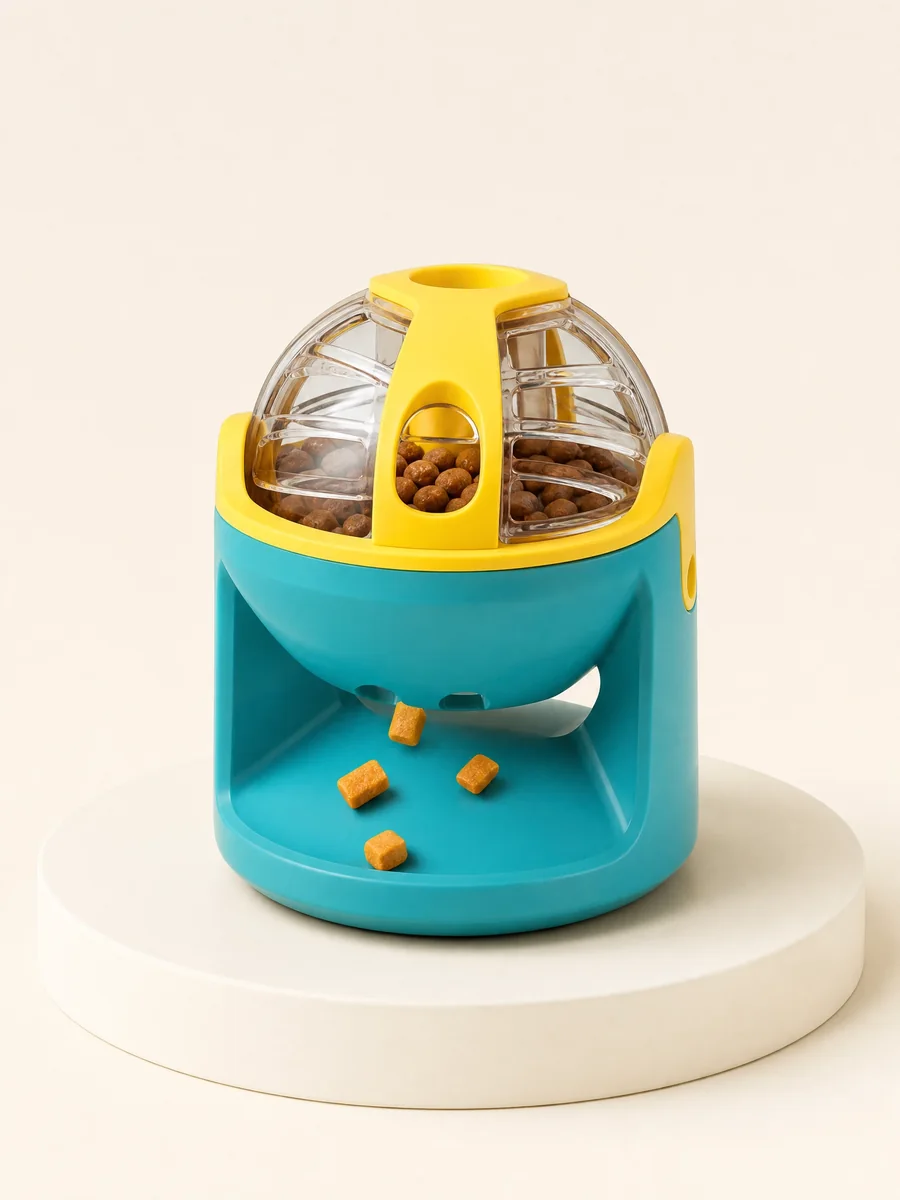
This guide helps U.S.-market retailers, importers, distributors, and private-label teams evaluate and buy stainless steel pet bowls in volume without promising product performance or regulatory outcomes. It centers on repeatable procurement decisions: screening suppliers, defining product specifications and material evidence, validating samples and pilot runs, confirming packaging and retail readiness, and establishing quality controls and commercial tradeoffs. Buyer/importer confirmation is required for final claims and target-market obligations.
Decision framework: quick checklist and buyer action plan
Use this short decision framework as the procurement roadmap. Each subsequent section expands the checklist items into practical steps.
Immediate checklist (actionable):
- Define SKUs by shape, capacity, rim, non-skid base, and finish.
- Set exact material requirements (e.g., 304/18-8 stainless vs 201), surface treatment, and weight targets.
- Require evidence: mill certificates, test reports, and supplier photos/videos.
- Order physical samples, then a pilot run (100–1,000 units) to verify production consistency.
- Specify retail packaging, UPC/labeling, and drop-shipping tolerance.
- Create incoming inspection (IQC) criteria and AQL sampling plan for production lots.
- Negotiate commercial terms: unit pricing bands, MOQs, lead times, and remedies for nonconforming lots.
Buyer action plan (60–90 day cadence):
- Week 1–2: Supplier shortlist and RFQ with full spec sheet.
- Week 3–4: Sample approvals and lab testing as required.
- Week 5–8: Pilot run and packaging proof approvals.
- Week 9–12: First full production with IQC and shipment audit.
- Post-launch: Quarterly supplier performance review and re-test schedule.
Keep this checklist at the front of your RFQ and supplier contracts so expectations are contractually clear.
Supplier screening: how to find and verify a pet bowl supplier
What to ask in an initial supplier screening
- Business credentials: registered entity, export license, years in business, and primary product lines (look for firms that list pet feeding accessories or tableware as a core competency).
- Production capability: annual output, number of forming lines, polishing capability, and tooling capacity for custom molds or stamping.
- Quality system: ISO 9001 or equivalent, documented incoming inspection, and traceability for raw-material batches.
- Compliance documentation: willingness to provide mill test certificates (MTCs), specific gravity/chemistry reports, and independent lab testing on request.
- References: other B2B customers in related categories (do not accept unverifiable or only consumer marketplace listings).
Red flags that warrant disqualification
- No traceable manufacturing facility or unwillingness to allow limited factory verification.
- Inability to provide material certificates or lab testing on request.
- Excessively long lead times without explanation, or inability to meet your minimum order quantity (MOQ) structure. -price-only proposals without technical specs or packaging details.
How to evaluate claims when sourcing "stainless steel pet bowls bulk"
- Request the exact alloy designation (e.g., 304/18-8). A supplier saying “stainless” without alloy details is insufficient.
- For private-label SKU strategies, confirm tooling ownership or exclusive runs and ask about minimum re-order quantities and lead-time for re-makes.
- If a supplier lists "stainless steel dog bowls wholesale" or "stainless steel cat bowls bulk" as product categories, validate depth of catalog and SKU testing history.
Quick supplier verification table
| Screening item | Evidence to request |
|---|---|
| Legal status | Business registration, export license |
| Factory capability | Photos, video walk-through, machinery list |
| Material traceability | Mill test certificate (MTC) for each lot |
| Quality system | ISO certificate, inspection reports |
Negotiation points unique to pet bowls
- MOQ flexibility by finish or engraving (for "custom cat bowls with name").
- Pricing tiers for branded vs. plain units.
- Intellectual property/tolling for private-label shapes or engravings.
Product specifications and design: defining SKUs for retail and wholesale
Establish precise, testable product specs. Avoid generic descriptions. Below are common specification categories and acceptable tolerances for a commercial buyer.
Core product attributes
- Alloy and grade: e.g., 304/18-8 stainless recommended for corrosion resistance in normal pet feeding use; record exact spec and acceptable alternatives. Buyer/importer confirmation required for final regulatory claims.
- Thickness/weight: specify material gauge or weight per unit to control perceived quality and durability.
- Finish: mirror polish, brushed finish, or bead-blast; specify Ra or surface roughness if hygiene or appearance is critical.
- Capacity and dimensions: list external and internal diameters, rim height, and bowl depth to ensure consistency across SKUs.
- Base/foundation: specify non-skid material (e.g., silicone ring) and whether it’s removable; note adhesion method and durometer.
- Edge/rim: rolled rim vs open edge; define tolerances to avoid sharp edges.
- Engraving/printing: laser-etch vs screen-print for custom cat bowls with name; specify location, depth, and color application process.
Functional variants and related SKUs
- Stainless steel dog bowls wholesale buyers commonly order multiple sizes and nesting sets to match retail assortment plans.
- Stainless steel cat bowls bulk often require shallower profiles and smaller diameters—define each SKU to reduce returns due to misfit.
- Portable accessories: if you sell items alongside bowls, confirm compatibility with "portable dog water bottle wholesale" products; define bundling requirements, packaging unit counts, and cross-POS barcodes.
Sample spec table (example SKU)
| Attribute | Specification |
|---|---|
| Alloy | 304/18-8 stainless steel (ASTM A240 equivalent) |
| Thickness | 1.0 mm ±0.1 mm |
| Finish | Brushed 320 grit, interior mirror-polished |
| Capacity | 500 mL ±10 mL |
| Non-skid | Silicone ring, removable, Shore A 60 |
| Labeling | Laser-etch logo on exterior, 2 mm depth |
Design-for-manufacture notes
- Prefer simple curves for deep-drawn bowls to reduce springback and variation.
- If adding silicone bases or printed decals, design for assembly line compatibility to avoid hand labor.
Retail readiness and compliance flags
- UPC/EAN placement and label adhesive temperature range for supply-chain impact.
- Country-of-origin marking and fiber content (if including paper packaging).
- All product and packaging claims require buyer/importer confirmation for legality in the U.S. market.
Material and component evidence: what documentation to require
Material evidence is central to disputes and regulatory scrutiny; require verifiable documentation up front.
Essential documents to request
- Mill Test Certificate (MTC): shows chemical composition and mechanical properties for the specific stainless batch. An MTC should reference standard numbers (e.g., ASTM) and batch ID.
- Traceability log: links finished goods to incoming sheet/coil batch numbers and MTCs.
- Independent third-party test reports: for surface release, corrosion resistance, or trace metal content if your brand makes claims requiring substantiation.
- Component supplier certificates: e.g., silicone base manufacturer certificates, adhesives, and coatings.
- Packaging material certificate: for inks, adhesives, and recycled content claims.
How to review an MTC (practical tips)
- Confirm alloy matches RFQ (e.g., 304 vs 201).
- Cross-check heat/lot number on MTC with supplier packing list and production photos.
- Ask for hardness and tensile test results if durability is a buyer concern.
When to commission additional lab testing
- For new suppliers or unverified alloys.
- For private-label launches or when making consumer-facing claims (e.g., “food-grade” marking).
- If you will market engraved or printed personalization like "custom cat bowls with name" and need to validate the permanence of mark and absence of contaminant residues.
Example documentation acceptance matrix
| Document | Acceptable for initial order? | Recommended for pilot run |
|---|---|---|
| MTC with heat number | Yes | Yes |
| Third-party corrosion test | No | Yes if claims depend on it |
| Component supplier cert (silicone) | Yes | Yes |
| Packaging print/color proof | Yes | Yes |
Note: Official guidance on food contact materials may apply; seek confirmation with your compliance team or regulatory counsel for specific claims 1.
Sampling and pilot-run checks: how to validate before full production
Sampling is where promise meets reality. Define what you will inspect, how, and in which order.
Sample types and purposes
- Pre-production prototype: used for fit, finish, and tooling adjustments.
- Production sample (PPAP/first article): shows actual production process and packaging.
- Pilot-run lot (100–1,000 units): reveals process stability, assembly issues, and packaging line compatibility.
- Third-party test sample: submitted to an accredited lab for requested tests.
Inspection checklist for samples
- Dimensional check vs spec sheet (use calipers, go/no-go gauges).
- Surface finish assessment under controlled light (look for marks, pits, polishing streaks).
- Edge/rim check for burrs or sharp spots with tactile tests.
- Base adhesion and non-skid performance (peel test, temperature cycling).
- Weight comparison against target tolerance to detect material substitution.
- Packaging fit-check and shipping simulation (drop test sample pack).
Acceptance criteria and redlines
- Define pass/fail criteria numerically (e.g., diameter ±1.0 mm, capacity ±5%).
- Require corrective action plans (CAPA) for any nonconformance before pilot run approval.
- For personalized items like "custom cat bowls with name," test multiple personalization variants (fonts, fill, color) and require proof of repeatability.
Sample approval flow (recommended)
- Prototype approval (design signoff).
- Production sample with MTC and packaging mock-up.
- Pilot run with IQC report and photographs.
- Full production release.
Cost considerations and tradeoffs
- Expect higher per-unit cost for small pilots; include cost into MSRP modeling.
- Sampling and third-party testing reduce return risk but add upfront spend.
- If sourcing "stainless steel dog bowls wholesale" at very low unit prices, insist on at least a pilot run to verify that cost cutting didn’t remove required material thickness or quality.
Packaging, labeling, and retail readiness
Packaging is a sales and logistics consideration: it must protect product, communicate brand, and be compliant with U.S. import and retail requirements.
Packaging checklist
- Primary packaging: polybag, kraft box, or clamshell—specify dimensions, material GSM, and sealing method.
- Secondary packaging: master carton specs, units per carton, and pallet configuration.
- Labeling: country-of-origin, material declaration (e.g., 304 stainless steel), lot/batch number, and any required safety or age warnings. Buyers/importers must confirm final claims.
- Retail-ready requirements: hang tags, shelf-ready trays, or poly-window boxes; define POS barcode placement and scannability.
Sustainability and inbound cost tradeoffs
- Recyclable or reduced material packaging often increases unit cost or affects protection. Balance sustainability goals with acceptable damage rates for retail channels.
- Bulk buyers ordering "stainless steel pet bowls bulk" often use minimal protective packaging to save cost—establish a damage allowance and quality acceptance AQL accordingly.
Packaging test scenarios
- Transit simulation: ISTA drop tests or equivalent to simulate courier conditions.
- Climate exposure: humidity and temperature cycling if silicone parts or adhesives are used.
- Shelf display test: assembly time for retail teams and clearance on standard gondola shelving.
Packaging decision table
| Buyer goal | Packaging strategy | Tradeoff |
|---|---|---|
| Minimize COGS for online bulk orders | Minimal inner packaging, more units per master carton | Higher damage risk; higher returns possible |
| Retail-display quality | Printed boxes, hang-tags, inner inserts | Higher unit cost and more complex SKU management |
| Private-label premium | Custom printed boxes, sealed warranties, personalized inserts | Higher MOQ, longer lead times |
For bundled product strategies (e.g., a bowl packaged with a "portable dog water bottle wholesale" accessory), confirm packaging weight, carton dimensions, and barcode mapping for multi-SKU sales.
Quality-control controls and commercial tradeoffs
Define inspection regimes and commercial remedies. This protects margins and keeps customer experience consistent.
Incoming quality control (IQC) essentials
- AQL sampling plan: adopt standard ISO 2859-1 levels appropriate to your risk tolerance (e.g., AQL 1.5% for critical defects, 4.0% for minor).
- Test battery on arrival: dimensional checks, surface inspection, adhesion/peel tests for bases, and random weight checks.
- Hold-and-release protocol: hold batches until IQC passes and certificates are cross-checked.
Production-line quality measures to require
- In-process checkpoints: first-article check, mid-run checks, and end-of-run checklists.
- Traceability: link rejects to tooling and operator where possible to facilitate corrective action.
- Photography and video evidence: require timestamped images of representative SKUs per batch.
AQL example and sampling plan
| Defect type | Severity | AQL | Sample action |
|---|---|---|---|
| Sharp edge/burr causing hazard | Critical | 0.0% | Reject lot; CAPA and rework |
| Incorrect alloy (mislabel) | Major | 0.1% | Reject lot; require verification & rework |
| Cosmetic scratches | Minor | 4.0% | Acceptable up to AQL; discount or rework above |
Commercial remedies and contractual clauses
- Price deductions for cosmetic issues above AQL; full replacement or rework for structural defects.
- Rejection-to-rework timelines and responsible party for rework costs.
- Escalation and third-party inspection rights for disputed lots.
- Insurance and freight terms for damages in transit.
Cost vs. quality tradeoffs to consider
- Lower unit price often means thinner gauges, lighter weight, and higher cosmetic variance; factor in potential returns and warranty claims.
- Higher-grade alloy (e.g., 304 vs 201) raises cost but can justify higher MSRP in premium channels.
- Private-label engraving or personalization ("custom cat bowls with name") typically increases unit time and cost; consider using pre-printed inserts to reduce per-unit touch.
Special note on bundled or portable items
- If offering supplementary items like portable water bottles wholesale, ensure that QC standards for both product lines align, and decide whether to accept mixed-supplier sourcing or single-supplier fulfillment.
Frequently asked questions
Q1: What minimum documentation should I require from a pet bowl manufacturers prospect? A1: At minimum request a valid business registration, mill test certificates (MTC) for the stainless batch, production capability evidence (photos, machinery list), and proof of a documented incoming inspection process. Third-party testing is recommended for new suppliers.
Q2: How many samples and what size pilot run should I plan before a full order? A2: Approve a prototype and a production sample, then run a pilot of 100–1,000 units depending on complexity. Larger pilots reveal assembly or packaging issues at scale; pilot size should match SKU complexity and shelf assortment commitments.
Q3: Can I expect all stainless steel bowls to be rust-proof? A3: No vendor or product should be assumed rust-proof. Alloy, finish, maintenance, and use conditions affect corrosion resistance. Require alloy designation, MTCs, and, if necessary, independent corrosion testing. Buyer/importer confirmation is required for any market claims.
Q4: How do I handle personalization like "custom cat bowls with name" at scale? A4: Decide whether personalization will be laser etch, pad print, or sticker. Laser etch is durable but increases lead time and tooling costs. Negotiate MOQs for each personalized variant, sample each font/design combo, and include personalization steps in your pilot-run checklist.
Conclusion
Sourcing stainless steel pet bowls bulk for the U.S. market requires clear technical specifications, verified material evidence, staged sampling, and disciplined quality controls. Use the decision framework and checklists above to structure RFQs and supplier contracts: define alloy and dimensional specs, request MTCs and traceability, require production samples and a pilot run, confirm packaging and retail readiness, and implement an AQL-based IQC plan with defined commercial remedies. Expect tradeoffs between cost, appearance, and durability; price alone is not a sufficient selection criterion. Always secure buyer/importer confirmation for market-facing claims and consult compliance resources as needed for food-contact or labeling obligations 1. Following a staged, evidence-based approach reduces risk and speeds time to shelf.
Buyer search scope
This guide addresses the following U.S. B2B procurement search phrases. Each phrase is considered in the context of supplier selection, product specifications, samples, packaging and quality evidence rather than as a consumer recommendation.
| Search phrase | Buyer use |
|---|---|
| stainless steel pet bowls bulk | Primary procurement focus for this guide |
| stainless steel dog bowls wholesale | Related specification, supplier or range-planning query |
| stainless steel cat bowls bulk | Related specification, supplier or range-planning query |
| portable dog water bottle wholesale | Related specification, supplier or range-planning query |
| custom cat bowls with name | Related specification, supplier or range-planning query |
| pet bowl supplier | Related specification, supplier or range-planning query |
| pet bowl manufacturers | Related specification, supplier or range-planning query |
Final CTA — Prepare a focused pet feeding accessories sourcing brief with PawViso.
Share your target U.S. channel, product format, estimated order structure, packaging direction and customization requirements for a practical B2B discussion.
Email: info@PawViso.com
WhatsApp: +86 186 8106 4480
Related PawViso resources
- Continue with How to Source Slow Feeders for Dogs and Cats to compare a related supplier, sample and quality-control route.
- Browse the PawViso product catalogue to identify product formats for your purchasing brief.
- Follow the PawViso sourcing process and review the B2B buyer FAQ before sharing requirements.
External reference
Use ISO 9001 quality-management systems guidance as general quality-system context, and confirm the product-specific evidence that applies to the selected SKU, channel and target market.