
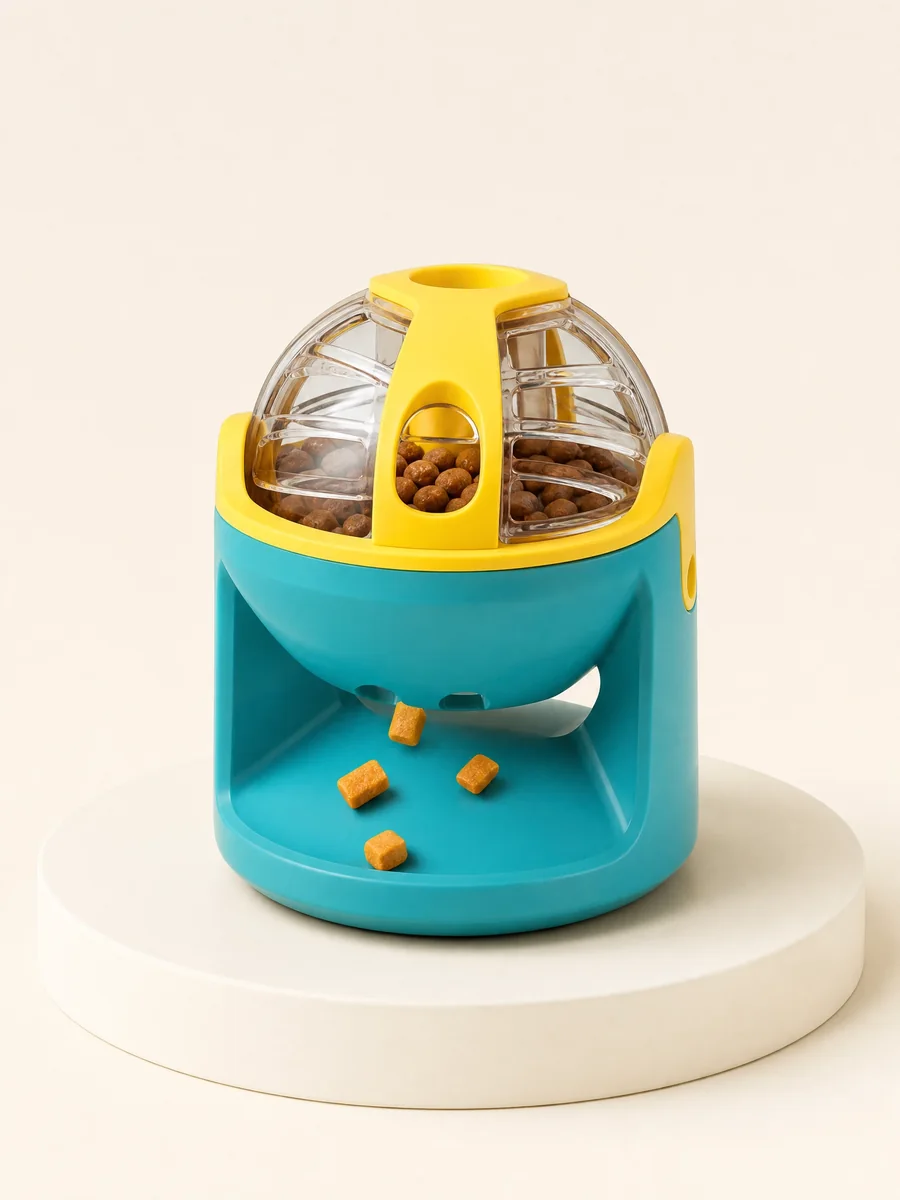
This guide gives U.S.-market retailers, importers, distributors, and private-label teams a practical, procurement-focused framework for sourcing dog bowl manufacturers. It covers supplier screening, product specifications, material/component evidence, sampling and pilot-run checks, packaging and retail readiness, quality-control controls, commercial tradeoffs, and a concise buyer action plan. It does not make product-performance, regulatory, veterinary, sustainability, or safety guarantees — final confirmation by the buyer/importer for target-market obligations is required.
Decision framework
Sourcing pet feeding accessories is a series of risk-and-reward decisions: cost versus durability, differentiation versus SKU complexity, lead time versus inventory risk. Use this four-step decision loop for every SKU or program:
- Define the commercial objective — margin target, price tier, brand positioning (basic retail, premium, private label, or speciality slow-feeder range).
- Translate to technical specs — materials, dimensions, tolerances, surface finish, packaging format, labeling and barcoding, and any personalization options.
- Qualify suppliers for evidence — factory audit items, test reports, capacity, lead times, tooling capabilities, and minimum order quantities (MOQs).
- Validate via sampling and a controlled pilot run, then lock quality control (QC) plans and logistics milestones before scaling.
Apply the loop at category level (e.g., ceramic dining bowls vs. silicone slow-feeders) and at SKU level (size, finish, personalized print). Keep commercial tradeoffs explicit: e.g., smaller MOQ and higher unit price vs. long-term tooling amortization.
Table: Quick decision checkpoints
| Decision area | Key question |
|---|---|
| Commercial objective | Premium margin or low-cost volume? |
| Technical spec | Materials, tolerances, finish, personalization? |
| Supplier fit | Certifications, capacity, lead time, MOQ? |
| Validation | Samples, pilot runs, QC acceptance criteria? |
Use this framework to compare offers from dog bowl manufacturers and to prioritize which risks to mitigate immediately (safety-critical dimensions, labeling accuracy) versus later (secondary finish variations).
Supplier screening & evidence
What to verify before you engage in detailed spec negotiations:
- Legal and trade credentials: business registration, tax IDs, and U.S. import experience. Confirm Incoterms and whether the supplier understands U.S. customs paperwork (HTS codes, country of origin claims).
- Manufacturing profile: Are you dealing with a design house, a factory, or a trading company? A direct dog bowl manufacturer with in-house molding, firing (for ceramics), or injection capabilities reduces coordination risk.
- Capacity and lead time evidence: Ask for monthly output for the specific product family and a documented production timeline for tooling + first production run.
- MOQs and pricing tiers: Clarify unit price breaks at clear quantity bands, and whether price includes packaging, labelling, and any personalization.
- Test and compliance documentation: Request material-safety certificates, migration reports, or lab testing relevant to dogs’ feeding conditions. Do not accept hand-waving — ask for dated, laboratory-sourced reports and the scope (testing standard).
- Photo and video evidence: Recent factory photos, production-line videos, and raw-material receipts are useful. For ceramics, request kiln schedules and glaze formulation detail.
- References and trail samples: Ask for at least two commercial references (other import customers), ideally with similar product scopes.
Screening checklist table
| Evidence item | Minimum acceptable evidence |
|---|---|
| Business legitimacy | Registered company license and tax ID |
| Factory capability | Photos/videos of production line; list of machines |
| Testing | Lab test reports with dates and lab identification |
| Capacity | Documented monthly capacity and recent output records |
| References | Two commercial customer references with contact method |
When evaluating an individual dog bowl manufacturer versus a trading company that bundles producers, prefer direct manufacturers for easier root-cause QC and faster change management. Confirm claims with documentary evidence — buyer/importer confirmation is required for final claims and target-market obligations.
(Use keywords: dog bowl manufacturers, dog bowl manufacturer — appear earlier and here.)
Product specifications and commercial tradeoffs
Define unambiguous specs. Each SKU must have a spec sheet that becomes part of purchase orders and quality inspection plans. Common specification categories for pet feeding accessories:
- Functional dimensions: inner diameter, depth, wall thickness, base profile, and weight. Include tolerances (e.g., ±1.5 mm).
- Materials and formulation: ceramics (porcelain, stoneware), stainless steel grades (304 vs. 316), FDA-recognized food-contact silicones, or plastics (specify polymer grade and any filler content).
- Surface finish and coatings: glaze type, matte vs. gloss, anti-slip base material, powder coating thickness and adhesion test criteria.
- Print and personalization: transfer printing, decal firing, laser engraving, embossing. Define color codes (Pantone), print durability tests, and placement tolerances.
- Packaging and retail-ready requirements: UPC, hang-tags, polybag specs, shelf-ready cartons, and inner fill materials.
- Performance acceptance criteria: drop tests, dishwasher cycles, thermal shock testing (for ceramics), and rim-chipping tolerances. Specify sample size and acceptance thresholds for inspections.
Commercial tradeoffs to spell out in the spec negotiation
- Cost vs. durability: Thinner walls reduce cost but raise breakage risk in transit/retail returns and can increase reject rates in QC.
- Personalization complexity: Variable-data personalization (names or patterns) increases lead time, per-unit cost, and defect risk on early runs.
- MOQ vs. unit price: Lower MOQs typically attract a per-unit premium; larger MOQs require demand certainty or risk inventory holding cost.
- Finish consistency vs. yield: Specialty glazes and complex multi-step finishes have lower yields and higher variability; budget for higher sample rejection in pilot runs.
Include a short spec-sheet template with each RFQ so suppliers price the same scope. For cat-focused channels or cross-category buyers, request “cat bowl wholesale” pricing and parallel spec sheets if you plan a multi-spec program. That helps compare unit economics across companion-species SKUs without conflating requirements.
Material, component evidence, and testing strategy
Material evidence is the foundation for safe, durable products. Ask for traceable documentation and independent testing where applicable.
Material and component checklist
- Raw-material certificates: supplier declarations listing grade, batch, and any additives (for plastics) or glaze formulation (for ceramics).
- Mill/test reports: metal certificates for stainless steel (e.g., 304 composition), polymer certificates showing FDA food-contact suitability, and ceramic glaze lead and cadmium screening where relevant.
- Third-party lab tests: independent laboratories can test for migration, heavy metals, and overall food-contact safety. Specify scope (e.g., extractables and migration in food-simulant solutions).
- Component sourcing evidence: if the product includes non-factory components (rubber anti-slip mats, silicone inserts, decals, or packaging inserts), request supplier names and batch traceability.
When to require third-party testing
- For new materials, unfamiliar glaze formulations, or when a supplier cannot provide mill certificates for a raw material batch.
- For personalization processes that involve inks or adhesives that may contact the product surface.
- For finished-product checks when you expect to import into the U.S. and need to demonstrate compliance with applicable food-contact and labeling guidance.
Example: ceramics versus steel tradeoffs
- Ceramic bowls (porcelain, stoneware) offer high perceived value and personalization options. Risks include thermal shock breakage, glaze variability, and heavier shipping weight that raises freight cost. Require kiln firing logs and glaze test results.
- Stainless-steel bowls are durable, lightweight for freight, and have predictable finish treatment; costs rise with higher-grade steel and polishing. Request metal certificates and passivation reports.
Include language in contracts that requires suppliers to maintain batch traceability for materials and to notify you before changes to raw-material sources or formulations. If a supplier proposes substitutions, require pre-approval and additional testing. Again: buyer/importer confirmation is required for final claims and target-market obligations.
(Include keyword: ceramic slow feeder dog bowl personalised — used to illustrate personalization and ceramic considerations.)
Sampling, pilot-run checks, and quality-control controls
Sampling and small pilot runs are the operational heart of risk reduction. Follow a staged approach:
- Pre-production sample (PPS): A single finished unit demonstrating design, colors, and surface finish. Use PPS to confirm visual and dimensional specs.
- Production sample or first-article inspection (FAI): A small batch sample produced on the intended production line, with full packaging. Use FAI to validate process capability.
- Pilot-run: A limited quantity production run that exercises tooling, finishing processes, printing, and packaging workflows under near-production volumes. Treat pilot runs as production for QC and shipping tests.
Key checks during sampling and pilot runs
- Dimensional inspection: measure critical dimensions and check tolerances across a statistically meaningful sample size.
- Visual inspection: surface defects, baking/firing quality (ceramics), weld continuity (metal), and print registration for personalization.
- Adhesion and wear tests: for printed or coated surfaces, perform abrasion, dishwasher, and simulated retail handling tests.
- Packaging validation: confirm fit in retail-ready cartons, barcode readability, inner fill sufficiency, and balance for palletizing.
- Transit simulation: drop testing, vibration, and compression tests for packaged goods.
Accept/reject criteria and sampling plans
- Use AQL or an agreed sampling standard and clearly state the lot size and inspection level in the purchase contract. For critical issues (sharp edges, lead content, biohazard concerns), use 100% inspection for the first two production runs.
- Define remedial actions and timelines for non-conforming batches (rework, replacement, financial penalties).
Quality-control controls to implement
- Incoming materials inspection: check raw-material certificates against batch shipments.
- In-process checks: first-piece inspection, mid-run spot checks, and end-of-run verification.
- Pre-shipment inspection (PSI): independent third-party inspections at the factory before goods load onto containers.
- Post-arrival checks: sample-based inspections upon receipt in the U.S., especially until the supplier has demonstrated a history of compliance.
Document acceptance criteria in a Master Quality Agreement or Quality Addendum to POs. This document becomes the reference for dispute resolution and commercial remedies. If you plan to work with “dog bowls wholesale distributors,” require evidence that distributors adhere to similar QC standards when procuring or repackaging.
(Insert keyword: slow feeder dog bowl reject shop — discuss handling of rejects: rework, recycle, or controlled disposal to avoid downstream quality issues.)
Packaging, retail readiness, and logistics
Packaging choices affect retail presentation, freight cost, and return rates. Plan packaging decisions as strategic tradeoffs.
Packaging checklist by retail objective
- E-commerce direct-ship: use protective internal padding, compact cartons, clear labeling, and tamper-evident seals.
- Brick-and-mortar retail: prioritize shelf-ready cartons, hang-tags, UPCs, and attractive display-ready outer cartons.
- Private label personalized SKUs: include product inserts documenting personalization specifics and quality checks.
Table: Packaging tradeoffs
| Packaging format | Strengths | Drawbacks |
|---|---|---|
| Individual retail-ready box | Retail-ready, protects product | Higher unit cost, more packing volume |
| Bulk polybag in master carton | Low cost, lower volume | Poor on-shelf presentation, higher damage risk |
| Blister or clamshell (for small items) | High visibility, theft-deterrent | Higher packaging cost, environmental concerns |
Labeling and regulatory notes
- Accurate labeling: include country of origin, material callouts, and any manufacturer/importer contact info required by retailers or regulations.
- Barcodes and SKU management: provide GS1-compliant UPCs or retailer-specific barcode formats and ensure scannability in packaging.
- Retail compliance packs: for each retailer account, prepare a compliance pack with packaging dimensions, case-quantity, pallet patterns, and carton markings.
Logistics considerations
- Freight optimization: heavier materials (ceramic) increase per-unit sea freight and duties; stainless-steel and silicone options often reduce freight weight per value.
- Lead time buffers: for personalized or kiln-fired runs, add buffer for re-firing and rework.
- Returns handling: plan reverse logistics for breakage-prone SKUs and set policies that balance customer service and supplier accountability.
If you anticipate a large “dog bowls bulk buy,” negotiate packaging economies (e.g., neutral master cartons) and confirm the supplier’s capacity to palletize for sea freight with standard container loading plans.
Frequently asked questions
Q1: What minimum documentation should I insist on before approving a first production run? A1: At minimum, request a dated production sample (PPS), raw-material certificates for that batch, a kiln or process log where applicable, and any third-party test reports promised during negotiations. Include the supplier’s production timeline and an inspection plan. Buyer/importer confirmation is required for final claims.
Q2: How do I balance MOQ and SKU variety for a private-label program? A2: Start with limited personalization runs and focus on core SKU sizes and finishes. Use a pilot-run to validate demand, then scale tooling for high-volume SKUs. Negotiate price breaks tied to cumulative annual volumes to lower upfront MOQ risk.
Q3: When is third-party lab testing necessary for dog bowls? A3: Required when raw-material certificates are missing, when a new glaze or ink is used, or when you need documented evidence for import compliance. Use accredited labs and specify test methods in the RFQ. Final confirmation for regulatory obligations must be performed by the buyer/importer.
Q4: How should I handle rejects found on arrival in the U.S.? A4: Maintain a documented non-conformance workflow: segregation, quarantine, photographic evidence, root-cause analysis, supplier corrective action request (SCAR), and defined remediation (rework, replacement, or financial settlement). For safety-related rejects, do not release product to market until resolved; buyer/importer confirmation is required for final disposition.
Conclusion
Sourcing dog bowl manufacturers for the U.S. market is a structured blend of specification rigor, supplier evidence, staged validation, and explicit commercial tradeoffs. Use the decision framework to align commercial objectives with technical specifications, then verify material and testing evidence before authorizing tooling or bulk buy decisions. Insist on staged samples (PPS, FAI, pilot) and documented QC plans that include pre-shipment inspections and post-arrival checks. Packaging choices should reflect your distribution channel (retail, e-commerce, or wholesale) and factor into landed cost calculations for any dog bowls bulk buy or contract with dog bowls wholesale distributors.
Action plan (short)
- Draft SKU-level spec sheets and packaging requirements.
- Run a supplier screen checklist and request documentary evidence.
- Commission PPS and an FAI; conduct pilot-run checks with agreed acceptance criteria.
- Implement QC controls (incoming, in-process, PSI, post-arrival).
- Negotiate commercial terms — MOQ, price bands, tooling amortization, and remedies for non-conformance.
- Confirm all regulatory and import obligations with your compliance advisor and the supplier; buyer/importer confirmation is required for final claims.
Finally, using this guide will help compare offers consistently across dog bowl manufacturers and distributors. Always verify documentation and testing directly and preserve contractual clauses that require supplier notification of material or process changes.
Buyer search scope
This guide addresses the following U.S. B2B procurement search phrases. Each phrase is considered in the context of supplier selection, product specifications, samples, packaging and quality evidence rather than as a consumer recommendation.
| Search phrase | Buyer use |
|---|---|
| dog bowl manufacturers | Primary procurement focus for this guide |
| dog bowl manufacturer | Related specification, supplier or range-planning query |
| cat bowl wholesale | Related specification, supplier or range-planning query |
| dog bowls wholesale distributors | Related specification, supplier or range-planning query |
| dog bowls bulk buy | Related specification, supplier or range-planning query |
| slow feeder dog bowl reject shop | Related specification, supplier or range-planning query |
| ceramic slow feeder dog bowl personalised | Related specification, supplier or range-planning query |
Final CTA — Prepare a focused pet feeding accessories sourcing brief with PawViso.
Share your target U.S. channel, product format, estimated order structure, packaging direction and customization requirements for a practical B2B discussion.
Email: info@PawViso.com
WhatsApp: +86 186 8106 4480
Related PawViso resources
- Continue with How to Source Slow Feeders for Dogs and Cats to compare a related supplier, sample and quality-control route.
- Browse the PawViso product catalogue to identify product formats for your purchasing brief.
- Follow the PawViso sourcing process and review the B2B buyer FAQ before sharing requirements.
External reference
Use ISO 9001 quality-management systems guidance as general quality-system context, and confirm the product-specific evidence that applies to the selected SKU, channel and target market.