
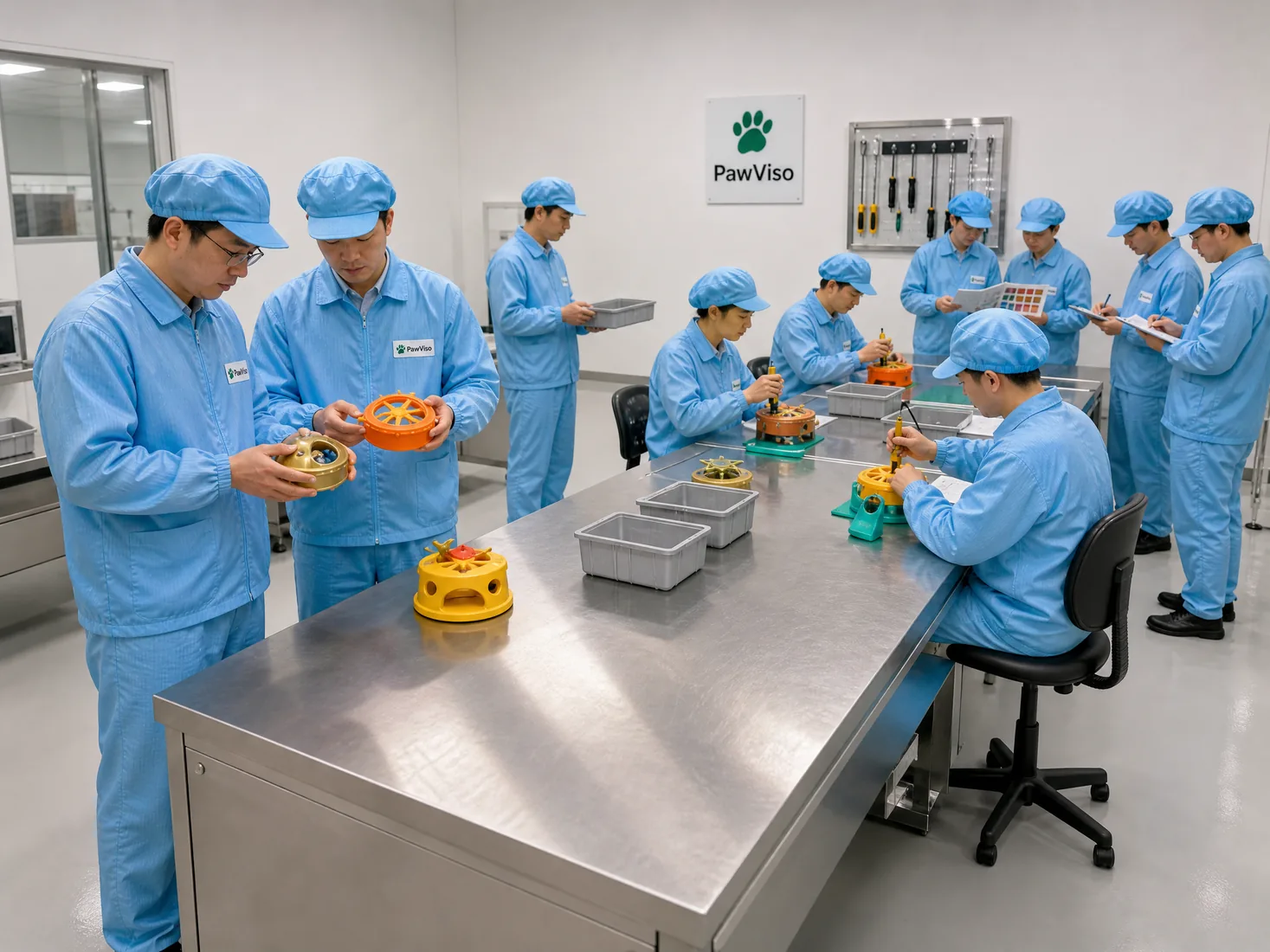
This guide is written for U.S.-based retailers, importers, distributors, and private-label buying teams who need a practical, supplier-focused framework for pet product programs. It covers supplier screening, product specifications, material/component evidence, sampling and pilot-run checks, packaging and retail readiness, quality-control controls, commercial tradeoffs, and a buyer action plan you can apply to pet supplies wholesale usa programs. It does not provide regulatory or performance guarantees; final compliance and market-acceptance checks are the buyer’s responsibility.
Decision framework: how to evaluate suppliers and products quickly
Start with a clear decision hierarchy so internal stakeholders and external suppliers evaluate the same criteria in the same order. The recommended hierarchy:
- Strategic fit — product families, MOQ tolerance, private-label capability, lead time tolerance.
- Compliance basics — material safety, labeling rules, and test evidence relevant to U.S. market obligations.
- Quality and performance evidence — samples, third-party tests when needed, inspection history.
- Commercial viability — landed cost, FOB vs. DDP tradeoffs, payment terms, production capacity and flexibility.
- Post‑launch safety nets — inspection, warranty terms, and agreed corrective action process.
Buyer action plan (high level)
- Define the target assortment and acceptable material/component list.
- Create a short RFI (request for information) template with mandatory evidence items.
- Pre-screen suppliers using the RFI; shortlist 3–5 for sampling.
- Run an agreed sample program and a small pilot order to validate production, packaging, and logistics.
- Finalize a contract that includes quality acceptance criteria, inspection rights, and remedies.
This framework applies whether you are assessing pet products wholesale usa sources domestically or abroad. Use it as a checklist at each decision gate to avoid ad hoc choices that create downstream risk.
Supplier screening: what to require before you start sampling
Objective: eliminate suppliers who can’t meet basic commercial, compliance, or capacity requirements before you invest in samples or travel.
Mandatory checks and documents to request in your initial screening:
- Company registration and primary contact, including legal entity addressing U.S. tax and customs implications.
- Factory address and photos of relevant production lines.
- Production capacity, typical lead times, and minimum order quantities (MOQs).
- Proven experience with pet supplies wholesale suppliers or related durable consumer products.
- Written confirmation of export capabilities and preferred Incoterms.
- List of third-party laboratories and testing history for relevant materials.
Verification steps
- Cross-check the supplier’s stated factory address with trade and customs databases or the supplier’s customers where possible.
- Ask for sample production photos and recent shipping documents (redact sensitive data).
- If importing from outside the U.S., confirm their export documentation experience (commercial invoices, packing lists, COO).
Supplier qualification table (compact)
| Screening factor | Acceptable evidence |
|---|---|
| Legal existence | Business registration or export license |
| Production capacity | Line photos and capacity statement |
| Product experience | References or sample portfolio in pet product categories |
| Export readiness | Past shipping docs and Incoterm preference |
Notes: When you source from pet store wholesale suppliers or pet product wholesale china vendors, differentiate between trading companies and factories: trading companies often ease logistics but add a layer of supply‑chain opacity. Buyer/importer confirmation is required for final claims regarding supplier status and regulatory standing.
Product specifications and material/component evidence
A clear, enforceable product specification (spec) document is the single most effective tool to reduce defects and disagreements.
Spec template essentials
- Product description and SKU code.
- Exact measurements and tolerances (length, width, thickness, weight).
- Materials list (primary and secondary), including acceptable alternatives and supplier-preferred trade names.
- Color references (Pantone or physical swatches) and dye fastness expectations.
- Component parts (zippers, buckles, hardware) with material composition and source preferences.
- Functional performance criteria (load ratings for beds, chew-resistance level, waterproof rating) described empirically, not subjectively.
- Packaging specifications and labeling text.
Material and component evidence you should require
- Mill or material certificates (e.g., polymer resin grade, fabric composition).
- Test reports for critical attributes: flammability (where applicable), heavy metals, phthalates, migration testing, and colorfastness. Use accredited third-party labs if test data is a purchase condition.
- For components sourced through subcontractors (e.g., hardware), require the supplier to provide chain-of-custody and certificates from those sub-suppliers.
Compact compliance reference table
| Evidence type | When to require |
|---|---|
| Material certificate (COA) | For plastics, metals, and textiles used in product |
| Third-party lab report | For any claim that affects safety or labeling obligations |
| Component supplier list | For hardware and interchangeable parts |
Practical note: avoid vague performance claims. Require quantifiable criteria in the spec—e.g., “pull test 50 lb for buckle closure” rather than “strong buckle.” Buyer/importer confirmation is required before making final regulatory or performance claims to end customers.
Sampling and pilot-run checks
Sampling is where theory meets practice. Use an iterative, documented sampling program to validate specs, assemble a pilot, and stress check logistics.
Two-tier sampling approach
- Pre-production sample (PPS): Verify materials, fit, color match, and basic assembly.
- Pilot/first production unit (PPU or FPU): A small production run (e.g., 1–5% of intended order or 50–500 units depending on SKU) produced on the intended line under normal conditions.
What to evaluate on samples
- Specification conformance (dimensions, materials, labeling).
- Assembly and finishing quality (seam integrity, adhesive consistency).
- Performance checks relevant to the product (load tests, closure cycles).
- Packaging and labeling fit: Does retail pack protect the product? Are barcode/UPC labels readable?
- Shelf presentation: Is the product retail-ready for your chosen channels?
Sample acceptance checklist (compact)
| Checkpoint | Accept/Reject criteria |
|---|---|
| Dimensions | Within specified tolerance |
| Material match | Matches approved material swatch/COA |
| Function test | Passes agreed performance test(s) |
| Packaging/labeling | Matches artwork and barcodes scan properly |
Documentation and traceability
- Require the supplier to send a “sample report” with photos and measured data for each sample.
- Where performance or safety tests are required, insist on laboratory reports referencing sample lot numbers.
- Sign-off process: buyer issues a written approval or a list of corrections; supplier confirms the corrective action and timelines.
Logistics considerations
- If sourcing from overseas pet products wholesale china suppliers, plan shipping lead times and customs clearance for pilot orders into your test markets. Allow contingency for rework and retesting.
Packaging, retail readiness, and labeling
Packaging is both a cost driver and a revenue enabler. For pet store wholesale suppliers, consider packaging from three perspectives: protection, merchandising, and regulatory labeling.
Key packaging decisions
- Protective packaging: must minimize transit damage across your logistics modes.
- Merchandising format: poly bag, blister pack, boxed set, header card, or bulk pack for B2B resale.
- Retail readiness: retail-ready packs should include hang holes, shelf-ready boxes, or pallet-ready cartonization for large-format retail partners.
- Sustainable considerations: if buyer requires recycled content or FSC certification for cartons, include specs and evidence requirements.
Labeling essentials for U.S. market (buyer must confirm final obligations)
- Product identity (what the product is), net contents where applicable, manufacturer/importer name and address, and country of origin.
- Any required safety instruction or warnings specific to the product function (consumer instructions for use and disposal).
- UPC or EAN barcode encoded correctly for retail systems.
Packaging cost vs. performance tradeoff
- Higher protection or premium retail packs increase per-unit cost and unit cube; conversely, minimal packaging reduces cost but can raise damage rates and returns.
- Determine the acceptable damage rate threshold before upgrading packaging.
Packaging decision quick matrix
| Goal | Recommended approach |
|---|---|
| Lowest landed cost | Bulk inner packs, minimal cushioning, maximize carton density |
| Retail-ready presentation | Branded boxed packs or hang-sell blister with barcode |
| Balanced | Protective inner pack + simple branded outer with retail info |
Note: Any regulatory labeling claims (e.g., “non‑toxic”) require documented evidence. Buyer/importer confirmation is required for final label content and compliance.
Quality-control controls and inspection strategy
Design a layered QC approach to protect margin and brand reputation. "Controls" here means both process controls and inspection touchpoints.
QC layers
- Incoming material controls: require supplier to verify materials against COAs before production starts.
- In-process controls: line checks and WIP sampling at defined production stages.
- Final random inspection (AQL-based) or 100% check for critical attributes (safety-related items).
- Pre-shipment inspection: verify carton counts, labeling, and shipping documentation.
- Post-arrival sampling: QC check on a receiving sample to confirm no transit damage and compliance in the U.S. market.
Inspection standards and AQL
- Use internationally recognized AQL tables for visual and functional defects, but set lower AQL limits for safety-critical features.
- For pet products, consider tighter AQL thresholds on seams, small parts, and closures.
Quality control roles and responsibilities
- Supplier responsibilities: routine line QC, documented inspections, corrective actions for nonconformances.
- Buyer responsibilities: define acceptance criteria, fund independent inspections when required, and maintain records for traceability.
Corrective action plan (CAPA) basics
- Nonconformance reporting template with photos and sample IDs.
- Root-cause analysis within X working days.
- Agreed corrective actions and re-inspection timelines.
- Financial remedy or rework terms for defective batches.
When to use third-party inspection
- New supplier onboarding.
- High-value or high-risk product categories.
- Large or irregular orders where risk tolerance is low.
Commercial note: insist on the right to pre-shipment inspection in the contract. Avoid relying solely on post-arrival checks, which can be costlier and slower to remediate.
Commercial tradeoffs when choosing pet product wholesale suppliers
Every sourcing decision is a negotiation between capability, cost, speed, and risk. Lay out the main tradeoffs explicitly before locking in a supplier.
Common tradeoff scenarios
- Cost vs. Quality: Lowest FOB price often correlates with higher variance and quality failures. Evaluate landed cost of rework and returns.
- Lead time vs. MOQ: Faster production lines and air freight reduce lead time but increase unit cost. Longer lead times allow consolidated, lower-cost ocean shipments.
- Factory vs. Trading Company: Factories usually provide better control over materials and QC; trading companies can simplify transactions and smaller MOQs but may add margin and opacity.
- Local sourcing vs. Import: Domestic suppliers shorten lead time and simplify compliance but may have higher unit costs and limited assortment depth.
- Private label flexibility vs. COGS: Customized designs, labels, and packaging increase production cost and complexity; consider phased customization to manage risk.
Simple cost tradeoff table
| Option | Pros | Cons |
|---|---|---|
| Lowest-cost offshore supplier | Low unit cost | Higher QC risk, longer lead times |
| Domestic supplier | Short lead time, easier compliance checks | Higher unit cost, limited scale |
| Trading company | Lower MOQs, simplified purchasing | Less transparency on origins and QC |
Negotiation levers to manage tradeoffs
- Run a pilot with a clear termination clause to validate assumptions.
- Use layered contracts: initial test order, then a longer-term supply agreement with graded price incentives.
- Implement shared QA costs for new product validation (split sample testing costs between buyer and supplier).
- Consider staggered payment terms tied to milestones: sample approval, production start, pre-shipment inspection, and delivery.
Remember: pet supplies wholesale suppliers vary from small specialty factories to large multi-line producers. Categorize potential partners by capability and make supplier-segment-specific decisions rather than treating all suppliers the same.
Frequently asked questions
Q: What is the difference between pet supplies wholesale usa and pet products wholesale china sourcing strategies? A: The core difference is lead-time and compliance management. Sourcing domestically shortens lead time and eases on-the-ground checks; sourcing from China typically offers lower unit costs but requires stricter upfront specification, testing, and logistics planning. Buyer/importer confirmation is required to finalize any compliance or tax implications.
Q: How many suppliers should I include in an evaluation short list? A: Shortlist 3–5 qualified suppliers for sample and pilot evaluation. This balances competitive pricing with the ability to validate quality and capacity without spreading procurement resources too thin.
Q: When are third-party lab tests necessary? A: Require third-party testing when a material or product attribute affects safety, labeling, or regulatory obligations (e.g., chemical migration, flammability, small part hazards). For apparel-like pet beds or harnesses, tests for lead or phthalates may be relevant depending on materials and intended use. Final testing requirements should be confirmed by the buyer/importer.
Q: Should I require the supplier to carry product liability insurance? A: Yes—ask suppliers for evidence of appropriate commercial insurance, and ensure your importer or brand carries product liability insurance that covers distribution in the U.S. Insurance requirements should be negotiated and documented; do not rely solely on supplier insurance for full protection.
Conclusion
Sourcing pet supplies wholesale usa requires a disciplined, documented process that aligns product specs, supplier evidence, sampling, packaging, quality-control controls, and commercial thinking. The decision framework in this guide helps you prioritize strategic fit, compliance, and performance before committing to larger orders. Use targeted RFIs, a two-tier sample program, enforceable product specs, and layered QC with clear corrective action processes to reduce downstream risk.
Key takeaways:
- Start with clear specs and mandatory evidence requests to screen suppliers efficiently.
- Use pre-production samples and small pilot runs to validate production and packaging.
- Require traceable material certificates and third-party testing where safety or labeling mandates demand it.
- Balance cost, lead time, and risk explicitly—document tradeoffs in purchase agreements.
- Buyer/importer confirmation is required for final compliance, labeling content, and market obligations.
This guide applies to buyers evaluating pet products wholesale market options, including pet supplies wholesale suppliers, pet store wholesale suppliers, pet product wholesale suppliers, and cross-border suppliers such as pet products wholesale china. Apply the checklists and tables here to your supplier RFIs and contracts to reduce ambiguity and accelerate sound sourcing decisions.
Buyer search scope
This guide addresses the following U.S. B2B procurement search phrases. Each phrase is considered in the context of supplier selection, product specifications, samples, packaging and quality evidence rather than as a consumer recommendation.
| Search phrase | Buyer use |
|---|---|
| pet supplies wholesale usa | Primary procurement focus for this guide |
| pet supplies wholesale suppliers | Related specification, supplier or range-planning query |
| pet store wholesale suppliers | Related specification, supplier or range-planning query |
| pet products wholesale usa | Related specification, supplier or range-planning query |
| pet products wholesale market | Related specification, supplier or range-planning query |
| pet products wholesale china | Related specification, supplier or range-planning query |
| pet product wholesale suppliers | Related specification, supplier or range-planning query |
Final CTA — Prepare a focused private label & supplier sourcing sourcing brief with PawViso.
Share your target U.S. channel, product format, estimated order structure, packaging direction and customization requirements for a practical B2B discussion.
Email: info@PawViso.com
WhatsApp: +86 186 8106 4480
Related PawViso resources
- Continue with How to Build a Private Label Pet Product Line to compare a related supplier, sample and quality-control route.
- Browse the PawViso product catalogue to identify product formats for your purchasing brief.
- Follow the PawViso sourcing process and review the B2B buyer FAQ before sharing requirements.
External reference
Use ISO 9001 quality-management systems guidance as general quality-system context, and confirm the product-specific evidence that applies to the selected SKU, channel and target market.