
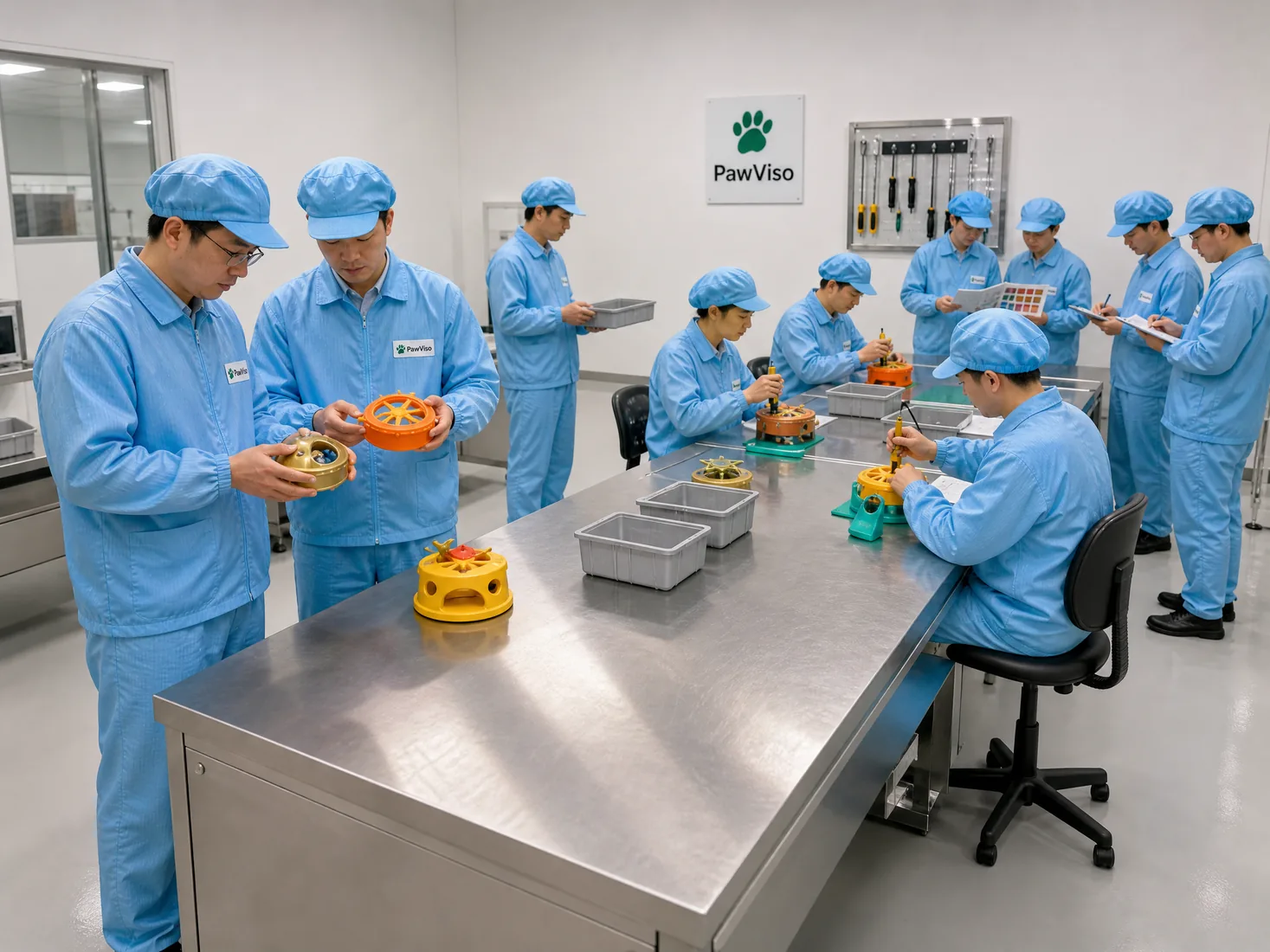
This guide helps U.S.-market retailers, importers, distributors, and private-label teams evaluate suppliers for custom pet products, compare technical evidence, run meaningful samples and pilot runs, set packaging and retail-readiness requirements, and build a practical buyer action plan. It focuses on procurement decisions and commercial tradeoffs; it does not provide regulatory, veterinary, performance, or safety guarantees. Buyer/importer confirmation is required for final product claims and target-market obligations.
Decision framework: what a purchasing decision must answer
A repeatable decision framework helps prioritize suppliers and identify key commercial tradeoffs. Each sourcing decision should answer:
- Supplier credibility: Can the vendor consistently deliver the agreed volume, lead times, and documentation?
- Product fit: Do specifications (materials, dimensions, tolerances) meet your brand and retail requirements?
- Evidence: Does the supplier provide verifiable material/component certificates, testing reports, and factory photos?
- Sample fidelity: Do samples represent production intent (same tooling, materials, label, and packaging)?
- Cost vs. control: Are unit cost savings worth tradeoffs in lead time, MOQ, or inspection burden?
- Compliance risk: Are you able to verify compliance responsibilities for the U.S. market? (Buyer/importer confirmation required.)
Use this checklist to convert qualitative impressions into a procurement decision:
| Decision element | Leading signal |
|---|---|
| Consistent delivery | Historical PO fulfillment record, production photos, references |
| Technical certainty | Detailed spec sheet, BOM, material certificates |
| Traceable testing | Lab reports tied to product SKU and batch |
| Sample representativeness | Serial-numbered sample with inspection checklist |
| Commercial clarity | Total landed cost, payment terms, MOQ, penalty terms |
Map the result to an action: proceed to pilot, negotiate commercial terms, or disqualify.
Supplier screening and commercial terms
What to verify first and how to structure your supplier shortlist.
-
Business verification
- Confirm legal entity, factory address, and production capacity. Request company registration documents and recent utility or lease documentation to corroborate the factory footprint.
- Ask for at least two verifiable references from other B2B customers (retailers, distributors) and recent PO fulfillment evidence.
-
Capacity and lead time modeling
- Model lead time as: order confirmation → materials procurement → production → inspection → shipping. Ask for historical month-by-month output for the SKU or similar SKUs.
- Require a sample of recent production schedules showing buffer allowances for material delays.
-
Commercial terms to prioritize
- MOQ and MOQ scaling: confirm unit cost at base MOQ, and at 2× and 5× MOQ to understand unit-cost elasticity.
- Payment terms and protection: negotiate balance between deposit and final payment on documentary evidence (inspection report, packing list). Consider escrow or letter-of-credit structures for higher-risk suppliers.
- Incoterm clarity: define whether prices are EXW, FOB, or Delivered Duty Paid (DDP). For importers new to a supplier, DDP reduces customs uncertainty but increases unit landed cost.
-
Screening scorecard (compact table)
- Use a simple 0–3 scoring approach for rapid comparison.
| Criteria | 0 = Fail | 1 = Weak | 2 = Adequate | 3 = Strong |
|---|---|---|---|---|
| Legal & contact verifiable | No docs | Partial | Docs provided | Docs + third-party check |
| Production capacity evidence | None | Anecdotal | Some data | Detailed plans + photos |
| Sample policy & lead time | No samples | Long lead | Routine | Rapid with revision history |
| Price transparency | Hidden fees | Base price only | Clear ex-works | Clear landed + options |
Notes on tradeoffs: lower-unit costs often come with higher MOQs and longer lead times. Decide whether inventory carrying cost and cashflow justify the savings. For private label pet toys or private label pet products, packaging customizations and private-label labeling typically push MOQs higher and lengthen lead times.
Product specifications and material/component evidence
A specification is the single source of truth for procurement and quality control.
-
Core spec elements
- SKU code, product name, and intended use case (retail display, subscription box, club pack).
- Bill of materials (BOM): component name, material type, color code, supplier of component (if outsourced), and critical dimensions/tolerances.
- Performance targets (durability cycles, load limits) stated as testable criteria, not guarantees.
-
Material and component evidence
- Request material data sheets and certificates of conformance (CoC) with batch numbers for plastics, fabrics, metal components, and electronic parts (if applicable).
- For polymer components, require identification of polymer grade (e.g., HDPE, TPE) and melt flow index or hardness (Shore A/D) where relevant.
- For metal components, require grade, surface treatment, and corrosion-resistance testing if intended for wet environments.
-
Testing and lab reports
- Accept only reports that reference the product SKU, batch number, and lab accreditation (ISO/IEC 17025 where applicable). If quoting a standard (ASTM, ISO), ensure the report describes the exact test method and acceptance criteria.
- Do not rely on supplier summaries. Ask for full test reports and cross-check with independent labs when necessary.
-
Evidence table (compact)
| Evidence type | Minimum evidence to request | Why it matters |
|---|---|---|
| Material CoC | CoC with batch/lot number | Ties material to production batch |
| Mechanical test | Full lab report referencing SKU | Verifies performance claims can be tested |
| Chemical test | Report specifying method and limits | Needed for banned substance limits and safety checks |
| Component traceability | Component supplier and lot | Prevents mix-and-match that affect durability |
Note: For categories like puppy treats bulk buy (keyword required), regulatory and safety requirements differ significantly from toys and supplies. This guide will not provide treat formulation or labeling advice. Buyer/importer confirmation is required for treat-specific obligations.
Sampling, pilot runs, and inspection checks
Treat samples as the primary instrument to catch specification gaps before full production.
-
Types of samples
- Pre-production sample (PPS): made from intended production tooling and materials. This should be the go/no-go sample for large runs.
- Production sample: taken from the first mass-production batch and kept as a production control sample.
- Proto sample: low-cost plastic or 3D-printed part used only to validate form and fit, not materials or finish.
-
Sampling checklist
- Match to BOM and spec sheet: dimensions, materials, color, print, and finish must match.
- Packaging representation: sample should include final intended retail packaging for shelf-fit tests.
- SKU labeling and barcodes: ensure label format and human-readable information matches retail system needs.
-
Inspection and acceptance criteria
- Use an AQL table appropriate to your category (e.g., 2.5% AQL for critical defects in safety components). Agree acceptance criteria in writing before production.
- Define rework, reject, and penalty processes. Include responsibility for re-shipping corrected units.
-
Practical pilot-run approach
- Start with a small pilot (e.g., 2–5% of intended first order volume, minimum 200–500 units depending on product) to validate assembly, packaging, and logistics.
- Use pilot to measure yield, non-conforming rate, pack accuracy, and real-world shipping damage in your chosen transport carton configuration.
Packaging and retail readiness
Packaging is functional, regulatory, and brand communication; get it right early.
-
Retail-fit and shelf considerations
- Specify exact pack dimensions, hang-hole placement, carton count, and retail-facing artwork files in approved file formats. Provide dielines and mockups.
- For pet toys wholesale usa and private label dog products, categorize packaging by retail channel: big-box shelf, pet specialty hanging peg, or e-commerce polybag. Each has different mechanical and labeling requirements.
-
Packaging testing
- Require transit testing for pallet stability and carton stacking strength. Request ISTA-style pre-shipment simulation if your supply chain exposes products to rough handling.
- For retail-facing blister or clamshell packages, include drop and crush tests to validate shelf performance.
-
Barcodes, labels, and regulatory copy
- Specify GTIN/UPC placement, label size, and mandatory product copy (country of origin, importer contact, and any required safety warnings). Buyer/importer confirmation required for final label obligations.
- For private label pet toys or private label pet products, include your brand trademarks and supplier’s role (manufacturer or packer) as agreed.
-
Packaging cost tradeoffs
- Single-unit retail packs vs bulk multipacks: single-unit retail packs increase per-unit cost and complexity; bulk multipacks reduce unit cost but may reduce impulse purchase conversion.
- Custom printed cartons vs plain cartons with shipper labels: printed inner cartons improve branding but require higher MOQ and longer lead times.
Quality control, inspections, and supplier corrective actions
Setting QC expectations in contract and operationalizing them reduces surprises.
-
QC program elements
- Incoming materials inspections: require supplier to test and document incoming critical components before production start.
- In-process checks: set mandatory hold points in production (molding first-off inspection, midway quality audit, pre-pack check).
- Final inspection: define scope (visual checks, dimensional checks, functional tests) and acceptance thresholds.
-
Third-party inspections
- Use accredited third-party inspection firms for pre-shipment inspections. Define scope, sampling plan, and pass/fail criteria in the PO.
- Make video evidence or live-streaming available for high-value runs or dispute resolution.
-
Non-conformance handling
- Define rework pathways, re-inspection criteria, and financial penalties. Include responsibility for rework shipping costs and failed replacement production runs.
- For recurring non-conformance, require root-cause analysis from the supplier with a documented corrective action plan (CAP) and timeline.
-
Quality metrics to track
- Scrap rate, rework rate, on-time delivery, sample-to-production deviation, and first-pass yield. Build these into supplier scorecards and use them in sourcing reviews.
| QC metric | Target | Action if missed |
|---|---|---|
| On-time delivery | ≥ 95% | Escalation + penalty, secondary supply run |
| Final inspection pass rate | ≥ 98% | Immediate hold and CAP required |
| Rework rate | ≤ 2% | Supplier pays rework for avoidable defects |
| Sample-production variance | ≤ 5% | Reject batch and re-run sample process |
Commercial tradeoffs and pricing strategies
Understand how technical requirements translate into commercial terms.
-
Cost drivers
- Materials specification: higher-grade or certified materials increase per-unit cost and may raise MOQ for certified lots.
- Tooling and molds: custom tooling is a capital expense amortized over volume. Larger volumes reduce effective tooling cost per unit.
- Packaging complexity: multiple SKUs, custom inserts, vacuum-formed trays, or multi-language print increase costs and lead times.
-
MOQ and inventory strategy
- Consider a staged MOQ approach: start with a minimum pilot volume to validate SKU, then escalate to larger production runs with improved unit price.
- If storage or cashflow is constrained, negotiate smaller, more frequent shipments with slightly higher unit cost, or use bonded warehouses and DDP terms to shift customs duty timing.
-
Price modeling
- Build a landed-cost model including unit price, tooling amortization, packaging, inspection fees, insurance, freight, duties, and a buffer for rework.
- Calculate break-even MOQ for private label pet toys and private label dog products where tooling and artwork costs materially affect unit economics.
-
Negotiation levers
- Longer-term contracts for multi-SKU business can secure better pricing and priority allocation.
- Offer predictable rolling orders (e.g., quarterly schedule) in exchange for price reductions or priority lead-time treatment.
- Consolidate component sourcing across SKUs to reduce component MOQ and simplify supplier management.
Frequently asked questions
Q1: How do I find a reliable supplier for pet products? A1: Start with prequalification that verifies legal entity, facility, capacity, and references. Require detailed specs, material certificates, and a PPS made from intended tooling. Use a screening scorecard and a pilot run before committing to full production. Buyer/importer confirmation is required for final supplier acceptance.
Q2: What should I request to validate private label pet products? A2: Request a complete spec sheet, BOM, artwork dielines, packaging samples, and production tooling details. Insist on a pre-production sample that includes final packaging and labels. Agree acceptance criteria and inspection scope in writing.
Q3: How many samples do I need before a production run? A3: At minimum, request a prototype for form/fit, one PPS from intended tooling and materials, and at least one production sample from the pilot batch. For complex SKUs, add functional or lifecycle samples as warranted.
Q4: Can I reduce MOQ by changing packaging or materials? A4: Often yes—simpler packaging and standard materials can lower MOQ and lead time. However, this may affect retail perception and durability. Model the tradeoff in your landed-cost and margin analysis to decide. Final sourcing decisions should be confirmed by the buyer/importer.
Conclusion
Sourcing custom pet supplies wholesale in the U.S. B2B context is a structured tradeoff between cost, time, and control. Build a decision framework that prioritizes verifiable supplier evidence, rigorous specifications, representative samples, and clear packaging and QC requirements. Use pilot runs to validate assumptions, and measure supplier performance with objective metrics. For private label pet toys, private label pet products, and private label dog products, the combined impact of tooling, packaging, and material certifications typically drives MOQ and lead-time outcomes—plan these into your commercial model.
This guide provides a practical checklist and negotiation levers; it does not make regulatory or safety guarantees. Buyer/importer confirmation is required for final product claims and target-market obligations.
Buyer search scope
This guide addresses the following U.S. B2B procurement search phrases. Each phrase is considered in the context of supplier selection, product specifications, samples, packaging and quality evidence rather than as a consumer recommendation.
| Search phrase | Buyer use |
|---|---|
| custom pet supplies wholesale | Primary procurement focus for this guide |
| supplier for pet products | Related specification, supplier or range-planning query |
| puppy treats bulk buy | Related specification, supplier or range-planning query |
| private label pet toys | Related specification, supplier or range-planning query |
| private label pet products | Related specification, supplier or range-planning query |
| private label dog products | Related specification, supplier or range-planning query |
| pet toys wholesale usa | Related specification, supplier or range-planning query |
Final CTA — Prepare a focused private label & supplier sourcing sourcing brief with PawViso.
Share your target U.S. channel, product format, estimated order structure, packaging direction and customization requirements for a practical B2B discussion.
Email: info@PawViso.com
WhatsApp: +86 186 8106 4480
Related PawViso resources
- Continue with How to Build a Private Label Pet Product Line to compare a related supplier, sample and quality-control route.
- Browse the PawViso product catalogue to identify product formats for your purchasing brief.
- Follow the PawViso sourcing process and review the B2B buyer FAQ before sharing requirements.
External reference
Use ISO 9001 quality-management systems guidance as general quality-system context, and confirm the product-specific evidence that applies to the selected SKU, channel and target market.