
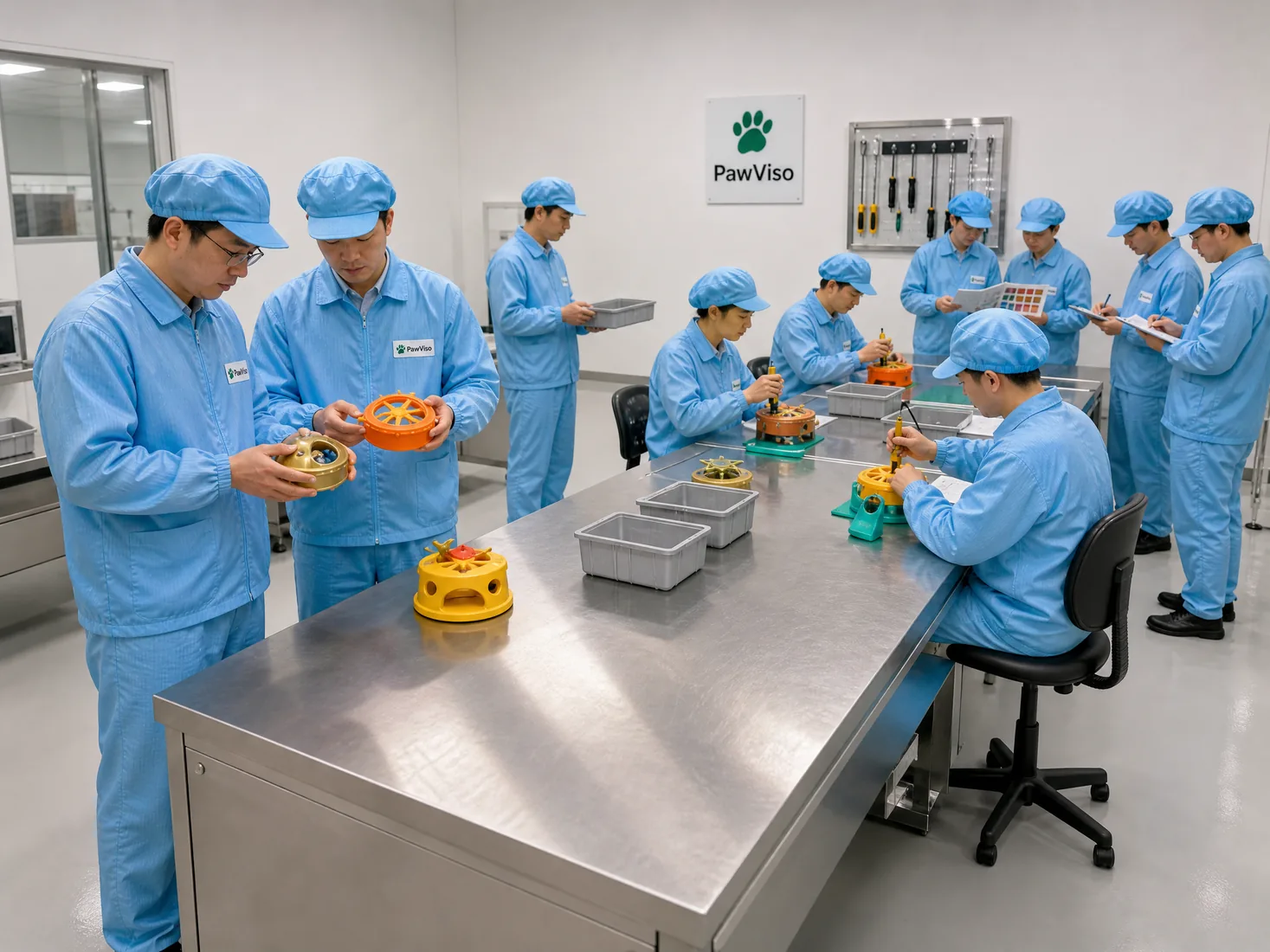
This guide helps U.S.-market retailers, importers, distributors, and private-label teams compare suppliers and make tradeoffs when sourcing pet accessories. It focuses on pragmatic procurement steps — supplier screening, product specifications, material and component evidence, sampling and pilot-run checks, packaging and retail readiness, quality controls, and an actionable buyer plan — without making product-performance or regulatory guarantees. Buyer/importer confirmation of final claims and target-market obligations is required.
Decision framework
Start sourcing with a decision framework that turns options into measurable risks and costs. Use these four decision axes to compare suppliers and SKUs:
- Compliance risk: evidence provided for materials, lab testing, and labeling.
- Production capability: MOQ, lead times, tooling, and flexibility for "dog crate custom size", "dog crate custom made", or other custom work.
- Commercial terms: FOB/CIF, payment terms, price breaks, duty estimates, and freight.
- Retail readiness: packaging format, barcodes, user instructions, and returns strategy.
Decision threshold example: accept suppliers with compliance evidence for at least 80% of required components, lead times under 90 days for standard SKUs, and MOQ aligned with planned sell-through. Use the following compact table to score shortlisted suppliers quickly.
| Decision axis | Score 1–5 (1 low risk/5 high risk) | Threshold to accept |
|---|---|---|
| Compliance evidence | ≤3 | |
| Lead time / capacity | ≤3 | |
| MOQ / commercial fit | ≤3 | |
| Packaging & retail readiness | ≤3 |
Translate scores into go/no-go and sensitivity analysis. For example, a lower scoring supplier with excellent pricing might be acceptable for pilot SKUs but not for national rollouts.
Supplier screening (module 1)
What to verify before requesting samples or contracts.
-
Business identity and capability
- Verify corporate registration, tax ID, and primary production sites.
- Confirm product focus: make sure the supplier regularly manufactures pet hardware, textiles, or furniture — not only miscellaneous items.
- Ask for references from other B2B customers (retail chains, distributors) and documented examples of past private-label projects.
-
Factory audit and sub-suppliers
- Request factory photos, process flow, and third-party audit reports (SMETA/SA8000 or ISO where applicable).
- Get a list of sub-suppliers for critical parts (buckles, metal clips, foam, fabrics, wood panels for crate furniture) and evidence they meet your specifications.
-
Capacity and flexibility
- Confirm core capacities: injection molding, sewing lines, welding, foam cutting, woodwork.
- For custom work like "dog crate custom size", "dog crate custom made", or "dog crate custom furniture", verify MDF/plywood shop capacity and CNC availability.
- Document minimum order quantities (MOQ) for standard SKUs and for custom tooling or furniture panels.
-
Financial and commercial checks
- Request bank reference or trade credit references.
- Evaluate payment terms: typical export terms are 30% deposit / 70% at B/L or L/C; negotiate for better terms if proving long-term business.
Red flags: unwillingness to share manufacturing details, no traceable B2B references, extreme lead-time opacity.
Product specifications & material/component evidence (module 2)
A precise spec reduces product defects and regulatory surprises.
-
Define a technical pack (Tech Pack) per SKU
- Materials list: fabric content and weight (gsm), webbing width and tensile rating, metal alloy (e.g., stainless grade), plastic resin and flame rating, finishes (zinc plating, powder coat).
- Dimensional drawings: full dimensions for "dog crate custom size" or "dog crate custom made" options, tolerances ±mm, and weight targets.
- Functional requirements: load rating for clips, leash tensile and elongation targets, door latch forces for crates, hinge cycles.
- Finish & appearance: color codes (Pantone or Lab), surface texture, stitch patterns, label placement.
-
Component evidence
- Request test certificates from component suppliers: e.g., buckle tensile tests, webbing break strength, foam density reports.
- For textiles, request fiber content certificates and, if required by your shelf claims, flammability and chemical test reports.
- Ask for material safety data sheets (MSDS) and component traceability to sub-suppliers.
-
Labeling and claims
- Define labeling copy, care instructions, country-of-origin marking, and barcode standard (EAN/UPC/ITF).
- For designer or apparel lines such as "designer pet clothes wholesale" and orders like "dog coats bulk buy", specify hang-tags, size grids, and packaging inserts.
-
Example spec checklist | Spec item | Required evidence | |---|---| | Webbing strength | Vendor tensile test report (kN) | | Buckle & clip metal | Material certificate; corrosion test | | Textile content | Fiber analysis report (lab) | | Paint / coating | Salt spray or adhesion test report |
Insist suppliers submit evidence and accept that incomplete evidence increases buyer inspection frequency and insurance costs.
Sampling and pilot-run checks (module 3)
Sampling reduces uncertainty. Design a sampling program tailored to your risk appetite.
-
Sample types and purpose
- Pre-production sample (PPS): confirm design, dimensions, and basic fit.
- Golden sample: final approved sample used as the quality benchmark for full production.
- Production sample: sampled from actual production line after first run to check process consistency.
- Pilot-run: small commercial run (e.g., 200–1,000 units) to validate packaging, labeling, and logistics.
-
Sampling checklist
- Conformity to tech pack: dimensions, materials, stitching, printed artwork, and hardware finish.
- Functional checks: tensile pull for leads and clips, latch operation for crates, zipper cycles for coats, and comfort/fit checks for apparel.
- Safety checks (non-exhaustive): sharp edges, loose small parts, seam integrity. Do not rely on a single visual inspection for safety claims.
-
Testing and lab work
- Select independent test labs for fiber content, flammability (if applicable), heavy metals, and mechanical strength. Attach test methods in the tech pack.
- Document sample lot numbers and production batch identifiers for traceability.
-
Acceptance criteria and rework
- Define acceptable deviation ranges and rework responsibilities.
- For custom items like "dog crate custom furniture", require go/no-go criteria on panel fit, finish, and assembly time.
-
Cost and timeline
- Expect additional costs for tooling, custom molds, or CNC jigs. PPE and durability tests add both time and expense.
- Use a pilot-run table to balance cost vs. risk:
| Pilot-run size | Typical purpose | Risk reduction |
|---|---|---|
| 50–200 | Fit-checks, gross defects | Low–medium |
| 200–1,000 | Packaging checks, logistics | Medium |
| 1,000+ | Market testing / initial retail | High |
Pilot runs are an investment: they reduce rework and recall risk but increase upfront cost.
Packaging and retail readiness (module 4)
Packaging is a selling and logistics driver. For private-label and retail shelf success, define packaging as rigorously as the product.
-
Retail formats
- Bulk pack for distribution vs. retail-ready packaging (hang-sell, window box, clamshell).
- For "custom pet products boxes" specify material grade (kappa test/kraft board weight), die-cut templates, and internal protective elements.
-
Labeling, barcodes, and mark-ups
- Confirm barcode format (UPC/EAN) and placement. For multi-SKU boxes, define master carton labeling and pallet labeling.
- Include care instructions, size charts, legal labels, and company contact info.
-
Packaging durability and transport testing
- Request transit-simulated packaging tests or ISTA 1A/2A where appropriate.
- For heavy items like crates or crate-furniture, consider corner crush and stacking strength tests for master cartons.
-
Sustainability and materials
- If making sustainability claims, require suppliers to provide chain-of-custody documents, recycled content certification, or FSC labels for wood. Buyer/importer confirmation is required before marketing any sustainability claim.
-
Packaging specs table example | Packaging element | Minimum spec | |---|---| | Master carton SWL | ≥ 4x product weight | | Inner protection | Foam / corrugate inserts (specified mm) | | Box material | 200–300 gsm kraft or equivalent | | Labeling | Barcode + product label on two opposing faces |
If you plan to source "designer pet clothes wholesale" or "dog coats bulk buy", include hang-tag design files and instructions for size grading in the pack specification.
Quality control & inspections (module 5)
Operationalize quality controls to protect margins and brand reputation.
-
Incoming quality control (IQC)
- Inspect components on arrival: webbing, buckles, fabrics, foam panels.
- Define acceptance sampling plans (ISO 2859 / ANSI/ASQ Z1.4) and AQL levels. For safety-critical items, use zero-defect or tightened AQLs.
-
In-line and pre-shipment inspections
- In-line checks: monitor critical process points (e.g., welding, seam allowance, hardware attachment).
- Pre-shipment inspection (PSI): full visual, measurement, and function checks on a statistically chosen sample.
-
Functional testing frequency
- Require batch testing for tensile strength and corrosion resistance on production lots — frequency depends on component risk and supplier history.
- For textile apparel orders including "designer pet clothes wholesale", include seam strength and colorfastness tests at pilot and periodic intervals.
-
Non-conformance management
- Establish written non-conformance protocols: remedial actions, rework limits, and rejected goods process (scrap, rework, return to supplier).
- Require root cause analysis and corrective action plans (CAPA) for repetitive failures.
-
Third-party quality assurance
- Use independent inspection companies or labs for objective reporting. Confirm their acceptance by insurer or retailer where applicable.
-
Insurance and recalls
- Carry product liability and recall insurance. Insurers may require specific QA measures. Buyer/importer confirmation is required for coverage limits and claims processes.
Frequently asked questions
Q1: How do I compare prices between suppliers who offer "dog lead wholesale supplier" services? A1: Normalize quotes to landed cost per SKU (unit price + duties + inland freight + inspection + packaging + insurance). Compare based on identical tech packs and MOQ-adjusted unit prices. Include projected returns and quality costs for a full economic view.
Q2: I want a "dog crate custom size" and "dog crate custom made" line — how much custom tooling should I expect? A2: Custom sizes usually require cutting templates, jig fixtures, and possibly tooling for hinges or latches. Expect tooling and setup fees in the low four- to five-figure range depending on complexity. Negotiate amortization of tooling across MOQ and future orders.
Q3: Can I request "dog coats bulk buy" pricing without a design? A3: Suppliers can quote based on material and estimated labor hours, but accurate quotes require a tech pack or preliminary prototypes. Blank-spec bulk buys cost less, but designer or branded apparel from "designer pet clothes wholesale" requires final artwork and size grading.
Q4: What should I require for "custom pet products boxes" to ensure retail readiness? A4: Specify die-lines, board weight, print quality (CMYK + spot), internal protection, barcodes, and transit testing. Require pre-production packaging samples and include packaging acceptance as part of the golden sample criteria.
Conclusion
Sourcing pet products for the U.S. market requires a structured procurement program that balances compliance evidence, manufacturing capability, commercial terms, and retail readiness. Use a clear tech pack and insist on material/component certificates, independent lab tests, defined sampling and pilot runs, and documented packaging specifications — especially when buying custom items such as "dog crate custom furniture", "dog crate custom size" or "dog crate custom made", apparel lines like "designer pet clothes wholesale" and "dog coats bulk buy", or bespoke packaging like "custom pet products boxes". Implement staged quality controls (IQC, in-line, PSI) and use pilot runs to catch issues early. Always validate regulatory and import obligations with competent authorities and document buyer/importer confirmation for final market claims.
Buyer search scope
This guide addresses the following U.S. B2B procurement search phrases. Each phrase is considered in the context of supplier selection, product specifications, samples, packaging and quality evidence rather than as a consumer recommendation.
| Search phrase | Buyer use |
|---|---|
| dog lead wholesale supplier | Primary procurement focus for this guide |
| dog crate custom size | Related specification, supplier or range-planning query |
| dog crate custom made | Related specification, supplier or range-planning query |
| dog crate custom furniture | Related specification, supplier or range-planning query |
| dog coats bulk buy | Related specification, supplier or range-planning query |
| designer pet clothes wholesale | Related specification, supplier or range-planning query |
| custom pet products boxes | Related specification, supplier or range-planning query |
Final CTA — Prepare a focused private label & supplier sourcing sourcing brief with PawViso.
Share your target U.S. channel, product format, estimated order structure, packaging direction and customization requirements for a practical B2B discussion.
Email: info@PawViso.com
WhatsApp: +86 186 8106 4480
Related PawViso resources
- Continue with How to Build a Private Label Pet Product Line to compare a related supplier, sample and quality-control route.
- Browse the PawViso product catalogue to identify product formats for your purchasing brief.
- Follow the PawViso sourcing process and review the B2B buyer FAQ before sharing requirements.
External reference
Use ISO 9001 quality-management systems guidance as general quality-system context, and confirm the product-specific evidence that applies to the selected SKU, channel and target market.