
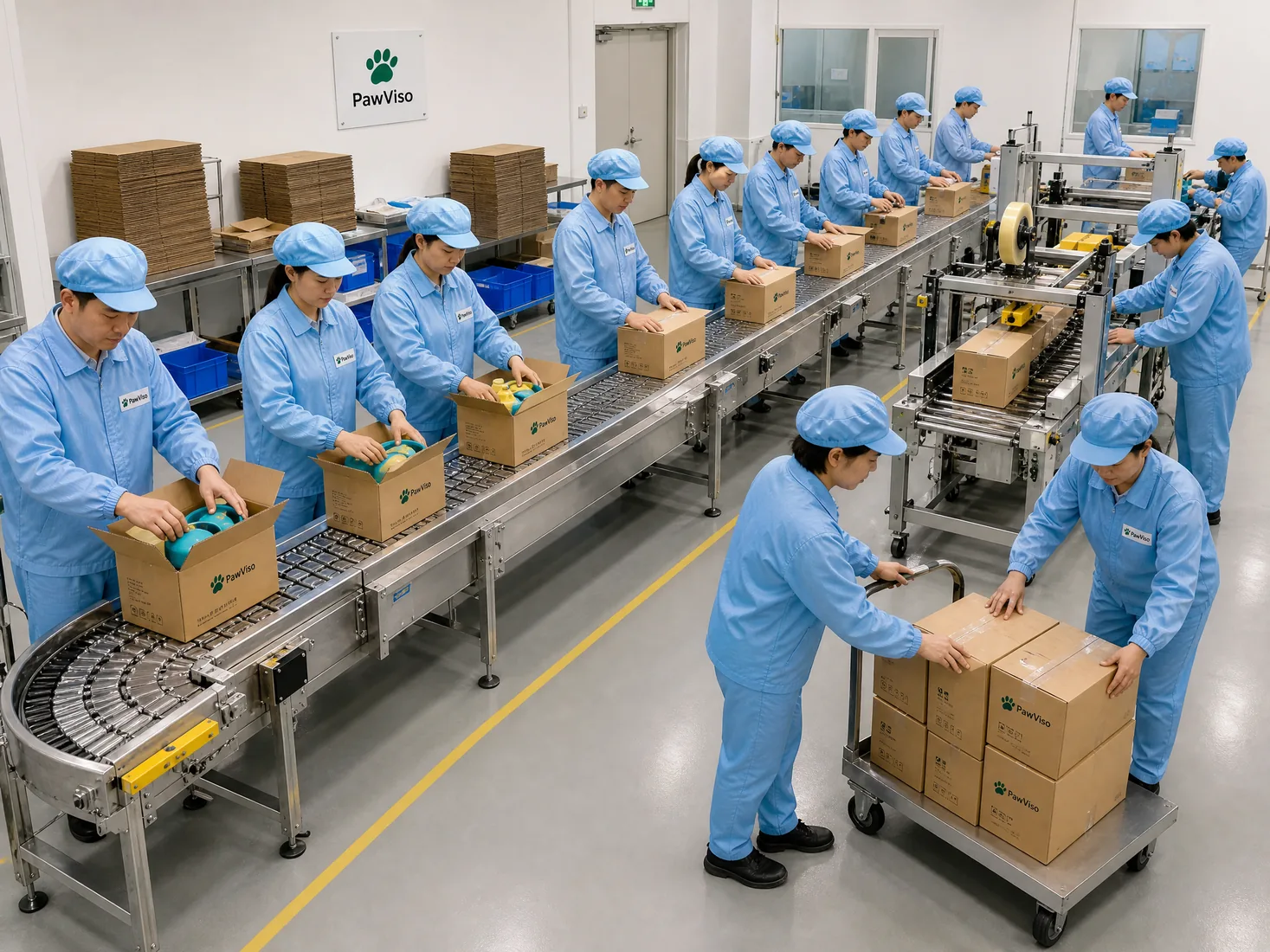
This guide is for U.S. pet-product retailers, importers, distributors, and private-label buying teams who must evaluate suppliers and make buy/no-buy decisions for dog training and waste accessories. It focuses on a clear buying framework that covers supplier screening, product specifications, material/component evidence, sampling or pilot-run checks, packaging/retail readiness, quality-control routines, and the commercial tradeoffs you will face. It does not make product-performance, safety, regulatory, or veterinary guarantees — those require buyer/importer confirmation for final claims and target-market obligations.
Decision framework: how to think about wholesale dog poop bag dispenser sourcing
Start by framing the problem on three levels: market fit, supply risk, and downstream cost.
- Market fit: Which channel (mass retail, specialty pet, e-commerce, subscription) and SKU assortment (single-roll dispenser, mounted dispenser, combo with bags) will match price and margin targets?
- Supply risk: What is the supplier’s capacity, lead-time stability, and contingency for raw-material disruption?
- Downstream cost: Include landed cost, storage and handling, packaging upgrades, returns and shrink, and expected box- or shelf-space allocation.
Use the following checklist as a first filter for any prospective supplier:
- Business credentials: registered company, tax ID, corporate bank account, trade references.
- Production capability: monthly capacity, peak capacity, lead times for small orders and scale-ups.
- Compliance readiness: documented test reports, material declarations, and traceability for components.
- Quality systems: documented inspections, corrective action records, and sample-retention policies.
- Commercial terms: pricing tiers, MOQ, payment terms, INCOTERMS, IP policy for private label.
Keep procurement goals concrete: target landed unit cost, target MOQ, expected return rate, and target on-shelf life. Compare suppliers against these numeric targets rather than vague impressions.
Product specifications: defining the dispenser and kit-level requirements
A clearly written product specification reduces ambiguity during sampling, production, and retail acceptance. For a wholesale dog poop bag dispenser, include the following sections:
- Product name and SKU
- Intended use and target channels
- Dimensional specs: overall size, mounting holes, roll diameter capacity, opening width
- Materials: main body material (e.g., ABS, polypropylene), snap/clip materials, fasteners, adhesive type if included
- Tolerances: ± mm for critical dimensions, color delta in Pantone or Lab
- Performance attributes: dispensing method (tear-off, pop-out), reloading method, full-roll capacity
- Packaging unit: primary pack (retail-ready bag/box), secondary pack (inner carton), master carton
- Labeling: UPC/EAN placement, required regulatory marks, company name and contact
- Shelf life and storage conditions
Include exact material-level requests where relevant (e.g., UV-stabilized polypropylene for outdoor units) and ask suppliers to respond with material data sheets and component traceability.
Compact decision table — choose dispenser style by channel:
| Channel | Dispenser style | Key requirement |
|---|---|---|
| E-commerce | Simple compact dispenser, lightweight | Low weight to reduce shipping cost |
| Specialty pet retail | Premium finish, private-label branding | Higher BOM, retail packaging |
| Mass retail | Standardized size, efficient pack counts | Pallet-friendly cartonization |
Compact decision table — roll compatibility planning:
| Attribute | Minimum buyer spec |
|---|---|
| Max roll diameter | 75 mm |
| Core diameter | 38 mm (or specify universal adapter) |
| Bag width | 120–160 mm |
| Bag thickness range | 10–25 microns |
Specify roll compatibility explicitly to avoid returns when customers receive dispensers that don’t fit common roll sizes.
Material and component evidence: what to request and how to verify
Material declarations and batch traceability are essential to manage quality, claims, and potential recalls. Require this evidence early in supplier screening:
- Material Safety Data Sheets (MSDS/SDS) for each raw material used in the dispenser and any included fasteners or adhesives.
- Polymer identification: resin grade, UV stabilizers, flame-retardant additives (if any).
- Food-contact or skin-contact declarations only if the product documentation implies such claims — otherwise avoid making those claims in marketing.
- Supplier bill of materials (BOM) listing sub-suppliers for critical components (clips, springs, adhesive strips).
- Component drawings and tolerances for molded parts and metal clips.
How to verify evidence practically:
- Request samples with visible lot identifiers. Cross-reference the lot to the supplier’s production log and the material batch ID from the resin supplier.
- Ask for third-party test reports where relevant (e.g., ASTM dimensional testing for plastic parts, chemical-extraction tests if claiming low VOC). Do not rely solely on supplier statements.
- Use random, independent lab testing on pilot shipment lots when the cost of failure is high (e.g., private-label chains, large retailer listings).
Supplier proof-of-evidence checklist:
- SDS for each material: Y/N
- Polymer grade + supplier: Y/N
- Lot/batch traceability: Y/N
- Component CAD and tolerance sheet: Y/N
- Third-party test reports (if claimed): Y/N
Note: Avoid assuming any regulatory status based only on supplier assertions. Buyer/importer confirmation is required for final claims and target-market obligations.
Sampling and pilot-run checks: how to structure tests that reveal real issues
Sampling reduces risk but must be structured. A single pre-production sample is not sufficient for most B2B channels. Design a two-stage process:
-
Prototype and validation sample:
- Approve dimensions, fit, and aesthetic finish.
- Verify packaging artwork fit and UPC placement.
- Test fit with standard rolls of dog poop bags you expect to ship (include your own bag SKUs where possible).
-
Pilot production run (pre-mass production lot):
- Minimum viable production quantity (e.g., 500–1,000 units or as needed to populate a pallet) produced under normal production conditions.
- Full inspection: dimensional checks, functional dispensing cycles (see below), packaging line simulation, carton pack counts.
Functional checks to include during pilot:
- Dispensing cycle: run at least 50 cycles per dispenser to watch for jamming, tearing, or flap misalignment.
- Drop and handle test: simulate consumer handling and shipping drops — typically 1 m drops to hard surface for one axis.
- Environmental exposure: short-term humidity and UV exposure if product is used outdoors.
- Adhesive/fastener adhesion: if adhesive mounts are supplied, check adhesion on multiple substrates and after temperature cycling.
Sampling acceptance criteria should be quantitative: e.g., <1% jams after 50-cycle test, adhesive peel strength >X N on stainless steel after 72-hour dwell.
Table — sampling test matrix (example):
| Test | Sample size | Acceptance criteria |
|---|---|---|
| Dispensing cycles | 30–50 units × 50 cycles | ≤1% jam rate |
| Dimensional audit | 30 units | 100% within specified tolerances |
| Packaging drop test | 10 cartons | No open cartons, no visible damage |
| Adhesive peel | 10 samples | ≥specified N on target substrate |
Use pilot-run feedback to update production tooling tolerances, improve material specification, or alter packaging design before full production.
Packaging and retail readiness: design for logistics and shelf conversion
Packaging serves three functions for B2B buyers: protect the product, reduce inbound handling costs, and present a retail-ready surface. Define packaging at two levels: shipping packaging and retail-ready packaging.
Key packaging considerations:
- Inner pack quantities and master-carton cube optimization. Retailers care about shelf-ready trays and single-SKU cartons that pack predictably on pallets.
- Barcodes and carton labels: UPC/EAN for individual retail units, GS1-128 for pallets if required by the retailer.
- Retail display features: Euro slot, hanging hole reinforcement, or compact shelf-ready carton. Ensure packaging meets channel-specific display constraints.
- E-commerce packaging: include content security (anti-tamper seals), appropriate void-fill to survive parcel shipping, and simple unboxing that reduces returns.
- Environmental and claims language: if you plan to claim recyclability or biodegradable packaging, obtain supplier documentation and local recycling guidance. Do not assert compliance without buyer confirmation for final claims.
Packaging cost tradeoffs table:
| Feature | Buyer benefit | Typical cost delta |
|---|---|---|
| Retail-ready blister card | Higher shelf appeal | +$0.20–$0.50/unit |
| Printed master carton | Easier retail receiving | +$0.02–$0.10/unit |
| Tamper-evident seal | Lower returns | +$0.01–$0.05/unit |
| Eco-friendly films | Marketing value | +$0.03–$0.20/unit |
Work with suppliers to produce a packaging specification sheet that includes dielines, materials, print specs (CMYK and Pantone), and fold/assembly instructions. Request physical pre-production packaging samples and validate them in your inbound-receiving process (scan test, shelf-fit test).
Quality control and inspections: practical regimes for ongoing production
A robust QC plan protects margin and reduces returns. Establish upfront what you or the supplier will inspect and what third-party inspection you require.
Inspection schedule suggestions:
- Pre-production inspection: verify tooling, first-article inspection (FAI), initial batch of components.
- In-process inspection: random checks during molding runs for cycle time deviations, visual defects, and part weight consistency.
- Final random inspection (FRI): AQL sampling for visual and functional defects and 100% check for critical features (e.g., mounting hole placement).
- Post-shipment inspection or verification: container-level checks on documentation and unit counts at destination warehouse.
Define AQL levels and critical defect definitions in the contract. Commonly used AQLs for consumer goods:
- Critical defects (safety/functional failure): 0% tolerance — 100% check or zero acceptance.
- Major defects (functionality, fit): AQL 1.0 or 2.5 depending on channel risk tolerance.
- Minor defects (cosmetic): AQL 4.0 or 6.5 for mass retail; lower for specialty channels.
Operational QC checklist items:
- Dimensional conformity to spec
- Functional dispensing test
- Visual finish and color match
- Packaging integrity and labeling accuracy
- Unit count per retail pack and per master carton
- Palletization and carton labeling for cross-docking
Use independent inspection providers where chain-of-custody or retailer compliance requires it. Require photo reports with timestamps and lot numbers. For private-label work, insist on sample retention and manufacturing record access for at least one year.
Commercial tradeoffs: pricing, MOQ, and IP for private-label plans
Every procurement decision involves tradeoffs. Here are the common ones for dog poop bag dispensers:
- Unit price vs. MOQ: Lower unit prices almost always require higher MOQs. Model landed cost with several MOQ tiers and consider staggered replenishment to meet cashflow needs.
- Lead time vs. tooling cost: Investing in precision tooling reduces long-term reject rates and per-unit cost but adds upfront CAPEX and extends lead time.
- Customization vs. standard stock units: Private-label branding and color matching increase unit cost and lead time. Consider near-standard units with a branded sticker for lower risk.
- Packaging sophistication vs. margin: High-impact retail packaging increases sell-through but reduces gross margin — evaluate via test assortments or A/B tests.
- Onshore finishing vs. shipped finished product: Adding a domestic finishing step (labeling, assembly) reduces import risk and allows leaner inventory, but adds handling cost and complexity.
Price-MOQ decision table (example):
| MOQ tier | Unit price (FOB) | Pros | Cons |
|---|---|---|---|
| 1,000 units | $1.85 | Lower capital, faster test | Higher unit price |
| 5,000 units | $1.55 | Better price, stable supply | Higher inventory risk |
| 20,000 units | $1.35 | Lowest unit cost | Large cash tie-up, longer lead time |
When negotiating, ask suppliers for price breaks at realistic tiers, and require lead-time commitments in writing. For private-label IP, include design ownership clauses and tooling custody agreements in the contract.
Frequently asked questions
Q: What documents should I require to verify a dog poop bag manufacturers usa?
A: Request business registration, tax ID, recent export invoices, product samples with lot numbers, SDS for materials, and a supplier audit or factory photos. For private-label relationships, add tooling and IP assignment documents.
Q: How do I ensure dog poop bag suppliers meet bag-roll compatibility?
A: Provide the supplier with your most common roll specs (core diameter, roll outer diameter, bag width, bag perforation spacing). Require test reports from pilot runs showing compatibility with at least three common roll dimensions.
Q: Are there specific tests I should request from a pet poop bag manufacturer before mass orders?
A: Yes—functional dispensing cycles, dimensional audits, packaging drop tests, and adhesive peel tests if mounts are included. For custom materials, ask for polymer SDS and any independent chemical test reports. Buyer/importer confirmation is required for final claims and target-market obligations.
Q: What are typical lead times and how should I plan safety stock?
A: Lead times vary by production capacity and customization; typical ranges are 6–12 weeks for standard runs and longer for custom tooling. Build safety stock to cover lead time plus transit and inspection windows; a common approach is 1.5–2× average weekly demand while you validate supply stability.
Conclusion
Sourcing a wholesale dog poop bag dispenser for the U.S. market is a systems exercise: define precise product specs, require material and component evidence, execute staged sampling and pilot runs, design packaging for the intended channel, and implement a rigorous QC program. Address commercial tradeoffs explicitly—MOQ, tooling, lead time, and packaging choices drive landed cost and retail performance. Use quantitative acceptance criteria for sampling and pilot production, insist on traceability and documentation, and include specific contractual terms on inspection, tooling custody, and IP for private-label projects.
This guide supplies the buying framework and checklists needed to move from supplier outreach to a validated production run. Remember: buyer/importer confirmation is required for any final claims and for compliance with target-market obligations.
Buyer search scope
This guide addresses the following U.S. B2B procurement search phrases. Each phrase is considered in the context of supplier selection, product specifications, samples, packaging and quality evidence rather than as a consumer recommendation.
| Search phrase | Buyer use |
|---|---|
| wholesale dog poop bag dispenser | Primary procurement focus for this guide |
| dog poop bag manufacturers usa | Related specification, supplier or range-planning query |
| pet poop bag manufacturer | Related specification, supplier or range-planning query |
| dog pee pad supplier | Related specification, supplier or range-planning query |
| puppy pad manufacturers usa | Related specification, supplier or range-planning query |
| dog poop bag suppliers | Related specification, supplier or range-planning query |
| dog poop bags bulk buy | Related specification, supplier or range-planning query |
Final CTA — Prepare a focused dog training & waste accessories sourcing brief with PawViso.
Share your target U.S. channel, product format, estimated order structure, packaging direction and customization requirements for a practical B2B discussion.
Email: info@PawViso.com
WhatsApp: +86 186 8106 4480
Related PawViso resources
- Continue with How to Compare Cost per Use for Dog Training Pads to compare a related supplier, sample and quality-control route.
- Browse the PawViso product catalogue to identify product formats for your purchasing brief.
- Follow the PawViso sourcing process and review the B2B buyer FAQ before sharing requirements.
External reference
Use ISO 9001 quality-management systems guidance as general quality-system context, and confirm the product-specific evidence that applies to the selected SKU, channel and target market.