
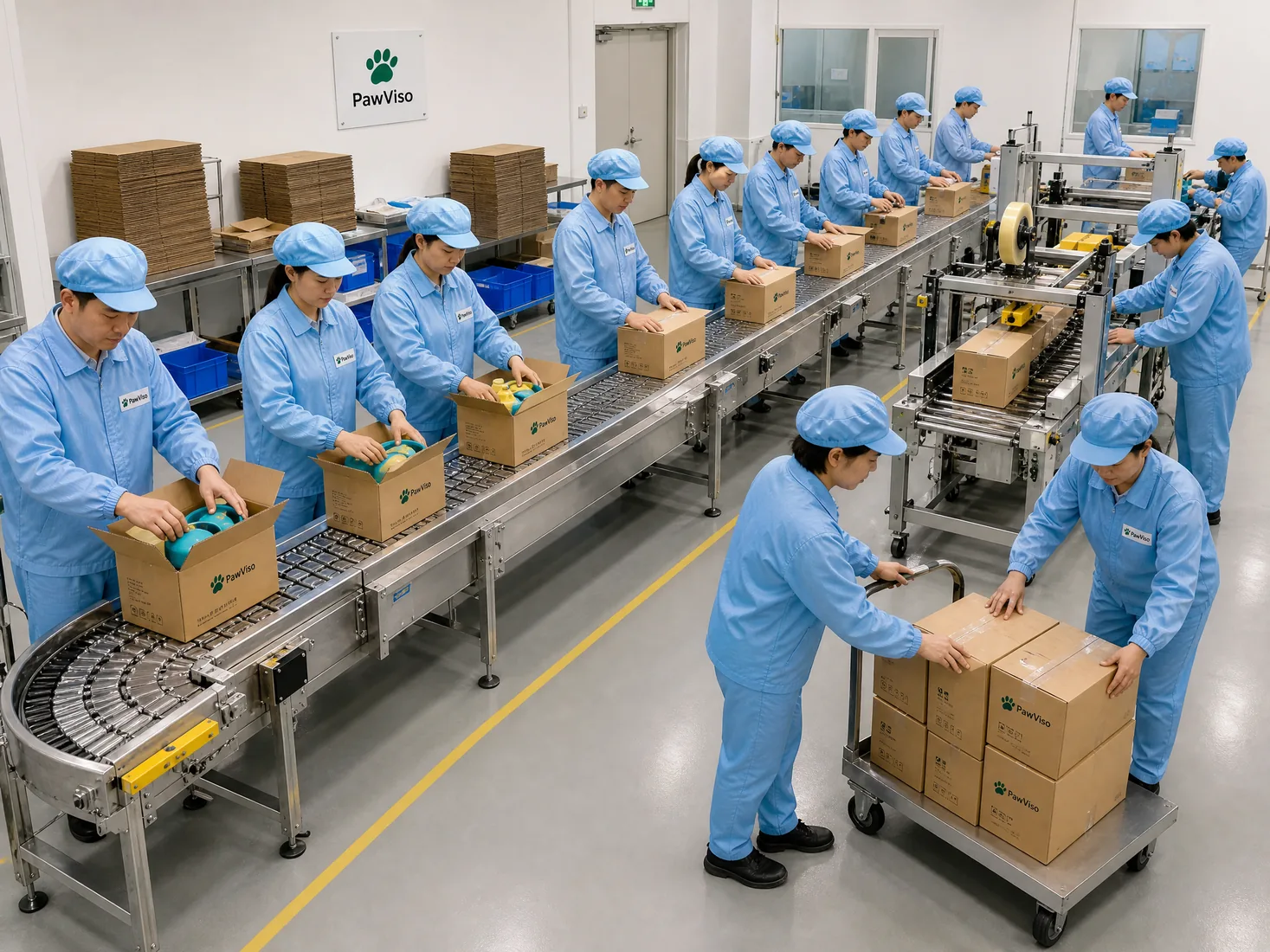
This guide is written for U.S.-market pet retailers, importers, distributors, and private-label buying teams who need a practical, procurement-focused framework to source dog poop bag holders and dispensers at scale. It compares supplier evidence, material and component checks, sampling, packaging readiness, quality-control practices, and the common commercial tradeoffs that affect margin, lead time, and shelf appeal. The guidance is practical and non-prescriptive; buyer/importer confirmation is required for final claims and target-market obligations.
Decision framework: how to prioritize needs and frame supplier conversations
Start every sourcing project by mapping three decision layers: commercial targets, product fundamentals, and compliance/market-entry requirements.
- Commercial targets: target landed cost per unit, minimum order quantity (MOQ), reorder cadence, retail price tiers, and desired gross margin. These drive material choices (injection-mold ABS vs. stamped stainless), packaging investment, and whether to pursue custom tooling.
- Product fundamentals: primary function (dispense single-roll vs. multi-roll; refill cartridge vs. free-roll), attachment method (clip, carabiner, leash loop), closure type (snap, magnetic), and desired user experience (refill speed, ease of access).
- Compliance/market-entry: labeling, claim substantiation (e.g., “biodegradable accessory” vs. “contains biodegradable bags”), and import documentation. Confirm regulatory obligations with legal/import counsel; do not assume any sourcing partner’s claim covers your obligations.
Use a simple decision matrix: rank urgency (speed-to-market), scale (units/year), and differentiation (private label vs. commodity). Prioritization example:
- High urgency + low differentiation → prioritize suppliers with existing tooling, short lead times, and ready-made SKUs.
- Low urgency + high differentiation → prioritize suppliers offering dog poop bag holder custom tooling and design control.
Before quoting, ask suppliers for: lead time from PO to FOB, MOQ, tooling charges (if applicable), sample policy, and standard QC acceptance criteria. Keep these items standardized across RFQs to enable apples-to-apples comparisons.
Supplier screening and evidence checklist
Supplier validation moves beyond price. For wholesale dog poop bag holder sourcing, require documented evidence for the following items before serious negotiation:
- Company profile: incorporation documents, years in business, export experience to the U.S.
- Product range & specialization: do they focus on pet accessories or general plastic/metal goods?
- Production capacity & lead times: monthly output for the SKU family and typical seasonal variability.
- Quality systems: inspection partners, in-house QA staff, and ISO certifications if present.
- Testing & material evidence: lab reports for plastics/metals, flammability (if applicable), and claim substantiation for any environmental marketing terms.
- References & verifiable customer list (redacted if required): existing U.S. buyers, including contactable references.
Use the table below as a compact supplier-evidence checklist you can attach to RFQs and site audits.
| Evidence requested | What to accept as proof |
|---|---|
| Company registration & export license | Scanned certificate of incorporation; export license; recent business bank reference |
| Production capacity | Capacity schedule, photos of lines, monthly output logs |
| Quality management | QC manual; inspection plans; third-party audit report (if any) |
| Material/test reports | Material certificates (resin grade), third-party lab tests for compostability/biodegradability claims |
| Reference customers | Contact info for 2–3 buyers in the U.S. (or distributor agreements) |
Do on-site audits for any high-value tooling or when scaling a new factory relationship. If an on-site visit is infeasible, require a third-party inspection report and multiple sample rounds before production.
Product specifications and material/component evidence
Define clear technical drawings and a materials matrix. For private label or custom dog poop bag holders, small specification errors compound in volume orders.
Key specification elements:
- Dimensional drawing with tolerances (± mm). Include functional dimensions: roll diameter, exit slot width, clip aperture.
- Material callouts: polymer grade (e.g., ABS, polypropylene, TPE for flexible parts), metal alloy and finish for clips or carabiners, and recommended resin codes.
- Mechanical requirements: impact resistance, tensile strength for straps, and expected lifetime (cycles of opening/closing).
- Aesthetic finishes: color tolerance (Pantone or color chip), surface texture, and plating or painting requirements.
- Chemical contact notes: if dogs’ waste bags are stored inside, specify any odor-resistant treatments and whether any additives are allowed.
When suppliers assert biodegradability or compostability for components or included bags, require supporting test reports compliant with recognized standards (e.g., ASTM D6400, EN 13432) for the bag product itself, and documentation that the holder components will not negate the bag’s claim due to additives or contamination 1. For labeling and marketing claims like “biodegradable” or “compostable,” follow local guidance and confirm with counsel and testing labs; buyer/importer confirmation is required for final claims 3.
Material comparison table for common dog poop bag holder constructions:
| Material | Pros | Cons | Typical wholesale use-case |
|---|---|---|---|
| Injection-molded ABS/PP | Low unit cost at scale, consistent finish, easy color matching | Higher tooling cost; brittle in cold if low grade | Most commodity dispensers and custom-brand holders |
| TPE (overmold for grips) | Soft-touch areas; good grip | Adds process complexity; higher per-unit cost | Premium handheld dispensers |
| Stainless steel (stamped or turned) | Durable, premium look | Higher weight and cost; packaging considerations | Upscale metal dispensers or leash-hook combos |
| Recycled/resin blend | Sustainability claim support (if certified) | Variable performance; requires supplier traceability | Mid-tier eco-focused SKUs |
Also consider complementary suppliers: many importers bundle dog poop bag holder wholesale with roll bags. Maintain separate RFQs for dog pee pad manufacturers usa and biodegradable dog waste bag manufacturer if you plan to source bags and holders together; quality and certification paths differ.
Sampling, pilot-run checks, and acceptance criteria
Samples are the practical laboratory for procurement decisions. Create a sampling plan upfront and insist on the following sample types and checks:
- Pre-production sample (PPS): a physical sample produced on the intended tooling to check fit, finish, color, and function. For custom orders, PPS should come before final tooling sign-off.
- First article inspection (FAI): an inspection report and measurement sheet for the first production pieces against the drawing tolerances.
- Lot inspection sample: for bulk shipments, require a statistically valid random sample plan (e.g., AQL 2.5/4.0) and define rejection thresholds for critical and major defects.
- Pilot-run: a small production batch (e.g., 1–5% of intended first PO or a fixed number such as 500–1,000 units) to test downstream issues—packaging, labeling, and logistics.
When evaluating samples, use a checklist scored numerically to avoid subjective bias. Example checklist items:
- Dimensional accuracy (pass/fail per tolerance)
- Functional tests (clip strength, axle rotation smoothness)
- Visual defects (scratches, color mismatch)
- Packaging fit (unit in retail package, hanger hole alignment)
For dog poop bag dispenser custom tooling, require updated tooling trial reports and photos documenting ejection quality and cycle time. For dog poop bag dispenser bulk orders using existing tooling, require batch traceability and a record of last maintenance.
Remember that sample turnaround time and shipping methods affect schedule: air-shipped PPS for design sign-off vs. sea-shipped pilot for packaging fit tests.
Packaging, retail readiness, and merchandising considerations
Packaging is no longer just protection; it’s a retail signal and a logistics cost center. Define packaging requirements in your product specification and include them in RFQs as separate line items.
Key packaging dimensions:
- Retail-ready packaging: header card, blister, or polybag with hang hole
- Case pack quantities and inner pack configuration
- Master carton dimensions, gross weight, and expected cubic meters per pallet
Evaluate packaging against:
- Unit protection during sea transit (tests for compression and moisture)
- Retail display needs (shelf vs. pegboard)
- Barcode placement and label zones for retail compliance
- Sustainability goals: % recycled content in packaging, recyclable mono-material design
Packaging table: cost vs. retail impact
| Packaging type | Unit cost impact | Retail visibility | Notes |
|---|---|---|---|
| Polybag + header card | Low | Moderate (peg) | Cheapest; good for mass-market |
| Blister card | Medium | High (clear product visibility) | Higher cost; better perceived value |
| Recyclable mono-poly sleeve | Medium | Moderate | Supports eco messaging if certified |
If you are private labeling, provide the supplier with print-ready dielines, barcode data, and required legal copy. For environmental claims on packaging or the product (e.g., “contains recycled plastic” or “biodegradable bag included”), require supplier-supplied certificates and third-party verification; buyer/importer confirmation is required for any marketing statement 3.
Also plan for retail-season inventory rhythm: retail promos and holiday peaks will affect lead-time planning—discuss expedited tooling or air freight contingencies with suppliers in the RFQ stage.
Quality control, testing, and commercial tradeoffs
Set quality standards and acceptance criteria before production. Typical parameters for dog poop bag holders include functional durability (number of open/close cycles), clip retention force, finish consistency, and packaging integrity.
Quality control mechanisms:
- Incoming QC for components (clips, screws, magnets)
- In-line checks during production: first-10 and every-100 sampling or statistical process control (SPC)
- End-of-line inspections and AQL acceptance (define critical, major, minor defects)
- Pre-shipment inspection (PSI) checklist covering packing, count, and product function
If you plan to source dog poop bag dispenser bulk from multiple factories, implement standardized QC forms and accept third-party inspection agencies. For components sourced from sub-suppliers (e.g., carabiners, metal clips), ask for material certificates and consider spot chemical analysis on arrival.
Commercial tradeoffs to evaluate:
- Price vs. tooling investment: a custom dog poop bag holder custom design requires tooling costs that amortize over higher volumes; calculate per-unit tooling amortization at expected reorder levels.
- Lead time vs. inventory holding cost: faster lead times may command premium pricing; compare cost of air freight vs. safety stock.
- Differentiation vs. MOQ: unique finishes or added features usually increase MOQ and per-unit price.
- Sustainability claims vs. supply complexity: biodegradable bag inclusion or recycled components increases supplier qualification complexity and may lengthen lead time.
Allocate risk reserves for initial orders: typical private-label buys include a contingency for 3–10% higher scrap during first production runs. Define clear non-conforming goods procedures in the purchase agreement: remedy options, rework allowances, and financial penalties where appropriate.
Frequently asked questions
Q: What minimum documentation should I require before placing a first bulk order? A: Company registration, export capability, material certificates, sample approvals (PPS/FAI), production capacity statement, and written QC acceptance criteria. Buyer/importer confirmation required for final legal/labeling claims.
Q: Can I combine procurement of bags and holders with a single supplier? A: Yes in some cases, but verify the supplier’s competence in both product categories. For items like dog pee pad manufacturers usa or biodegradable dog waste bag manufacturer, separate specialized suppliers may be necessary; require evidence of relevant testing and certifications.
Q: How should I set MOQ expectations for private-label holders? A: Tooling-heavy custom designs usually require higher MOQs to amortize tooling; commodity SKUs with existing tooling can offer low MOQ but limited differentiation. Negotiate tooling amortization, payment terms, and trial-pilot quantities.
Q: What inspection standard is recommended for pre-shipment checks? A: Use an AQL plan tailored to your defect tolerance (commonly AQL 2.5 for major defects, AQL 4.0 for minor). Define critical defects as those that affect safety or merchandising function. Independent third-party PSI is common for importers.
Conclusion
Sourcing dog poop bag holder wholesale for the U.S. market requires a structured approach that aligns commercial targets with product technical detail and supplier capabilities. Use a consistent RFQ and evidence checklist, insist on meaningful samples and pilot runs, and define explicit QC and packaging specifications. Evaluate commercial tradeoffs—tooling investment, lead-time vs. inventory, differentiation vs. cost—and quantify them before committing. For companion items (bags, pee pads), treat sourcing and certification separately: dog pee pad manufacturers usa and biodegradable dog waste bag manufacturer qualifications follow different testing pathways. Finally, verify all market and labeling claims through your legal and compliance team; buyer/importer confirmation is required for final claims and target-market obligations.
Additional next steps for buyers:
- Assemble a one-page sourcing brief (target price, MOQ, target delivery window, main specs) and distribute to prequalified suppliers.
- Book a tooling/PPS calendar and schedule the first article inspection.
- Contract a pre-shipment inspection provider and agree AQL and rework rules in the PO.
Buyer search scope
This guide addresses the following U.S. B2B procurement search phrases. Each phrase is considered in the context of supplier selection, product specifications, samples, packaging and quality evidence rather than as a consumer recommendation.
| Search phrase | Buyer use |
|---|---|
| dog poop bag holder wholesale | Primary procurement focus for this guide |
| dog poop bag holder custom | Related specification, supplier or range-planning query |
| dog poop bag holder bulk | Related specification, supplier or range-planning query |
| dog poop bag dispenser custom | Related specification, supplier or range-planning query |
| dog poop bag dispenser bulk | Related specification, supplier or range-planning query |
| dog pee pad manufacturers usa | Related specification, supplier or range-planning query |
| biodegradable dog waste bag manufacturer | Related specification, supplier or range-planning query |
Final CTA — Prepare a focused dog training & waste accessories sourcing brief with PawViso.
Share your target U.S. channel, product format, estimated order structure, packaging direction and customization requirements for a practical B2B discussion.
Email: info@PawViso.com
WhatsApp: +86 186 8106 4480
Related PawViso resources
- Continue with How to Compare Cost per Use for Dog Training Pads to compare a related supplier, sample and quality-control route.
- Browse the PawViso product catalogue to identify product formats for your purchasing brief.
- Follow the PawViso sourcing process and review the B2B buyer FAQ before sharing requirements.
External reference
Use ISO 9001 quality-management systems guidance as general quality-system context, and confirm the product-specific evidence that applies to the selected SKU, channel and target market.