
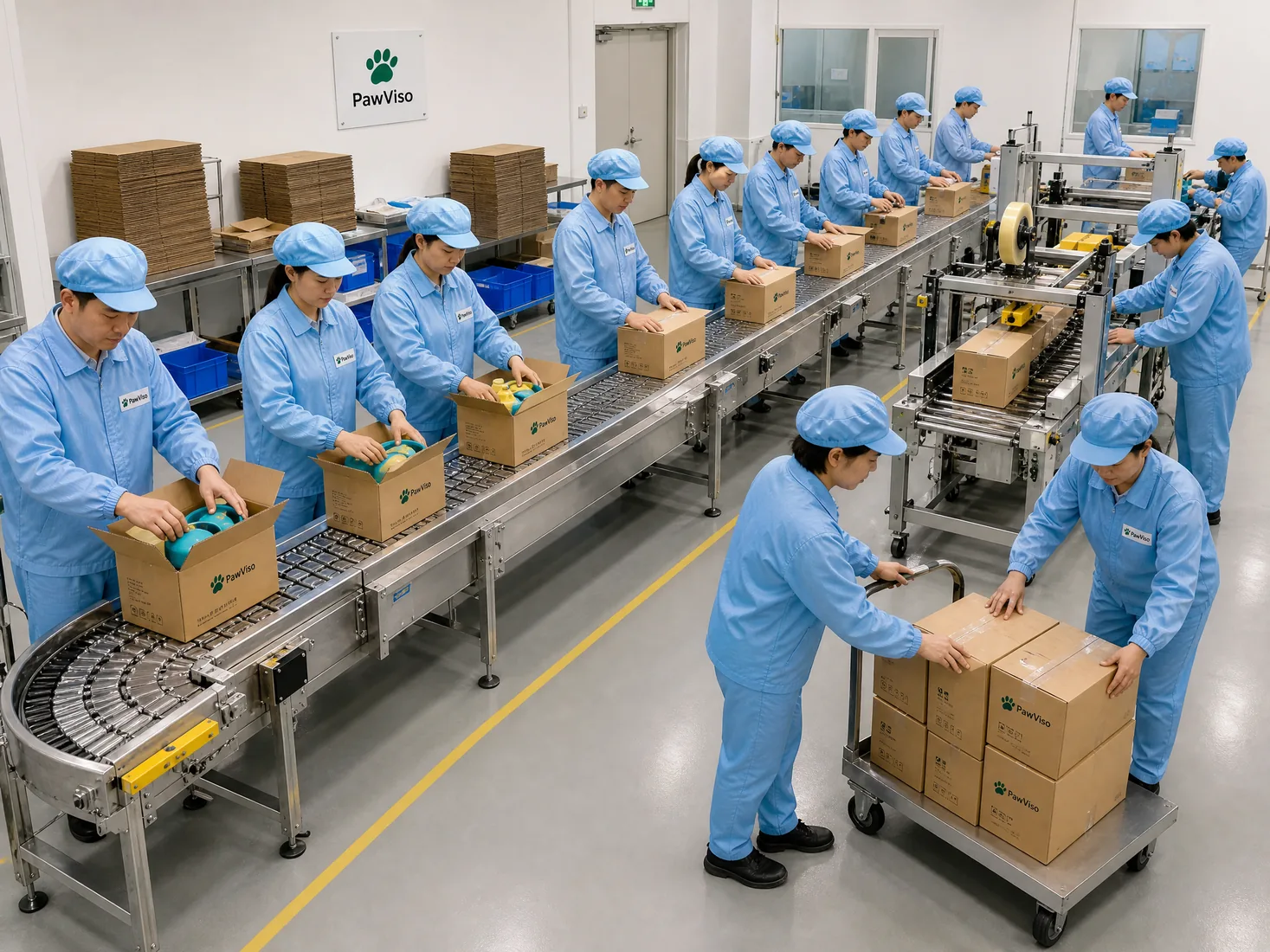
This guide is written for U.S.-market pet-product retailers, importers, distributors, and private‑label buying teams who need a practical procurement playbook for puppy pads and related waste accessories. It focuses on commercial decision points: supplier screening, product specifications, material/component evidence, sampling and pilot-run checks, packaging and retail readiness, quality-control processes, commercial tradeoffs, and a concrete buyer action plan. This guide does not make product-performance, safety, veterinary, or regulatory guarantees. Buyer or importer confirmation is required for final claims and to meet target‑market obligations.
Decision framework: purchase drivers and tradeoffs
Start by aligning commercial objectives. Each sourcing decision should reflect one or more of these buyer priorities:
- Unit economics and landed cost targets (unit price, MOQs, freight, duties, taxes, brokerage).
- Positioning (value pack vs. premium absorbency, private‑label branding, sustainable claims).
- Channel constraints (big-box, online, subscription, multi-pack retail shelf size).
- Time to market (supplier lead time, sample cycle, certification turnarounds).
- Risk management (quality variance, recalls, compliance, supplier financial stability).
Common tradeoffs buyers accept:
- Lower unit price vs. higher variability and returns.
- Faster shipping vs. higher freight cost or smaller order economics.
- Strong sustainability claims vs. higher material cost and supply complexity.
Quick decision checklist (use when comparing offers):
- Does the supplier meet MOQ and lead-time targets?
- Are tested absorbency ranges and leak-through metrics provided?
- Is packaging retail-ready for your channel, or will you need repacking?
- What QC and inspection steps are included in the quote?
- Is there a documented claims and recall process?
This framework helps prioritize the five procurement modules below.
Supplier screening and commercial due diligence
What to require up front
- Company credentials: full legal name, address, factory locations, production capacity, export history to the U.S., and W-8/W-9 information if required.
- Business licenses and factory audit reports (SMETA, BSCI, or client-specific audits).
- Export documentation experience: HTS codes used for similar shipments and familiarity with U.S. import rules.
- Minimum order quantity (MOQ), standard lead times, sample policy, and payment terms.
- Warranty, product liability insurance coverage (amount and insurer), and recall policy.
Red flags
- Unwillingness to provide factory photos, capacity figures, or a third‑party audit.
- Single-line contact or unverifiable trade references.
- Requests for unusually large deposits without staged milestones.
Supplier evidence matrix (compact table)
| Evidence requested | Acceptable proof | Why it matters |
|---|---|---|
| Factory existence | Business license + factory photos + production capacity statement | Verifies ability to meet volume and continuity |
| Audit status | Recent third‑party audit summary (6–18 months) | Labor/compliance and process maturity signal |
| Export experience | References for U.S. clients, past HTS codes | Smooth customs clearance and paperwork accuracy |
| Insurance | Product liability certificate showing limits | Commercial risk mitigation |
Commercial negotiation levers
- MOQ vs. unit price: ask for price tiers at multiple MOQs to model cash and inventory tradeoffs.
- Payment milestones: sample payment, partial deposit, balance on BL or after inspection.
- Add testing and inspection as separate line items to clearly budget QC.
Include "dog bandanas custom" plans if you intend to bundle pads with accessory SKUs—ask suppliers about accessory lead times and small-run customization costs.
Product specifications and performance metrics
Define objective, testable product specs in the tech pack and contract. Avoid vague terms like “high absorbency” without numbers.
Core specs to mandate
- Dimensions and tolerances (length × width × thickness; acceptable variance ± mm).
- Layer structure: top sheet (material and hydrophilicity), acquisition layer, absorbent core composition (SAP percentage vs. fluff), and bottom leak-proof layer material and thickness (g/m²).
- Absorbency metrics: total capacity (mL or grams of saline), strike‑through time (seconds), and retention under pressure (mL retained at specified pressure). Use industry common liquids (0.9% saline) for repeatability.
- Leakage and lateral wicking: performance under weight and agitation cycles.
- Odor control: if using additives or activated carbon, require specifications and test methodology.
- Biodegradability or compostability claims: require third‑party certification details and disintegration test methods.
- Packaging counts and pack sizes (single pads, multi-pack, roll options).
Absorbency decision table (compact)
| Positioning | Core composition | Typical absorbency target | Commercial notes |
|---|---|---|---|
| Economy retail | Higher fluff, low SAP | 300–600 mL | Lower cost, bulk packaging; more bulk and weight |
| Mid-market | Balanced SAP/fluff | 600–1,200 mL | Good retail acceptance; medium weight |
| Premium | High SAP content | >1,200 mL | Higher cost, thinner pads, premium claims possible |
Spec sheet best practices
- Include testing methods and pass/fail criteria for each metric.
- Specify sampling plans (e.g., AQL for finished goods) and acceptance thresholds.
- Require traceability: lot codes on each pallet and inner pack.
Respect that claims for biodegradability, compostability, and VOCs require buyer/importer confirmation and documented supporting evidence from an accredited lab.
Material and component evidence; regulatory considerations
Materials commonly used and what to verify
- Top sheet: usually polypropylene nonwoven (spunbond or SMS). Request melt-blown details if present.
- Acquisition layer: airlaid pulp, additional nonwovens — request fiber content and bonding details.
- Absorbent core: cellulose fluff with superabsorbent polymer (SAP). Request SAP % by weight and source (e.g., sodium polyacrylate).
- Backsheet: polyethylene film or PE/PP laminates. For reusable or flushable claims, get full testing evidence.
- Adhesives, inks, and odor-control additives: request full composition and MSDS.
Material evidence checklist (compact)
| Component | Evidence to request | Typical supporting docs |
|---|---|---|
| SAP | % by weight, supplier name, safety data | SAP spec sheet, MSDS |
| Nonwovens | Fiber type, basis weight (g/m²), supplier | Technical spec sheet, test certificates |
| Film backsheet | Thickness (µm), WVTR if relevant | Material spec, lab test |
| Additives/odors | Chemical composition, allergen info | MSDS, VOC tests |
Regulatory and safety notes
- There is no single U.S. federal “puppy pad” certification. For U.S. imports, ensure compliance with applicable federal and state rules (e.g., hazardous substances, chemical content limits). Buyer/importer confirmation is required for final claims and compliance.
- If making biodegradability or compostability claims, require accredited test results (e.g., ASTM/ISO standards) and the exact certification body.
- For private-label packaging with child-safety claims or choking warnings, validate labeling requirements per channel and state.
- If marketing as flushable or septic-safe, require independent septic-system testing; these claims are high risk and need strong evidence.
Document chain of custody and raw-material traceability so you can address any claims swiftly. Keep supplier declarations and MSDS on file in your ERP or quality system.
Sampling, pilot runs, and in‑line testing
Sampling strategy
- Request three sample stages: proto/sample (visual and dimensions), lab samples (for standardized tests), and a short pilot production run for packaging and line-speed checks.
- Define sample quantity per stage: proto (1–3), lab (6–12 packs or 30–50 pads per SKU), pilot run (1,000–5,000 units depending on complexity).
What to test in lab samples
- Absorbency (capacity, strike-through, rewet/retention).
- Tensile/peel strength for any bonded seams or taped edges.
- Film integrity under abrasion and flex cycles.
- VOC emissions if odor-control is claimed.
- Packaging seal strength and barcoding verification.
Pilot-run checks
- Fill and seal efficiency: does your packaging line handle the packs without repacking?
- Labeling and UPC verification: test scanner read rates across channels.
- Palletization and unit loads: ensure pallet height, wrapping, and box strength match your warehouse systems.
- Returns simulation: test how the product performs in stressed transit or customer returns scenarios.
Acceptance criteria and dispute handling
- Define pass/fail numeric thresholds in the purchase agreement.
- For pilot runs, specify a remediation plan and time-bound corrective actions.
- Include price and lead-time penalties for failing critical specs if appropriate.
Sampling table: sample plan example
| Stage | Purpose | Qty recommended | Typical timeline |
|---|---|---|---|
| Proto | Confirm design, dimensions | 1–3 packs | 1–2 weeks |
| Lab | Independent performance testing | 30–50 pads / per SKU | 2–4 weeks (including lab turnaround) |
| Pilot | Validate packaging, line speed | 1,000–5,000 units | 3–8 weeks (production + inspection) |
Always pre-budget third‑party lab costs and third‑party inspection (pre-shipment) into landed cost models.
Packaging, retail readiness, logistics, and quality-control processes
Packaging and retail considerations
- Retail-ready packaging: indicate whether inner packs, display-ready cartons, or shelf-ready trays are required. Provide dielines, barcode placement, and merchandising dimensions.
- Multi-pack SKUs: confirm weight and cube for POS and shipping efficiency. High absorbency pads are denser and raise freight costs.
- Private-label printing: request PMS color matches, proofing timelines, and plate charges. Ask about minimum print runs for customized inner packs.
- Insert and promotional materials: clarify local language and compliance for claims and labeling.
Logistics and lead-time factors
- Shipping modes and cost tradeoffs: ocean (cheaper but longer), air (expensive but faster), and door-to-door consolidation options.
- Duty classification: agree HTS code early to estimate U.S. duty rates. Incorrect classification can materially affect landed cost.
- Incoterms: negotiate who pays for inspection, storage, demurrage, and insurance at each stage.
Quality control program elements
- Incoming material inspection at factory for critical components (SAP, nonwovens, films).
- In-process checks with agreed sampling plans (e.g., specific checks per production shift).
- Final random inspection (pre-shipment) by a third-party inspection firm with photo evidence and lab test result attachments if required.
- Lot traceability: ensure production lot numbers on packs and pallets to isolate any field issues.
Typical QC acceptance table (example)
| Stage | Who performs | Key checks | Accept/reject criteria |
|---|---|---|---|
| Incoming raw materials | Supplier QC | SAP %, nonwoven bw, film thickness | Match material specs ± tolerance |
| In-process | Factory QC | Layer alignment, glue spots, pad count | Visual defects ≤ agreed AQL |
| Final inspection | 3rd-party inspector | Packaging integrity, barcode read, random absorbency tests | AQL per contract; critical fails = reject |
Plan for regular QC reviews (monthly or quarterly) and include a clause for supplier corrective action plans (SCARs) in contracts.
Commercial tradeoffs to model
- Unit price vs. freight+inventory: higher unit prices may be justified if they reduce freight and inventory carrying costs.
- High SAP content vs. cost and supply volatility: SAP suppliers may have capacity constraints affecting lead times and pricing.
- Custom printed packaging vs. generic inner packs: custom packs improve shelf presence but increase lead time and MOQ.
Frequently asked questions
Q: What order quantities are typical for puppy pads wholesale? A: Typical MOQs vary by supplier and customization. Off-the-shelf SKUs can have lower MOQs (a few thousand units), while private‑label custom packs and printing often require larger MOQs. Always request tiered pricing at several MOQ levels.
Q: How do I verify absorbency claims from a supplier? A: Require lab test reports with defined methods (e.g., saline absorption, strike-through time, retention under pressure). Use independent third‑party labs for verification and include the testing standard and sample size in the contract.
Q: Can suppliers handle bundling pads with accessories like dog bandanas custom orders? A: Many manufacturers or co-packers will handle accessory bundling, but lead times and MOQs for custom-printed bandanas differ from pads. Request separate quotes and confirm packaging and labeling rules to avoid repacking costs.
Q: What are common causes of supply delays and how can I mitigate them? A: Common causes include raw-material shortages (SAP, nonwovens), printing/packaging bottlenecks, and logistics congestion. Mitigate by qualifying multiple suppliers, maintaining safety stock, staggered production schedules, and early ordering for seasonal peaks.
Conclusion
Sourcing puppy pads wholesale for the U.S. market is a structured procurement exercise: define measurable product specifications, verify materials with documentation, validate performance through staged sampling and pilot runs, and lock in packaging and QC processes that match your channel needs. Use supplier screening criteria and a clear commercial checklist to reduce risk, and quantify the tradeoffs between unit cost, logistics, and lead time before signing contracts. All claims about product performance, regulatory compliance, biodegradability, or safety should be supported by documented third‑party evidence; buyer/importer confirmation is required to meet final market obligations. Start with a concise tech pack, a supplier evidence request list, and a sampling schedule—those three documents let you move from vendor quotes to a vetted pilot run with confidence.
Buyer search scope
This guide addresses the following U.S. B2B procurement search phrases. Each phrase is considered in the context of supplier selection, product specifications, samples, packaging and quality evidence rather than as a consumer recommendation.
| Search phrase | Buyer use |
|---|---|
| puppy pads wholesale | Primary procurement focus for this guide |
| puppy pads bulk | Related specification, supplier or range-planning query |
| pet supplies wholesale | Related specification, supplier or range-planning query |
| pet supplies bulk | Related specification, supplier or range-planning query |
| pet products bulk | Related specification, supplier or range-planning query |
| dog bandanas custom | Related specification, supplier or range-planning query |
Final CTA — Prepare a focused dog training & waste accessories sourcing brief with PawViso.
Share your target U.S. channel, product format, estimated order structure, packaging direction and customization requirements for a practical B2B discussion.
Email: info@PawViso.com
WhatsApp: +86 186 8106 4480
Related PawViso resources
- Continue with How to Compare Cost per Use for Dog Training Pads to compare a related supplier, sample and quality-control route.
- Browse the PawViso product catalogue to identify product formats for your purchasing brief.
- Follow the PawViso sourcing process and review the B2B buyer FAQ before sharing requirements.
External reference
Use ISO 9001 quality-management systems guidance as general quality-system context, and confirm the product-specific evidence that applies to the selected SKU, channel and target market.