
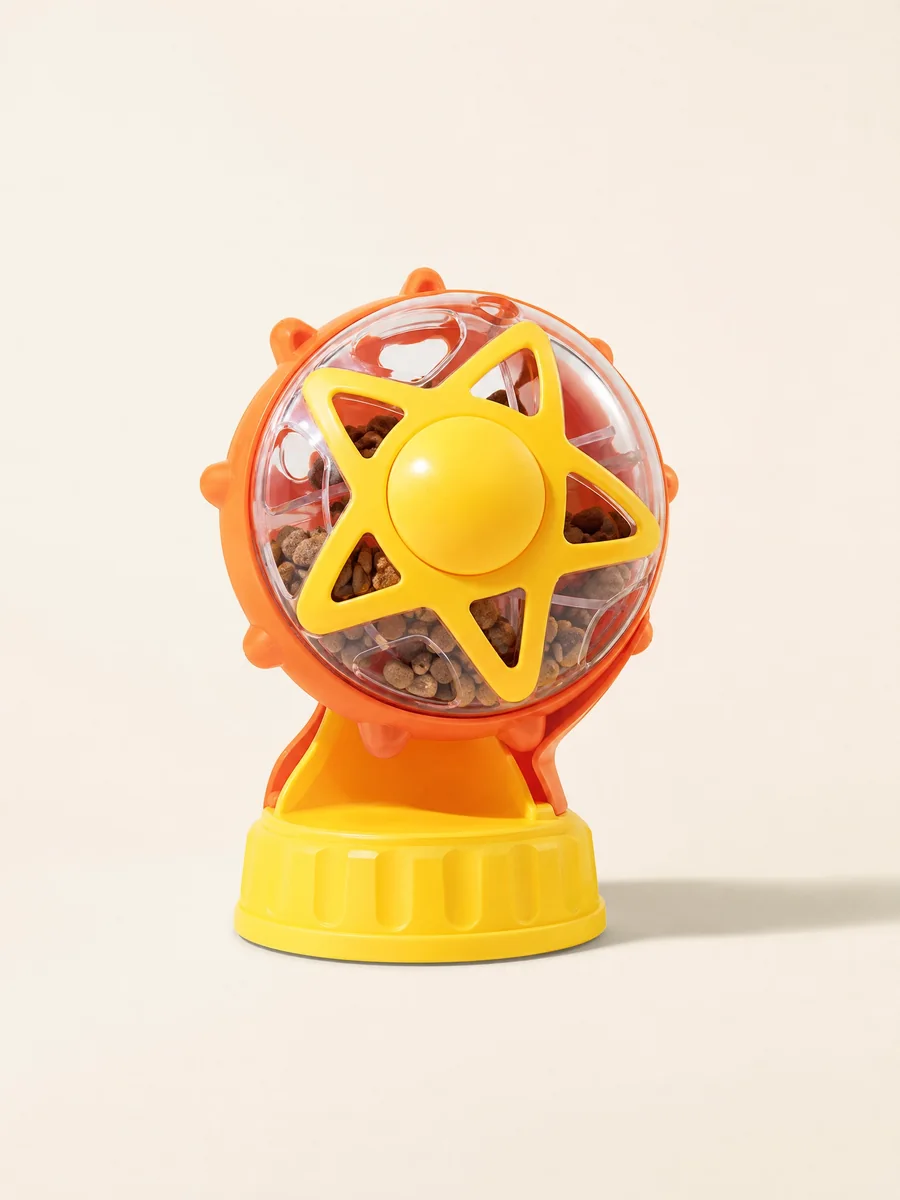
This guide is written for U.S.-market pet-product retailers, importers, distributors, and private-label buying teams who need a practical, repeatable approach to sourcing dog toys bulk. It walks through a decision framework, five procurement modules focused on common product types and commercial models, and specific checks for supplier evidence, sampling, packaging, quality controls, tradeoffs, and a short buyer action plan. Where regulatory or safety claims are relevant I note the need for buyer/importer confirmation; this guide does not make regulatory or performance guarantees.
Decision framework
Start every sourcing project by mapping four business inputs: target price band, sales channel and unit economics, customer expectations (durability, novelty, safety disclosures), and category adjacency (other pet categories you’ll inventory). These inputs define acceptable suppliers and product specifications.
- Target price band: establish landed cost per SKU and target margin. For retail, know your typical keystone or margin target; for subscription/distribution models, model volume and turnover assumptions.
- Sales channel: e-commerce requires different packaging and barcode/labeling than wholesale pallet loads; brick-and-mortar needs presentation-ready retail-ready packaging.
- Customer expectations: set baseline functional specs for safety and longevity based on target end-customer (e.g., puppy owners expect gentle textures; working-dog buyers expect durability).
- Category adjacency: if you source dog toys, suppliers that can also make cat scratchers bulk or offer cat furniture supplier services may provide cross-category efficiencies; confirm their capabilities early.
Supplier screening checklist (tiered):
- Company registration, export experience to the U.S., and references from U.S. customers.
- Factory audit access or third-party audit reports (BSCI/SMETA or equivalent) and quality-management evidence (ISO 9001 or documented QC plans).
- Product compliance evidence: material test reports, component traceability, and a willingness to support sampling and pilot runs.
- MOQ and lead-time transparency, capacity for repeat production, and private-label capability.
Quick decision table — choose supplier profile by risk tolerance and margin target:
| Supplier profile | Typical MOQ | Best for | Main risk |
|---|---|---|---|
| Trading company/exporter | 500–2,000 pcs | Low-touch assortment buys | Limited factory control |
| Direct factory (own shop) | 2,000–10,000 pcs | Private label, cost control | Higher MOQ, QA responsibility |
| Contract manufacturer (ODM/brand) | 1,000–5,000 pcs | Custom design, tooling | Longer lead times, tooling cost |
Use this framework to prioritize supplier outreach and prepare an RFP that lists required evidence, key spec tolerances, packaging expectations, and pilot-run conditions.
Plush & soft toys: specifications, sampling, and retail readiness
Plush toys are high-volume, low-cost items but have many quality and labeling nuances.
Key specification checklist:
- Core components: outer fabric (type, GSM), inner fill (fiber type, fire retardant treatments if any), sewn seams (stitch-per-inch), and any internal noise-makers or squeakers (material, encasement).
- Size and weight tolerances (±X%).
- Color fastness and washability requirements.
- Small-parts policy: define maximum allowable detached piece size for intended age groups.
Supplier evidence to request:
- Material safety data sheets (MSDS) for filling and surface treatments.
- Lab test reports for flammability and small parts as appropriate for intended age labeling.
- Production photos showing stitch density and seam construction.
Sampling and pilot-run checks:
- Break/seam test: perform manual pull tests and simulated wash cycles.
- Squeaker durability: cycle test (e.g., 10,000 compressions) and leak check.
- Labeling/print durability: rub tests on brand labels and care tags.
Packaging and retail readiness:
- Hang tags, UPC/GTIN, and barcode placement for retail shelves.
- Inner bagging for hygiene (clarify material and thickness); polybags must meet store and e-commerce requirements.
- Display-ready units per carton and master-carton dimensions to minimize damages.
Table: Quick pass/fail sampling checklist for plush toys
| Test | Acceptable indicator |
|---|---|
| Seam tensile | No seam split at specified pull force |
| Washing | No major color bleed or distortion after standard cycles |
| Squeaker | No air leak after 10k compressions |
| Label adhesion | Tag remains legible after abrasion test |
Note: Buyers/importers must confirm labeling and age-grade obligations for their target market; do not treat supplier reports as final compliance confirmation.
Chew and dental toys: materials evidence, performance sampling, and warnings
Chew toys have higher material and performance risks because of ingestion hazards and wear. Commercial buyers must set clear material and testing expectations.
Material/component evidence to require:
- Polymer identification for rubber/TPR/TPE/nylon components (e.g., ASTM-standard identification tests).
- Additives and residual monomer testing (if polymeric).
- Certificate of Origin and full bill of materials (BOM) that identifies any metal, wood, or composite parts.
Performance and sampling protocol:
- Abrasion and chunking test: multiple cycles with a mechanical chew rig or standardized force profile.
- Hardness measurements (shore A/D as applicable) with specified tolerance.
- Chemical migration tests for materials with potential oral contact.
Labeling and safety warnings:
- Provide supplier with required cautionary language for packaging and hangtags; ensure placement meets retailer policy.
- Define discard criteria in documentation to support consumer guidance (e.g., “remove toy when significantly worn”).
Commercial tradeoffs:
- Softer materials often cost less and feel better for puppies but wear faster.
- Durable polymers increase lifespan but can raise bite-load and potential dental concerns; buyers must balance return rates vs. unit price.
Table: Material vs. commercial tradeoff snapshot
| Material class | Durability | Cost | Typical use case |
|---|---|---|---|
| Soft plush/fabric | Low–medium | Low | Gift/comfort toys |
| TPR/TPE (soft rubber) | Medium | Medium | Gentle chewers, puppy toys |
| Nylon/polymers (hard) | High | Medium–high | Heavy chewers, long-life SKUs |
Require independent lab reports for any claim implying “non-toxic” or similar. Buyer/importer confirmation is required to finalize market-facing claims.
Interactive and enrichment toys: electronics, mechanisms, and warranty considerations
Interactive toys (ball launchers, motorized enrichment devices, puzzle feeders) introduce electronics, small motors, batteries, and moving parts.
Supplier screening additions:
- Factory capability for electro-mechanical assembly and ESD-safe processes.
- In-house testing rigs for endurance cycles and drop tests.
- Experience with battery handling and transport regulations.
Required evidence and tests:
- Electrical safety reports and certifications where applicable (electrical insulation, short-circuit protection).
- Battery certification and transport-class documentation (UN testing for lithium batteries, if used).
- Endurance testing results for gear and motor assemblies (run-time cycles, stall tests).
Sampling and pilot-runs:
- Functional acceptance: full product run for a sample batch that replicates production assembly.
- Environmental testing: temperature and humidity cycles, drop tests for e-commerce packing.
- Firmware/version control: require firmware documentation and field-upgrade procedures where products are updatable.
Warranty and returns policy:
- Define warranty period and RMA process with supplier; set responsibility thresholds for wear vs. manufacturing defects.
- Agree SLA for replacement parts and repairability; this reduces long-term warranty costs for buyers.
Note on transport and retail readiness:
- Interactive devices often require additional packaging for batteries and must comply with U.S. shipping regulations; buyers must confirm logistics route compatibility.
Puppy toys wholesale and volume buys: MOQ strategies, sampling cadence, and lifecycle planning
Sourcing puppy toys wholesale emphasizes volume economics with shorter lifecycle expectations (puppies outgrow needs). Buyers should plan SKU rotation and margins.
MOQ and pricing strategies:
- Negotiate staggered MOQs tied to a pilot run and then scale (e.g., 1st order: 1,000 pcs; 2nd order: 3,000 pcs).
- Volume tiers: require price breaks at defined cumulative annual volumes to align incentives.
Sampling cadence and quality sampling plan:
- Initial sample (pre-production): full prototype to validate design.
- Pre-production sample: before main run, after tooling is created.
- Lot acceptance sampling: define AQL (acceptable quality limit) criteria and third-party inspection thresholds.
Inventory and lifecycle planning:
- Short lifecycle SKUs should use smaller initial buys with agile replenishment.
- Build assortment bundles (e.g., puppy starter kits) to increase average order value and rotate SKUs seasonally.
Cross-category sourcing note:
- If you plan to add cat items, source partners able to supply cat scratchers bulk or act as a cat furniture supplier to leverage freight and vendor consolidation. Suppliers that also do cat furniture custom can be advantageous for multi-category private-label lines; confirm they maintain separate BOMs, tests, and QC flows for cat and dog products.
Private-label and custom sourcing (tooling, labeling, and IP considerations)
Private-label and custom programs drive differentiation but require more upfront investment and governance.
Design and tooling:
- Secure technical drawings, bill of materials, and 3D files up front.
- Tooling deposit terms: specify amortization of tooling cost over a quantity horizon or retain tooling ownership clauses.
- Prototype rounds: budget for 2–3 iterations before pre-production.
IP and labeling:
- Confirm IP ownership for custom molds, prints, and patterns within the contract.
- Trademark use: require suppliers to accept authorized artwork and reference packaging approvals.
- Labeling: provide electronic print-ready label files and set proofing steps before full print runs.
Quality-control controls (QC controls):
- Define in-line inspection points and final random inspection criteria.
- Agree on defect definitions and chargeback terms for non-conforming batches.
- Use third-party quality-inspection partners where internal resources are limited.
Commercial tradeoffs:
- Custom tooling raises unit economics but reduces SKU parity with competitors.
- Private-label often requires higher marketing spend to build recognition; include this forecasting in your landed-cost model.
Buyer action plan (concise):
- Prepare an RFP with specs, tests, packaging, and required evidence.
- Screen suppliers to a shortlist based on production capability and compliance track record.
- Approve prototypes and run pre-production samples.
- Perform third-party inspection at pre-shipment and hold container release criteria.
- Plan replenishment and warranty processes with supplier SLAs.
Frequently asked questions
Q: What is the minimum documentation I should request from a new toy supplier? A: Company registration, factory audit reports (or promise of audit access), BOM, material MSDS for key components, and recent lab test reports relevant to intended product category. Buyer/importer confirmation is required for final compliance.
Q: How should I evaluate a supplier’s quality-control program? A: Ask for written QC procedures, in-line and final inspection checklists, AQL thresholds, and recent QC reports. Prefer suppliers with third-party inspection experience and documented corrective-action workflows.
Q: Do I need special testing for toys sold to the U.S.? A: Many toy products require safety testing and labeling. Consult official guidance and secure independent test reports for relevant standards; buyer/importer confirmation of obligations and final claims is required 1.
Q: How can I reduce claims and returns in chew-toy lines? A: Use robust sampling and durability testing, specify clear discard and warning labeling, and set manufacturer warranty responsibilities. Consider offering a satisfaction-sampling period and analyze returns to adjust specs.
Conclusion
Sourcing dog toys bulk for the U.S. market requires disciplined specification work, supplier evidence, repeatable sampling and QC, and pragmatic commercial tradeoffs. Begin with a decision framework that ties target price, sales channel, and customer expectations to supplier selection. For each product type—plush, chew, interactive, puppy-focused, or private-label—define material and performance tests, packaging and retail readiness, and clear sampling and inspection protocols. Where products or suppliers cross into cat categories, investigate cat scratchers bulk or the capabilities of a cat furniture supplier or cat furniture custom provider to capture cross-category efficiencies, but insist on separate testing and QC.
Use staged MOQs and pilot runs to de-risk volume commitments, require documented QC and corrective-action plans, and maintain third-party inspections for pre-shipment checks when internal resources are limited. Finally, treat supplier-provided documentation as part of your evidentiary file, not a substitute for buyer/importer confirmation of regulatory compliance and market obligations. For any statutory or regulatory questions, confirm with official U.S. authorities or accredited testing labs before making market claims 1.
(Where cited, buyers should use the referenced official resources to inform compliance work; final importer/buyer confirmation is required for regulatory obligations.)
Buyer search scope
This guide addresses the following U.S. B2B procurement search phrases. Each phrase is considered in the context of supplier selection, product specifications, samples, packaging and quality evidence rather than as a consumer recommendation.
| Search phrase | Buyer use |
|---|---|
| dog toys bulk | Primary procurement focus for this guide |
| dog toys manufacturers | Related specification, supplier or range-planning query |
| puppy toys wholesale | Related specification, supplier or range-planning query |
| dog toys suppliers | Related specification, supplier or range-planning query |
| cat scratchers bulk | Related specification, supplier or range-planning query |
| cat furniture supplier | Related specification, supplier or range-planning query |
| cat furniture custom | Related specification, supplier or range-planning query |
Final CTA — Prepare a focused dog toys & enrichment sourcing brief with PawViso.
Share your target U.S. channel, product format, estimated order structure, packaging direction and customization requirements for a practical B2B discussion.
Email: info@PawViso.com
WhatsApp: +86 186 8106 4480
Related PawViso resources
- Continue with How to Source Rotating Treat Puzzles to compare a related supplier, sample and quality-control route.
- Browse the PawViso product catalogue to identify product formats for your purchasing brief.
- Follow the PawViso sourcing process and review the B2B buyer FAQ before sharing requirements.
External reference
Use ISO 9001 quality-management systems guidance as general quality-system context, and confirm the product-specific evidence that applies to the selected SKU, channel and target market.