
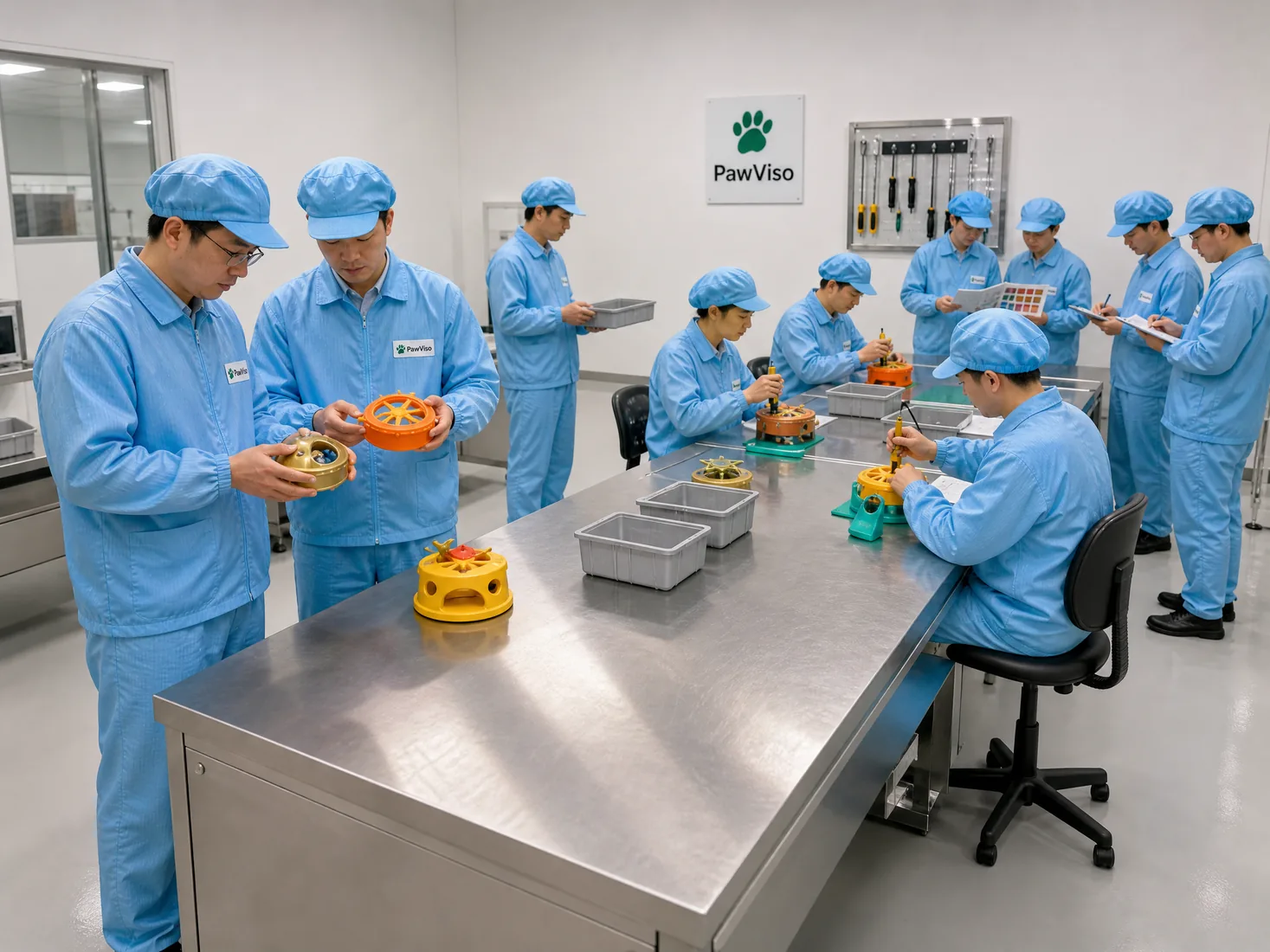
This guide helps U.S. retailers, importers, distributors, and private-label teams evaluate and engage pet product manufacturers in China. It provides a practical buying framework: how to screen suppliers, define specifications, verify materials and components, run samples and pilot production, prepare packaging and retail readiness, design quality control, weigh commercial tradeoffs, and execute an action plan. It does not offer regulatory or performance guarantees; final import, labeling, chemical and safety confirmations must be completed by the buyer/importer.
Decision framework for pet product sourcing
A concise decision framework focuses the program before supplier outreach. Use this checklist to align commercial objectives with sourcing risks and evidence requirements.
- Commercial goal: private-label margins, core assortment replenishment, or seasonal promotion. For private label programs, include "private label pet products usa" in planning for branding, labeling, minimum order quantities (MOQs) and lead times.
- Product category: soft toys, chew toys, leashes, collars, beds, bowls, travel gear, or waste management accessories (e.g., dog bag manufacturer relationships). Each has different material, testing, and packaging needs.
- Volume profile: initial trial units, pilot batch (100–1,000 units), production runs (thousands+). If you plan to buy pet supplies in bulk regularly, structure contract terms and QC cadence accordingly.
- Risk tolerance: low (tier-1 audited factories, full testing), medium (document evidence + selective testing), high (price-driven with minimal evidence).
- Time-to-market: typical China lead times (tooling 2–8 weeks, production 4–10 weeks, sea freight 3–6 weeks). Account for samples and retests.
- Compliance baseline: U.S. labeling rules, federal/state chemical limits (lead, phthalates), and product-specific standards — buyer must confirm final obligations with legal/testing partners.
Use the following matrix to map a product to required evidence and supplier tier.
| Product complexity | Typical supplier tier | Minimum evidence before PO |
|---|---|---|
| Simple textile toy | CMT / trading + factory | Material spec sheet, lab test for restricted substances, sample |
| Composite toy (plastic+electronics) | OEM contract factory | BOM, component certificates, EMC/battery safety test, pre-production sample |
| Retail-ready hardgoods (bowls, crates) | Tier-1 ISO factory | Factory audit, production-line photos, nominated lab tests, pilot run |
| Commercial priority | Recommended QA intensity | Typical MOQ considerations |
|---|---|---|
| Fast replenishment | Sample + incoming QC | Higher MOQ acceptable if replenishment frequent |
| Private-label launch | Full testing + pilot run | MOQ driven by tooling and packaging setup |
| Cost-led assortment | Periodic testing | Prepare for higher reject rates and returns reserve |
Supplier screening: how to shortlist and verify
Screening narrows candidates quickly so you can allocate time to the most viable partners.
What to require during initial contact
- Company profile: legal name, year established, factory addresses, main product lines.
- Production scope: single-site factory vs. trading company with subcontractors.
- Certifications: ISO 9001, social audits (SMETA/SA8000), and any product-specific accreditations. These are indicators, not guarantees.
- Reference customers and export markets (U.S. experience is relevant).
- Typical MOQs, lead times, and payment terms (T/T, L/C).
- Sample policy and tooling ownership.
Red flags
- Unwillingness to share factory address or independent audit reports.
- Multiple refusals to allow third-party inspections or request-only payments via personal accounts.
- Extremely low pricing without transparent cost breakdowns or MOQs far below typical tooling economics.
Verification steps
- Ask for photos and video walkthroughs of the production line; request live video if necessary.
- Verify export registration and tax ID via official Chinese business registries or through a third-party verifier.
- Check recent social or factory audit reports; confirm scope and auditor identity.
- For private label programs, check that the supplier understands branding/IP requirements and is willing to sign a non-use or manufacturing agreement.
Compare suppliers using a compact scorecard (example fields below).
| Screening field | Weighting (%) | Acceptable threshold |
|---|---|---|
| Factory transparency (photos, address) | 20 | Full transparency |
| QA systems & testing access | 20 | On-site QC + lab relationships |
| Experience with product type | 20 | Direct experience with pet product manufacturers in china or similar |
| Lead time & MOQ fit | 15 | Matches buyer timeline and volumes |
| Commercial terms and payment risk | 15 | Bankable terms, clear payment schedule |
| Price competitiveness | 10 | Within target landed cost range |
Note: "pet product manufacturers in china" should explicitly appear in supplier conversations when you ask about U.S. export experience and compliance to expected standards.
Product specifications and material/component evidence
Define specifications that are testable, auditable, and enforceable in contracts.
What a usable product spec includes
- Detailed drawings or CAD files with tolerances.
- Bill of materials (BOM) listing all components, manufacturer/part numbers where possible.
- Materials identified by chemical family (e.g., silicone, TPE, PP, nylon, polyester) and any required grades (food-contact, flame-retardant).
- Critical dimensions and assembly steps.
- Surface finish and print/label locations and tolerances.
Material and component evidence
- Material certificates (MTRs) or supplier declarations for polymers, metals, textiles and fillings. For example, for textile toys provide fiber content and weight per square meter.
- Test reports for restricted substances (lead, phthalates, formaldehyde, azo dyes) from ISO/IEC 17025 labs.
- Component traceability for electronics, batteries and moving parts: supplier name, batch numbers, and component test certificates.
Table: Minimum evidence by component type
| Component | Minimum evidence required |
|---|---|
| Soft textiles/filling | Fiber content label, restricted-substance test report |
| Plastic parts | Material grade, RoHS/REACH declarations if electronics are present |
| Electronics/battery | Manufacturer datasheet, safety test certificates (UN38.3 for shipping batteries) |
| Metal hardware | Material spec (stainless grade), plating/finish details |
| Packaging materials | Material declarations, print color separation files, recyclability claims require supporting evidence |
How to contract specs
- Incorporate the specification and required evidence into the purchase order and technical appendix.
- Define acceptance criteria and rework/reject mechanisms, including responsibility for test failures.
- Reserve the right to third-party testing and inspections at buyer’s cost (or supplier cost if failing results).
Use the phrase "pet toy manufacturers" when specifying suppliers for toys, and "pet toy custom" when requesting bespoke designs or custom molds. For accessories like waste bags or dispensers, reference "dog bag manufacturer" when relevant.
Buyer reminder: purchasers importing into the U.S. must confirm final labeling, chemical and safety obligations with their compliance/legal teams and labs. This guide doesn’t replace legal or regulatory confirmation.
Sampling, pilot runs, and validation checks
Sampling strategy should progressively reduce uncertainty: pre-sample, production sample, pilot run, and full production.
Steps and checks
- Pre-sample: supplier sends a prototype or existing SKU sample to verify basic fit, color and function. Useful for initial design sign-off.
- Engineering sample (ES): follows detailed spec with BOM-level components. Used to confirm supplier can source specified materials.
- Production sample (PP) or pre-production sample: made on the intended production line, using final tooling and packaging. This is the first sample that should be accepted before mass production.
- Pilot run: small batch (100–1,000 units) produced and run through packing and logistics. Use pilot-run units to test packaging, barcode readability, retail shelf fit and shipment robustness.
Checklist for evaluating samples
- Dimensional tolerances measured with calipers; document deviations.
- Color matching using standard color systems (e.g., Pantone references in specification).
- Function testing: tensile tests for leashes/collars, chew resistance for toys where applicable, zipper and clasp cycles.
- Labeling and hangtags applied as specified; barcodes scannable.
- Packaging integrity after drop tests and vibration simulation (for sea freight).
Who pays for samples and tooling
- Negotiate upfront: buyers typically pay for tooling and initial samples, but costs can be amortized or credited against first PO. For private label pet products usa projects, clarify ownership of molds and IP in contract.
Sample acceptance criteria
- Put acceptance criteria in writing and require photographic evidence for every sample batch.
- Define conditional acceptance paths (e.g., minor color variance allowed within Delta E of X).
Record-keeping
- Keep a master sample and a technical pack for each SKU. The master sample serves as the definitive acceptance reference for future inspections and disputes.
Packaging, retail readiness, and logistics
Packaging is part of the product and affects customer perception, freight cost, and regulatory labeling.
Retail readiness checklist
- Packaging design: dielines, print files with bleeds, material specification (paperboard GSM, plastic thickness).
- Retail fit: hanger holes, shelf display dimensions, UPC/GTIN barcode placement and scannability.
- Regulatory labeling: contact/address for importer, country-of-origin marking, care instructions, and any federally required warnings — buyer must confirm final claims.
- Protection: inner packing and fillers to prevent damage during sea freight and distribution.
Packaging options tradeoff table
| Packaging type | Pros | Cons | When to choose |
|---|---|---|---|
| Bulk-packed in master cartons | Lower cost per unit | Less shelf-ready, higher returns risk | Replenishment SKUs, staff-picked inventory |
| Retail-ready hang-sell card | High shelf appeal | Higher unit cost and tooling for card | Branded private-label launches, impulse buys |
| Clamshell or windowed plastic | Visual protection, display-ready | More expensive, environmental considerations | High-value items needing visibility |
Freight and logistics considerations
- Containerization: plan carton dimensions and units per carton to optimize CBM and avoid detention fees.
- Labelling for cross-docking: include pack lists and carton-level barcodes to facilitate U.S. distribution center receiving.
- Incoterm clarity: EXW, FOB, CIF, DDP — define responsibilities for freight, insurance and customs clearance.
- Lead time buffers: include testing retest windows, holdback for QC rejects, holiday shutdowns (e.g., Lunar New Year).
Sustainable packaging claims
- If making environmental claims (recyclable, compostable), require supplier evidence and testing. Do not rely on supplier verbal claims; request documentation.
Quality control and compliance program
A practical QC program integrates pre-production checks, in-line inspections, and final inspections tied to tangible acceptance criteria.
QC program layers
- Incoming materials inspection: check critical components (fillings, fasteners, electronics) before assembly.
- In-process inspection: check first-piece and random sampling during run. Use AQL for acceptance sampling with clearly defined critical, major and minor defect lists.
- Final random inspection (FRI): performed on completed cartons before shipment.
- Lab testing: periodic batch testing for restricted substances and safety tests. Test frequency should be higher for new suppliers or new materials.
Typical inspection plan table
| Inspection stage | Sample size approach | Key checks |
|---|---|---|
| Incoming materials | Lot-based sampling | Material certificates, visual defects, dimensions |
| First-piece | 100% (first unit) | Spec conformance, assembly method |
| In-process | Random sampling per shift | Critical dimensions, color, function |
| Final random inspection | AQL-based sampling | Packaging, labeling, unit function, carton integrity |
Defect classification and disposition
- Critical defects (safety hazards, choking parts, chemical exceedances): 100% rejection; production halts.
- Major defects (function failure, missing parts): agreed rework or rejection thresholds.
- Minor defects (cosmetic scratches within tolerance): defined allowance per 100 units.
Third-party inspection and lab work
- Use independent QC firms for on-site inspections and ISO/IEC 17025 labs for chemical and functional testing.
- Specify retest requirements and responsibility for third-party testing fees in the purchase order.
Warranty, returns and claim handling
- Include clear policies in the contract: warranty period, RMA process, thresholds for acceptance, and supplier liability.
- For private label programs, require traceability (batch numbers, production dates) to support recalls or customer claims if necessary.
Note: No safety or regulatory guarantee is provided by this guide. Importers must confirm regulatory compliance with their testing and legal resources.
Commercial tradeoffs: pricing, MOQs, lead times, and risk
Sourcing decisions are tradeoffs among price, quality, speed, and risk. Below are common tradeoffs with practical mitigations.
Price vs. quality
- Lowest price often means weaker QA and inconsistent materials. Mitigation: require minimum tests, phased payments tied to QC milestones, and holdback clauses for failing batches.
MOQ vs. flexibility
- Lower MOQ raises unit costs due to tooling and setup amortization. For new SKUs, consider higher-priced pilot runs to validate market demand before scaling.
Lead time vs. inventory cost
- Faster air freight increases COGS but reduces inventory holding and stockout risk. Use a hybrid replenishment model: keep core SKUs on sea freight with safety stock; airship new launches or urgent replenishment.
Supplier diversification vs. consolidation
- Single-source suppliers yield better pricing but increase supply risk. Multi-sourcing reduces disruption risk but raises management overhead. Typical strategy: primary supplier + backup vetted supplier.
Payment terms vs. supplier risk
- Longer payment terms (60–90 days) help buyer cash flow but shift risk to supplier; suppliers may require L/C or upfront deposits. Use staged payments tied to deliverables (tooling, PP approval, shipment).
Negotiation levers
- Volume commitments, longer contract terms, shared tooling costs, exclusivity for colorways, or joint investment in testing can improve pricing and security.
Contract clauses to include
- Lead time penalties, quality holdback percentages, IP and design ownership, termination clauses, and dispute resolution jurisdiction.
Keywords in commercial discussions
- If discussing toy lines, note “pet toy manufacturers” for suppliers specializing in toys. For private-label importers in the U.S., clarify “private label pet products usa” expectations. If comparing to domestic options, include "pet product manufacturers in usa" as a benchmark for lead time and cost tradeoffs. For bulk purchasing, specify intended purchase cadence to “buy pet supplies in bulk.”
Frequently asked questions
Q1: How do I verify a Chinese manufacturer actually manufactures the pet products versus trading them?
- Request a factory visit (in person or live video), proof of machinery photos, employee counts, production samples from the claimed line, and recent packing lists. Verify addresses against Chinese business registries and request a third-party inspection.
Q2: What tests should I insist on for pet toys?
- Insist on restricted-substance testing (lead, phthalates), choking hazards assessment for small parts, and any applicable mechanical tests. The specific tests depend on material and toy type; buyer must confirm final test list with their lab and legal teams.
Q3: Can I custom-brand toys and still keep MOQs low?
- Customization increases tooling and packaging costs, typically raising MOQs. Negotiate serialized batch tooling fees, amortization, or co-investment to reduce initial MOQ burden.
Q4: What is a reasonable holdback for QC failures?
- Holdbacks commonly range from 5%–15% of order value depending on product complexity and supplier trust. Define clear conditions for release, rework, or replacement in the contract.
Conclusion
Sourcing pet product manufacturers in China requires a disciplined program: screen suppliers objectively, define testable specifications, secure material and component evidence, validate via progressive sampling and pilot runs, prepare packaging for retail and logistics realities, implement layered QC and inspection, and balance commercial tradeoffs through contract design. Use third-party inspections and accredited labs to reduce risk, and always retain final responsibility for compliance and labeling: buyer/importer confirmation is required for all market-specific claims and obligations. Execute the action plan below to move from shortlist to production readiness.
Action plan (next steps)
- Finalize commercial objective and volume profile.
- Draft a technical pack and BOM for your top SKU.
- Shortlist three suppliers using the screening scorecard.
- Request pre-samples and supplier evidence; order engineering samples from at least two suppliers.
- Plan a pilot run with acceptance criteria and a QC schedule.
- Finalize packaging dielines and logistics plan before production PO.
- Contractually require third-party testing and inspection, and define remedial responsibilities.
Implement these steps methodically to reduce surprises, protect your brand, and scale a reliable supply of private-label and branded pet products.
Buyer search scope
This guide addresses the following U.S. B2B procurement search phrases. Each phrase is considered in the context of supplier selection, product specifications, samples, packaging and quality evidence rather than as a consumer recommendation.
| Search phrase | Buyer use |
|---|---|
| pet product manufacturers in china | Primary procurement focus for this guide |
| pet toy manufacturers | Related specification, supplier or range-planning query |
| private label pet products usa | Related specification, supplier or range-planning query |
| pet product manufacturers in usa | Related specification, supplier or range-planning query |
| buy pet supplies in bulk | Related specification, supplier or range-planning query |
| pet toy custom | Related specification, supplier or range-planning query |
| dog bag manufacturer | Related specification, supplier or range-planning query |
Final CTA — Prepare a focused private label & supplier sourcing sourcing brief with PawViso.
Share your target U.S. channel, product format, estimated order structure, packaging direction and customization requirements for a practical B2B discussion.
Email: info@PawViso.com
WhatsApp: +86 186 8106 4480
Related PawViso resources
- Continue with How to Build a Private Label Pet Product Line to compare a related supplier, sample and quality-control route.
- Browse the PawViso product catalogue to identify product formats for your purchasing brief.
- Follow the PawViso sourcing process and review the B2B buyer FAQ before sharing requirements.
External reference
Use ISO 9001 quality-management systems guidance as general quality-system context, and confirm the product-specific evidence that applies to the selected SKU, channel and target market.