
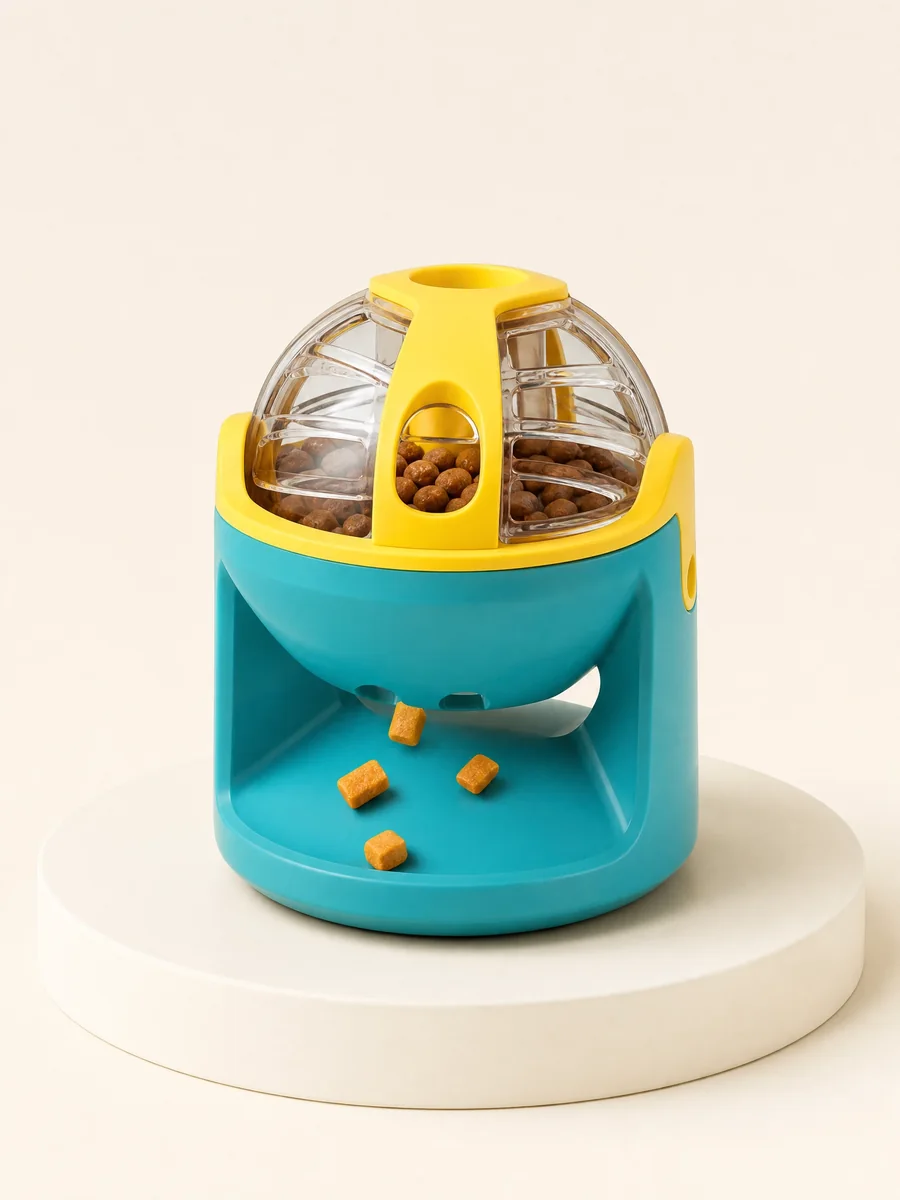
This guide helps U.S. retailers, importers, distributors, and private-label buying teams evaluate suppliers and make repeatable decisions when sourcing dog water bottle custom products and related pet feeding accessories. It focuses on practical procurement checkpoints—supplier screening, product specifications, material evidence, sampling and pilot runs, packaging/retail readiness, plus the risk controls and commercial tradeoffs you’ll face. It does not provide regulatory or safety guarantees; final confirmation by your legal, compliance, and import teams is required.
Decision framework (quick checklist and action plan)
Start by deciding whether you need a fully custom product (artwork, mold, tooling) or a semi-custom solution (standard bottle with branded printing or sleeve). Your category decision drives lead time, MOQ, unit economics, and quality verification steps.
Quick decision checklist
- Target price per finished unit (landed to your warehouse).
- Expected retail price and margin target.
- Order quantity strategy: one-off pilot (500–2,000 units), limited run (2,000–10,000), or ongoing replenishment.
- Time-to-market: can you accept 60–120+ days for custom tooling?
- Regulatory/compliance constraints and labeling requirements for your market.
Action plan (first 30–90 days)
- Define product-family: dog water bottle custom or variant (collapsible, insulated, integrated bowl).
- Draft a functional spec (materials, capacity, weight, leakproof requirement, fastening).
- Screen 8–12 suppliers; request capability evidence and three references.
- Order pre-production samples from 3 preferred suppliers.
- Run pilot sales in 2–4 retail channels before committing to production tooling.
Risk and control overview (integrate these into contracts)
- Quality-control controls: incoming inspection plans, AQL thresholds, defect classification.
- Commercial tradeoffs: lower cost vs. higher inspection frequency; faster lead time vs. higher sample costs; tooling amortization vs. price per unit.
- Intellectual property: ownership of tooling, art, and label designs; NDA and IP clauses.
Note: This guide refers to buyer obligations and best-practices. Regulatory or safety compliance for the U.S. market must be confirmed by the buyer/importer.
Supplier screening (capability, capacity, and evidence)
What to verify in the first contact
- Manufacturing type: injection-mold (plastic bottles), stainless fabrication, silicone molding (collapsible designs), or multi-component assembly. For collapsible dog bowls custom or collapsible dog bowls bulk the factory should demonstrate silicone compression molding capacity.
- Experience with pet accessories and examples of previous private-label runs.
- Facility audits: ask for factory photos, process flow diagrams, and quality certifications (ISO 9001 relevant for process control, but not a substitute for product testing).
- Minimum order quantities (MOQ) for custom tooling vs. stock modification.
- Lead time breakdown: tooling, samples, production, shipping (FOB/FCA/incoterm used).
Document requests (must receive before sample ordering)
- Company registration and export license.
- Production capacity numbers: monthly output for the product type.
- Sample policy: costs, lead time, and whether the sample is produced on the production line.
- At least three trade references (other buyers in your region).
Red flags
- Vague answers about materials or testing, refusal to provide sample photos of pre-production parts, or avoidance of third-party inspection during production.
Compact supplier comparison table
| Screening item | Info to collect | Pass/fail criteria |
|---|---|---|
| Manufacturing type | Injection, silicone, stainless, assembly | Matches requested product family |
| MOQ & lead times | MOQ for custom vs. stock | Feasible for your volumes |
| Audit evidence | Photos, certifications, references | Provides verifiable documentation |
| Sample policy | Cost and on-line sample availability | Samples available from production line |
Decision rule: shortlist 3 suppliers who meet capability, MQO timing, and provide verifiable references. Move to technical spec and material evidence requests.
Product specifications (functional, dimensional, and user requirements)
Write specifications that leave minimal interpretation for the factory. For dog water bottle custom products, include precise details for every element: bottle volume, dimensions, nozzle type, valve mechanism, cap, strap, leakproof requirement, and cleaning method.
Core spec checklist
- Functional requirements: leakproof under X kPa, single-handed dispensing, capacity (e.g., 350 ml, 500 ml, 750 ml).
- Dimensional tolerances: overall length ±X mm; nozzle diameter ±X mm.
- Materials and finishes: primary body material (e.g., Tritan copolyester, stainless steel 18/8), seals (silicone grade), printed areas (pad-print, laser engraving).
- Component sourcing: who supplies valves, caps, straps and whether you expect factory to source or buyer to provide.
- Assembly and secondary operations: sonic welding, over-molding, silicone bonding.
- Packaging expectations: polybag vs. branded box, instruction insert, UPC label placement.
Include test methods in the spec (describe test conditions rather than prescriptive standards)
- Leak test method: bottle filled to capacity, inverted and pressurized with X kPa for Y minutes.
- Drop resistance: free fall from Z meters to concrete, functional check after drop.
Compact specification summary table
| Spec area | Example requirement |
|---|---|
| Capacity | 500 ml ±5% |
| Body material | Tritan copolyester (BPA-free) |
| Valve | Single-actuation silicone valve, removable |
| Leak test | No visible leakage after 2-minute inversion at 10 kPa |
| Labeling | UPC barcode on retail box; care instructions in English |
Specify acceptable tolerances and required test documentation. If you plan to offer variants such as collapsible dog bowls custom lines alongside bottles, reuse this spec structure for each product family (e.g., materials for collapsible bowls: food-grade silicone shore hardness, tear resistance).
Keywords applied: include dog water bottle custom and collapsible dog bowls custom when listing product families.
Material and component evidence (how to verify what’s actually used)
Materials drive performance and claims. Ask for verifiable evidence rather than trusting labels.
Ask suppliers for:
- Material data sheets (MDS) or technical data sheets for polymers, silicones, and surface finishes.
- Certificates of analysis (CoA) for stainless steel grades (e.g., 18/8) and polymer batch numbers.
- Component sourcing invoices or packing lists for purchased critical components (valves, springs).
- Third-party test reports for migration, heavy metals, and extractables where relevant; if testing is not available, plan to commission it.
What to inspect on delivery sample
- Compare part weight, wall thickness, and shore hardness (for silicone) to spec.
- Material appearance: clarity/opacity for plastics, surface finish for metal.
- Seals and mating parts: check fit, friction, and compression set for silicone seals.
Minimum evidence requirement table
| Evidence type | Why it matters | Acceptable submission |
|---|---|---|
| Material Data Sheet (MDS) | Confirms raw material grade and properties | MDS with supplier name and batch number |
| Certificate of Analysis (CoA) | Verifies lot-specific chemistry | CoA referencing lot used in samples |
| Component invoices | Shows origin of purchased parts | Supplier invoice showing item and batch |
| Test reports | Demonstrates compliance/test performance | Third-party lab report or buyer-commissioned testing |
If suppliers cannot provide MDS/CoA or refuse third-party testing, treat that as a high risk. For private-label claims (e.g., BPA-free, food contact), buyer/importer confirmation is required for final claims and target-market obligations.
Sampling and pilot-run checks (how to test before mass production)
Samples are your most valuable risk-control tool. For custom tooling you typically move from prototype -> pre-production sample (PPS) -> production sample. For non-tooling customization (printing, packaging), insist on production-line samples.
Sampling sequence and what to demand
- Prototypes (3D-printed or hand-made): functional shape verification only.
- Production tooling sample (first-run off the actual tooling): use to verify dimensions, material behavior, and surface finish.
- Pre-shipment sample: sample taken from the final production batch, boxed and labeled exactly as shipped.
Test battery to run on each sample
- Functional: dispense rate, valve activation force, cap threading engagement.
- Durability: 1,000 cycle open/close, 100 fill/empty cycles, pressure test for leaks.
- Usability: one-handed operation, strap attachment strength (define breakpoint).
- Cleaning and sanitation: ability to disassemble and reassemble easily for cleaning.
- Retail readiness: hang-tag fit, UPC scannability on printed box, shelf presentation.
Sampling logistics tips
- Always require production-line samples for bulk orders. Lab samples or hand-assembled samples are insufficient.
- Photograph serial numbers and batch codes on samples to match incoming shipments.
- If ordering collapsible dog bowls bulk or collapsible dog bowls custom variants, demand shore hardness testing and tear-resistance checks for a representative sample set.
Pilot-run checklist
- Run a small production batch (e.g., 500–2,000 units) and perform acceptance tests on a statistically significant sample (see your AQL plan).
- Sell pilot units in controlled channels to observe returns, complaints, and customer feedback before large restock orders.
Note: Sampling and pilot-run costs should be budgeted. Tooling changes after PPS are costly—insist on clear sign-off gates.
Packaging and retail readiness (presentation, labeling, and logistics)
Packaging is both protection and the first retail impression. Define packaging at the product-spec stage so manufacturing considers it during production.
Define packaging requirements
- Primary: polybag, blister, or retail box; internal inserts to protect valves and finishes.
- Secondary: carton dimensions (for palletization), units per carton, and G.W./N.W.
- Labeling: country of origin, importer name and address, contact info per U.S. labeling rules, and any handling icons.
- Instruction sheet: care, cleaning, and disclaimers drafted by buyer (factory should print or pack-in).
Packaging performance requirements
- Transit simulation: package must protect product from a 1.2m drop and compression while stacked according to carton specs.
- Retail display fit: hang-hole size, shelf footprint, or box dimensions to match retailer requirements.
- Barcode verification: UPC must scan through any protective film or packaging window.
Sustainability and E-commerce readiness
- If you will sell in e-commerce, specify protective packaging for shipment to consumers (additional polybag or mailer) and return-friendly packaging.
- If you seek reduced packaging, define acceptable minimums and perform transit testing accordingly.
Packing list and shipping marks
- Factory must provide accurate packing lists with SKU breakdown, net/gross weight, carton dimensions, and cube per carton.
- Specify palletization: cartons per layer, layers per pallet, and maximum pallet height.
Example packaging requirement snippet
- Retail box: glossy laminated 1.5 mm SBS board; insert: molded pulp tray; UPC printed on lower right of front flap; carton: 12 units, carton size 48 x 34 x 32 cm; gross weight ≤ 12 kg.
Note that labeling for pet products sold in the U.S. may carry specific obligations; buyer/importer confirmation is required for final claims and target-market obligations.
Frequently asked questions
Q1: What minimum order quantities should I expect for dog water bottle custom tooling? A1: Custom tooling typically implies higher MOQs—commonly 2,000–10,000 units depending on tooling cost and factory economics. Request MOQ ranges early and evaluate MOQ versus tooling amortization to assess unit cost.
Q2: Can I use the same supplier for dog water bottle custom and other accessories like custom pet feeding mats or custom dog bowls bulk? A2: Only if the supplier has proven capability across the relevant manufacturing processes—e.g., injection molding for bottles, thermoforming or textile finishing for mats, and ceramic partners for bowls. Expect specialized suppliers for ceramic dog bowls wholesale and ceramic dog bowls custom.
Q3: How should I specify leakproof performance? A3: Specify an objective test method (e.g., inverted leak test at defined pressure and time) and acceptable pass criteria; require production-line samples and third-party testing if needed.
Q4: How much pre-production testing is reasonable? A4: At minimum: functional, leak, and durability tests on PPS; packaging transit simulation; and material evidence (MDS/CoA). For new tooling, consider third-party lab testing of a pilot batch prior to full production.
Conclusion
Sourcing dog water bottle custom products for the U.S. market is a multipart decision: choose between full custom tooling and semi-custom branded options, screen suppliers for specific manufacturing capabilities, define unambiguous functional and material specs, require material evidence and production-line samples, and confirm packaging and logistics for retail and e-commerce. Use a staged approach—prototype, PPS, pilot run—to limit exposure and enable data-driven decisions on quality and commercial viability. Build inspection and testing requirements into purchase agreements and be explicit about who is responsible for compliance and labeling. Buyer/importer confirmation is required for final claims and target-market obligations; work with your compliance and legal teams to finalize any regulatory-facing statements.
Buyer search scope
This guide addresses the following U.S. B2B procurement search phrases. Each phrase is considered in the context of supplier selection, product specifications, samples, packaging and quality evidence rather than as a consumer recommendation.
| Search phrase | Buyer use |
|---|---|
| dog water bottle custom | Primary procurement focus for this guide |
| custom pet feeding mats | Related specification, supplier or range-planning query |
| custom dog bowls bulk | Related specification, supplier or range-planning query |
| collapsible dog bowls custom | Related specification, supplier or range-planning query |
| collapsible dog bowls bulk | Related specification, supplier or range-planning query |
| ceramic dog bowls wholesale | Related specification, supplier or range-planning query |
| ceramic dog bowls custom | Related specification, supplier or range-planning query |
Final CTA — Prepare a focused pet feeding accessories sourcing brief with PawViso.
Share your target U.S. channel, product format, estimated order structure, packaging direction and customization requirements for a practical B2B discussion.
Email: info@PawViso.com
WhatsApp: +86 186 8106 4480
Related PawViso resources
- Continue with How to Source Slow Feeders for Dogs and Cats to compare a related supplier, sample and quality-control route.
- Browse the PawViso product catalogue to identify product formats for your purchasing brief.
- Follow the PawViso sourcing process and review the B2B buyer FAQ before sharing requirements.
External reference
Use ISO 9001 quality-management systems guidance as general quality-system context, and confirm the product-specific evidence that applies to the selected SKU, channel and target market.