This guide helps U.S.-market buyers — retailers, importers, distributors, and private-label teams — evaluate and select a dog raincoat manufacturer. It focuses on a practical, procurement-first approach that balances product requirements, supplier evidence, sampling, packaging and quality-control processes. It does not provide regulatory or performance guarantees; buyers and importers must confirm obligations for their target market.
Decision framework: a quick checklist for supplier selection
Use this decision framework as an operating checklist when screening suppliers and making tradeoffs. It breaks sourcing into seven decision points you should resolve before placing a commercial order.
- Strategic fit: Can the supplier meet your volume, lead-time, and product customization needs (branding, fit ranges, closure types)?
- Technical capability: Do they have pattern-making, grading, and sewing lines for pet apparel, and specific experience with waterproof coatings, seam-sealing, or reflective trims?
- Material traceability: Can they provide test reports and bill-of-materials (BOM) details for fabrics, trims, and waterproofing chemicals?
- Quality systems: Do they operate pre-shipment inspections, in-line checks, and corrective action processes? Can they accept third-party inspections?
- Packaging & retail readiness: Can they produce private-label hangtags, UPC-ready packaging, and retail-ready packs to your spec?
- Commercial terms: What are MOQs, price tiers, lead times, sample costs, payment terms, and INCOTERMS?
- Risk controls: How will you manage non-conformances, lead-time slippage, and import compliance?
Score each point 1–5 for a given supplier; aim for an average score above 3.5 before committing to a production order or pilot run.
Supplier screening: evidence, credentials, and capability questions
What to request up front to triage dog raincoat manufacturer leads and related vendors such as dog leash suppliers, dog leash manufacturers, and dog harness wholesale producers.
Documents and evidence to request
- Company profile and production capacity (lines, monthly output).
- Product portfolio and photos of finished dog raincoats; ask for similar SKUs if they claim specialization.
- References from other pet-industry buyers, including contactable procurement managers.
- Factory audit reports or third-party social compliance certificates if labor practices matter to your brand.
- Sample BOMs listing fabric composition, weight (gsm/oz), coatings (PU, PVC, TPU), lining, closures (Velcro, snaps, buckles), and reflectives.
- Test reports: colorfastness to washing, water column or hydrostatic pressure for water resistance (if available), flammability where applicable, and restricted substances test (e.g., per consumer chemical limits). Note: you will need to confirm target-market obligations separately.
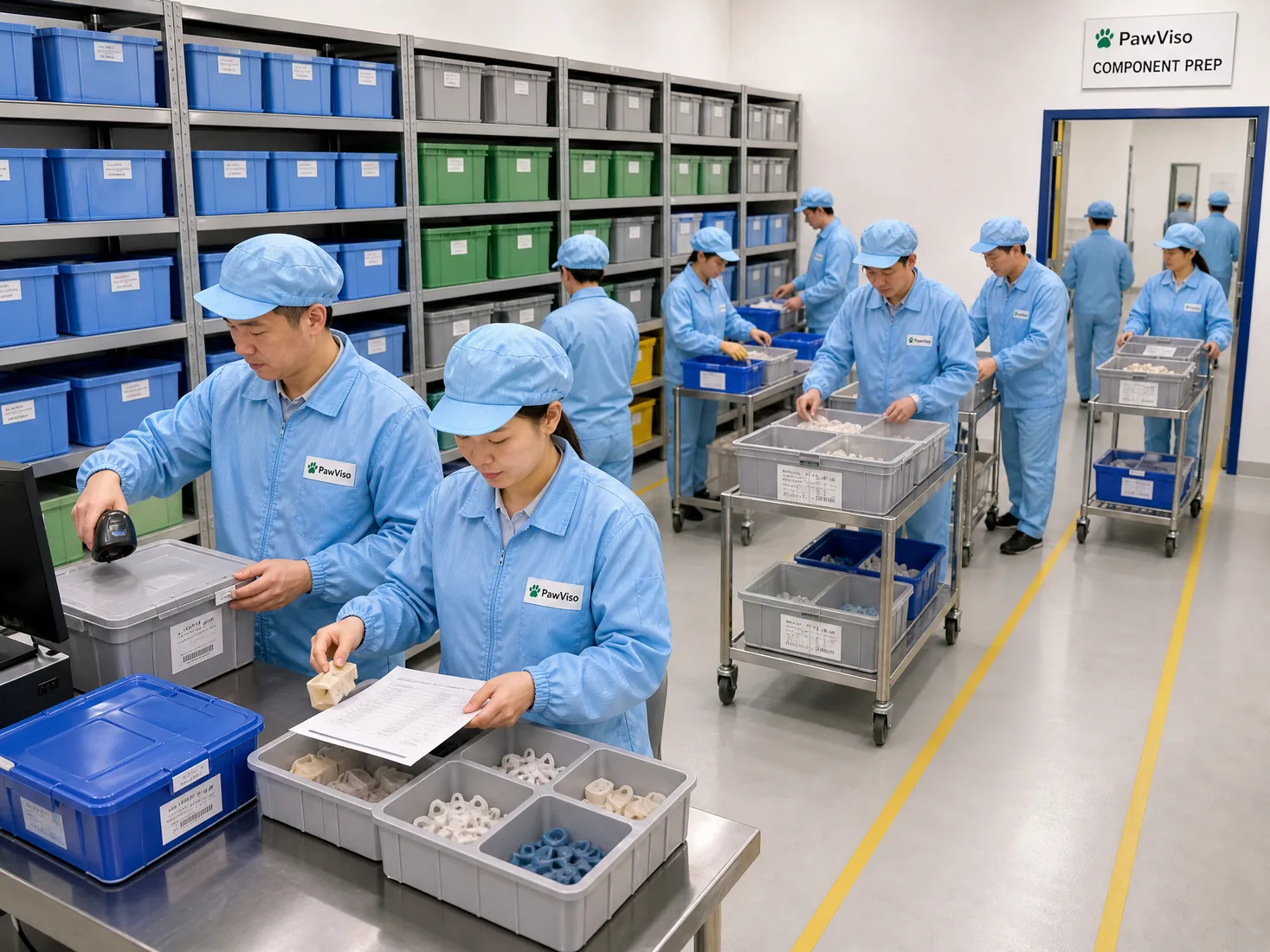
- Photos or videos of production processes: cutting tables, seam-sealing, ultrasonic welding, and packaging lines.
Key screening questions
- Have you produced dog raincoats before? Can you show finished samples and production photos?
- What are your MOQs by SKU and by material type?
- Do you offer private-label sewing, hangtags, and retail packaging?
- Can you supply complementary products (dog harness custom, dog harness bulk, dog collar wholesale) to consolidate vendors and reduce freight cost?
- What are typical lead times for sample, pilot run (100–500 pcs), and full production?
Red flags during screening
- Reluctance to share BOMs or test reports.
- No sample program or inability to produce a pilot run.
- Vague answers on capability to seam-seal or work with waterproof membranes.
- No willingness to accept third-party inspections or to correct non-conforming lots.
Supplier comparison table (compact)
| Evidence item | Good supplier | Insufficient evidence |
|---|---|---|
| BOM & fabric certificates | Detailed BOM with suppliers and weights | Generic “nylon/PVC” only |
| Sample availability | Rapid sample delivery; pilot-run option | No sample or only photos |
| Test data | Lab reports for water resistance / chemicals | None or self-reported tests |
| Production photos | Current, dated photos/videos of lines | Stock images; no proof of capacity |
Product specifications and materials: defining what you sell
Create a product specification (spec) pack that leaves no ambiguity between you and the dog raincoat manufacturer. The spec pack prevents fit failures, material mismatches, and unplanned costs.
Minimum contents of a spec pack
- Technical sketch and flat drawings with dimensions in inches (graded size table).
- Grading rules for size range (XS through XL or numeric chest/back-length).
- Full BOM listing fabric type, weight (gsm or oz/yd2), coating type and weight, lining materials, thread type, seam-tape spec, closures, reflective tape spec, and label/hangtag art files.
- Acceptance criteria: tolerance ranges for dimensions, allowed visual defects, and seam allowance tolerances.
- Packaging instructions: folded or hang-sold, hanger type, polybag dimensions, carton pack quantities.
- Washing and care instructions text for hangtags and labels (confirm wording with compliance team).
Material considerations specific to dog raincoats
- Outer fabric: common options are coated nylon or polyester with PU, PVC, or TPU coatings. Coating durability, breathability, and flexibility differ — specify coating weight or water column target rather than just “waterproof.”
- Seam sealing: waterproof performance depends on seam sealing method (tape vs. liquid seam seal). Specify the method and request process photos.
- Fasteners and fit features: Velcro is common for adjustability; specify hook/loop rating. Snaps and quick-release buckles should be rated for tensile strength appropriate for canine movement.
- Reflective trims: specify retroreflective tape standard and placement so visibility features are consistent across SKUs.
- Lining & insulation: if offering insulated raincoats, detail fill type and target warmth level; avoid performance guarantees and require buyer confirmation for claims.
- Trims compatibility: buckles and D-rings should be compatible with leash hardware; this is where consolidating suppliers (dog leash suppliers, dog leash manufacturers) can reduce compatibility issues.
Specification decision table (compact)
| Spec item | Decision to make | Buyer input required |
|---|---|---|
| Water resistance | Target water column (e.g., 2,000–10,000 mm) or coated fabric weight | Confirm target-market claims & labeling |
| Breathability | Specify if breathable membranes required | Tradeoff: cost vs. comfort |
| Fastening method | Velcro, snaps, buckles, elastic closures | Consider customer convenience & injury risk |
| Reflectives | Tape width, retroreflectivity class | Placement and testing expectations |
Note: Do not make regulatory or performance guarantees in your product descriptions. You must confirm legal and labeling obligations for the U.S. market.
Sampling and pilot-run checks: what to test and how
Treat the sample stage as a mini-R&D and QA program. Use a sequence of lab tests, fit checks, and field-style evaluations.
Sample types to order
- Prototype sample: one-off built to your initial spec to test design and pattern.
- Size set: full graded set (all sizes you will sell) to verify grading accuracy.
- Pilot production run: 50–500 pieces produced on the factory line to validate processes, packaging, and yields.
Sampling checklist — tests and checks (compact table)
| Check | Why it matters | Pass / Fail indicator |
|---|---|---|
| Dimensional fit vs. spec | Ensures grading is accurate | All sizes within tolerance ±0.5 in |
| Seam integrity | Prevents leaks and seam failure | No seam separation after stress test |
| Water resistance spot test | Validates coating and seam seal | No penetration under specified test |
| Attachment strength | Buckles, snaps, D-rings | No hardware failure under rated load |
| Wash & wear test | Colorfastness and coating durability | No excessive fading or coating crack |
| Packaging verification | Retail readiness and barcode placement | Fits retail packaging and carton counts |
Recommended physical tests during sampling
- Dimensional inspection: measure graded pieces across sizes. Keep a master spec sheet.
- Water resistance check: simple in-house spray/water exposure test to check obvious leaks; for claims, obtain lab testing.
- Hardware pull test: apply gradual force to buckles and D-rings to detect weak points.
- Wash cycle check: subject samples to a few wash cycles if product is machine washable; check coating adhesion and colorfastness.
- User movement test: simulate canine movement across activities (walking, running) to check fit retention and fastener security.
Document everything: photos, measurement sheets, and a non-conformance log. Each sample iteration should come with a short report listing corrective actions and deadlines for fixes.
Packaging and retail readiness: retail pack design and labeling
Packaging contributes to margin, breakage control, and shelf presentation. Clarify packaging expectations early with the dog raincoat manufacturer to avoid late-stage delays and surprises.
Key packaging decisions
- Retail format: hang-sell on peg/hanger, folded in a polybag, or boxed. Determine SKU-level pack quantities.
- Private-label tools: hangtags, swing tags, printed care labels, UPC/GTIN printing and placement, and any polybag artwork.
- Secondary packaging: inner pack quantities, carton dimensions, gross/net weight, and palletization pattern for freight optimization.
- Barcodes and traceability: who provides UPC/GTIN? Decide whether supplier prints barcodes or you provide sticker labels.
- Sustainability considerations: if using recycled polybags or recycled cartons, include acceptable material specifications and labeling.
Packaging checklist to provide suppliers
- Hangtag art with hole punch location and attachment method.
- Care label layout and sewing location on garment.
- Polybag size, thickness (microns) and artwork file for printing.
- Carton specification including maximum stacking and labelling for customs and distribution centers.
Retail-ready packing sample: require a pack mock-up during pilot run. Verify barcode scannability, hangtag durability, and that packaged products meet retail receiving standards.
Quality control and inspection regimes
Implement QC measures that align with order size and your risk tolerance. Smaller orders can be managed with tighter sampling; larger orders will need in-line and pre-shipment processes.
Suggested QC stages
- Incoming material inspection: verify fabric roll lengths, composition, color lots, and trims before cutting.
- In-line inspections: periodic checks during production for seam quality, stitching tension, and hardware attachment.
- Final random inspections (AQL): use established AQL tables appropriate for apparel; for safety-critical features, use tighter inspection levels.
- Pre-shipment inspection: full checklist of dimensions, workmanship, labeling, packaging, and carton integrity.
- Third-party lab testing: for chemistry and performance claims (if you intend to claim water resistance or restricted substances limits).
Sample QC checklist items
- Color lot verification across fabric rolls.
- Stitch per inch, thread break tests, and seam allowance.
- Placement and attachment strength of reflective trims and hardware.
- Labeling correctness: care instructions and legal text where required.
- Packaging conformity: polybag print, hangtag, UPC placement, and carton counts.
Quality control roles and responsibilities
- Supplier QC lead must document inspection results and corrective actions.
- Your quality manager or third-party inspector should have authority to reject lots and require rework.
- Define rework timelines, acceptance criteria for reworked goods, and cost allocation for rework vs. rejection.
Note: For chemical safety or restricted substances testing, buyers must confirm required tests and acceptable limits for their market and product type.
Commercial tradeoffs and negotiation levers
Sourcing dog raincoats involves balancing price, lead time, minimum order quantity (MOQ), and product complexity. Be explicit about which dimensions you will prioritize.
Common tradeoffs
- Price vs. customization: lower-cost, off-the-shelf designs are cheaper but offer less brand differentiation. Custom patterns, private-label hangtags, and unique trims increase unit cost and lead time.
- MOQ vs. unit cost: higher MOQs lower unit cost; negotiate graduated pricing tiers tied to order volume.
- Lead time vs. inventory cost: air freight reduces lead time but increases landed costs; plan seasonal orders with buffer for raw-material lead times.
- Performance features vs. margin: adding breathable membranes, premium seam sealing, or reflective Class ratings raises cost. Decide if these features are must-haves or can be optional SKUs.
- Consolidation vs. specialization: consolidating dog leash suppliers, dog leash manufacturers, dog harness custom, dog harness bulk, and dog collar wholesale with one vendor can reduce logistics complexity but may increase per-item cost if supplier specializes unevenly across categories.
Negotiation levers to use
- Consolidated PO: offer combined purchase orders across product families in exchange for better pricing.
- Longer payment terms: offer earlier or larger upfront payment for priority production slots.
- Forecast visibility: provide rolling forecasts to secure capacity; consider supplier-managed inventory agreements for high-volume SKUs.
- Shared test costs: offer to fund third-party testing in exchange for exclusive or preferential terms.
Commercial terms to finalize
- MOQ per SKU and per color, price breaks, sample costs and timeline, payment terms (e.g., 30% deposit / 70% on B/L), lead times, penalties or remedies for late delivery, and INCOTERM (FOB, CIF, DDP). Ensure responsibilities for freight, insurance, and customs clearance are clear.
Frequently asked questions
Q: How do I verify a supplier’s capacity to produce both dog raincoats and related items like dog harness bulk? A: Request current production photos, a monthly output figure, and evidence of parallel lines. Ask for a pilot-run schedule and references for similar multi-product orders. If capacity is a concern, consider splitting product families across specialized suppliers.
Q: Are lab tests required to claim “waterproof” on a dog raincoat sold in the U.S.? A: Lab tests are typically needed to substantiate waterproof claims. Exact test methods depend on the claim (e.g., hydrostatic pressure tests). Buyers must confirm which tests and documentation are required for their marketing and regulatory footprint.
Q: What minimum inspections should I require for a first full production order? A: At minimum, require incoming material checks, in-line spot checks, and a final pre-shipment inspection with documented measurement sheets and defect photos. For higher-risk items, mandate third-party lab tests for restricted substances and performance features.
Q: How can I reduce the number of returns or customer complaints for sizing and fit? A: Use accurate graded size sets during sampling, document grading rules, include detailed size charts for your sales channels, and consider a modest pilot run with real-world returns monitoring before scaling. Keep an iterative feedback loop with the manufacturer to refine fit.
Conclusion
Sourcing a dog raincoat manufacturer for the U.S. market requires a structured, evidence-based approach: screen suppliers with targeted documents, create precise product specs and BOMs, run thorough sampling and pilot checks, confirm packaging and retail readiness, and implement layered quality controls. Commercial tradeoffs — cost, lead time, MOQ, and performance features — must be explicit in contracts. Use the checklists, tables, and sample-testing sequence in this guide to reduce surprises and control risk.
This guide provides procurement and inspection guidance but does not replace legal, regulatory, or veterinary advice. Buyers and importers must confirm test requirements, labeling, and compliance obligations for their target market and product claims before launch.
Buyer search scope
This guide addresses the following U.S. B2B procurement search phrases. Each phrase is considered in the context of supplier selection, product specifications, samples, packaging and quality evidence rather than as a consumer recommendation.
| Search phrase | Buyer use |
|---|---|
| dog raincoat manufacturer | Primary procurement focus for this guide |
| dog leash suppliers | Related specification, supplier or range-planning query |
| dog leash manufacturers | Related specification, supplier or range-planning query |
| dog harness wholesale | Related specification, supplier or range-planning query |
| dog harness custom | Related specification, supplier or range-planning query |
| dog harness bulk | Related specification, supplier or range-planning query |
| dog collar wholesale | Related specification, supplier or range-planning query |
Final CTA — Prepare a focused dog walking & apparel sourcing brief with PawViso.
Share your target U.S. channel, product format, estimated order structure, packaging direction and customization requirements for a practical B2B discussion.
Email: info@PawViso.com
WhatsApp: +86 186 8106 4480
Related PawViso resources
- Continue with How to Source Adjustable Dog Harnesses to compare a related supplier, sample and quality-control route.
- Browse the PawViso product catalogue to identify product formats for your purchasing brief.
- Follow the PawViso sourcing process and review the B2B buyer FAQ before sharing requirements.
External reference
Use ISO 9001 quality-management systems guidance as general quality-system context, and confirm the product-specific evidence that applies to the selected SKU, channel and target market.