
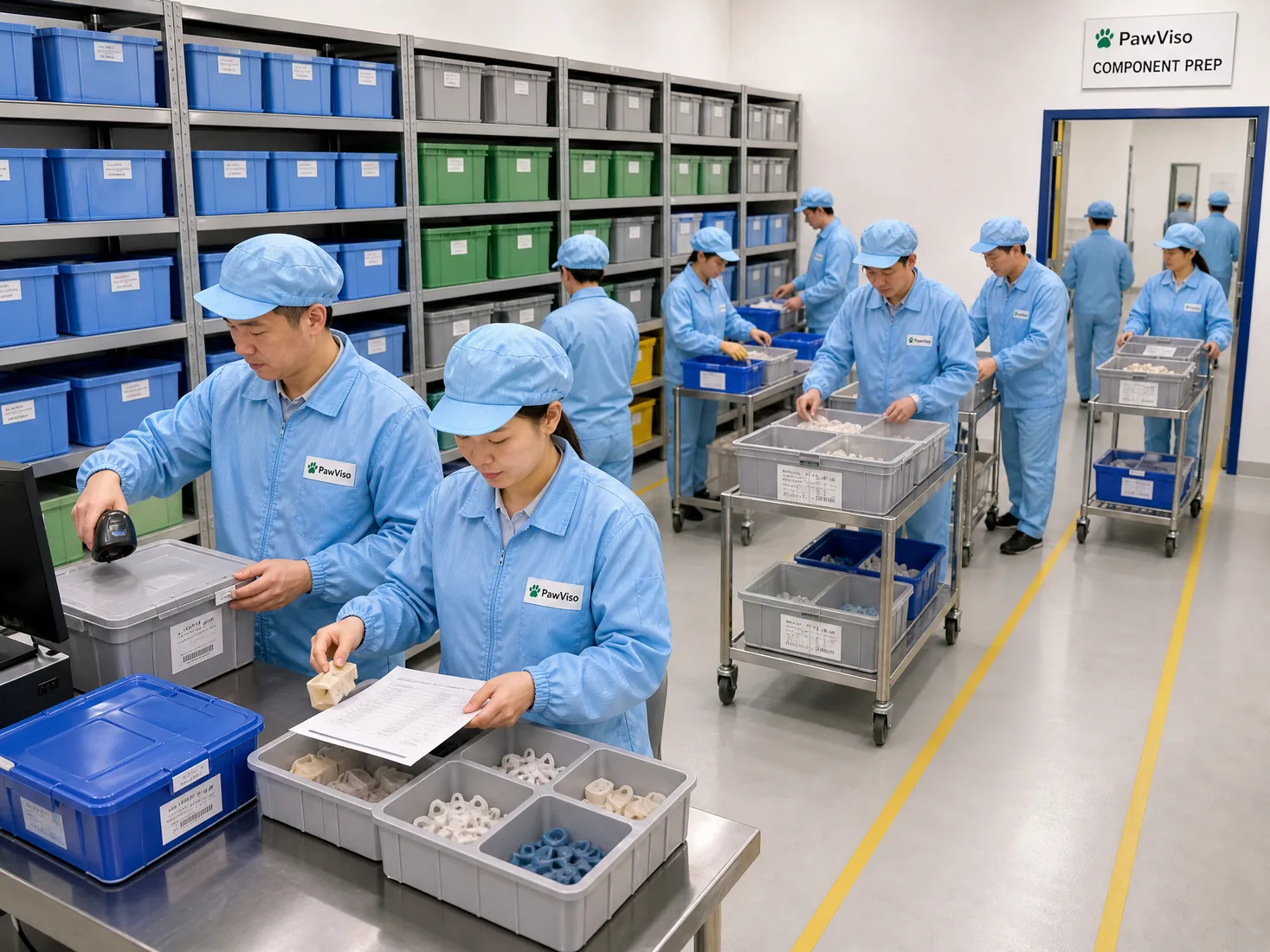
This guide gives U.S.-market buyers — retailers, importers, distributors, and private-label teams — a practical, vendor-facing framework for sourcing dog bandana custom name and design products. It focuses on supplier screening, product specifications, material/component evidence, sampling and pilot-run checks, packaging and retail readiness, quality-control (QC) planning, and the commercial tradeoffs buyers routinely make. The guidance avoids performance or regulatory guarantees; buyer/importer confirmation is required for any final claims and for meeting target-market obligations.
Decision framework: what to decide before you contact suppliers
Before issuing requests for quotation (RFQs) or signing an agreement, decide the business-critical parameters. These choices narrow supplier lists, reduce rework on samples, and protect margin.
- Target SKU family: basic bandana, reversible bandana, or bandana with integrated ID pocket.
- Customization level: dog bandana custom name (single-line name), dog bandana custom design (full-art print), or both. Decide if names will be embroidered, heat-transferred, or printed.
- Volumes and MOQ expectations: initial pilot (100–500 pcs), reorder cadence, annual volume. If you also source custom dog leashes bulk or custom dog collars bulk, coordinate MOQ incentives with the same supplier where possible.
- Price band vs. margin: target landed cost per unit and acceptable quality tier.
- Delivery timelines: standard production lead time and desired LDP/DDP terms.
- Regulatory/label needs: fiber content, care instructions, country of origin marking, and safety labels. Use compliant label text planned for U.S. retail.
- Packaging format: polybags, hang tags, retail-ready hangers, or black-box kits for subscription channels.
Decision checklist (compact)
| Decision area | Typical options to commit before RFQ |
|---|---|
| Customization type | Embroidery, print, applique, heat-transfer |
| Materials | Cotton, polyester, blended, performance knit |
| Attachment method | Snap, tie, Velcro, buckled loop |
| MOQ intent | 100–500 pilot; 1,000+ production |
| Packaging | Bulk polybag, single retail-ready pack |
Record these decisions in your RFQ template. Suppliers without firm capability in your chosen customization method or unable to meet MOQ timelines should be deprioritized.
Supplier screening: evidence and red flags
Screen suppliers for production capability, export experience, and evidence specific to dog bandanas and adjacent products (dog collars bulk, dog bandanas wholesale, etc.). For private-label teams, suppliers that can also do custom dog leashes bulk or custom dog collars bulk offer economies, but only if controls are in place.
Minimum supplier evidence to request
- Corporate registration and export license.
- Product catalog showing bandanas and adjacent lines (collars, leashes) with photos and technical sheets.
- Factory photos or video showing cutting, printing/embroidery, and finishing lines.
- Recent client references or verifiable purchase orders for bundled pet accessory programs.
- Lead times, MOQ, and pricing tiers by customization type.
- QC and testing partnerships or in-house lab capabilities.
Red flags
- Reluctance to provide factory floor photos or client references.
- Vague answers about embroidery machines, pigment inks, or thread brands.
- No documented change-control process for artwork or name lists.
- Extremely low unit prices that undercut market without explanation.
Two-tier supplier shortlist (compact)
| Tier | Typical capability profile |
|---|---|
| Tier A | In-house embroidery/DTG printing, QC lab, export experience, handles multi-SKU orders (bandanas + collars + leashes) |
| Tier B | Subcontracted customization, limited QC, competitive prices for basic bandanas wholesale but longer lead time for custom work |
Ask for proof: serial photos of recent finished goods, machine lists (e.g., number of heads for embroidery), and sample cost policy. Verify references directly.
Product specifications and material/component evidence
Define the technical spec sheet for each SKU variant. For dog bandana custom name or dog bandana custom design, the differences are material choice, print method, and finishing details.
Core spec items to include in RFQ
- Finished dimensions and tolerance (e.g., small 12" base length ±0.5").
- Fabric composition and GSM (e.g., 100% cotton, 180 GSM).
- Edge finish (serged hem, double-needle topstitch).
- Attachment method (ties, snaps rated to X N).
- Customization method and stitch density or print ink type.
- Labeling and care instructions text, and artwork for hangtags.
- Color references (Pantone or supplier dye-lot numbers).
- Packaging: polybag type, UPC/hangtag, inner pack counts, master carton details.
Material and component evidence to request
- Fabric mill certificate and fiber analysis or test reports showing composition and colorfastness.
- Thread spec (sashiko, polyester 40 wt), snap/buckle supplier datasheet showing corrosion resistance.
- Ink datasheet for prints claiming wash and lightfastness.
- Evidence of OEKO-TEX or similar if buyer requires restricted substance screening; otherwise request a restricted substances list (RSL) and supplier attestations.
Material tradeoffs (compact)
| Material | Pros | Cons | Typical use |
|---|---|---|---|
| 100% cotton (woven) | Soft, premium look, printable | Shrinkage, higher cost | Boutique/eco lines |
| Polyester (knit) | Durable, colorfast, low shrink | Can feel synthetic, heat sensitive | Sport/active bandanas |
| Blended (poly-cotton) | Balance of cost and hand | Compromises on both properties | Mid-tier private label |
Demand test evidence: require supplier-provided lab tests for colorfastness to washing and crocking, and tensile tests for snaps/attachments. Where a supplier claims compatibility with active-wear inks or special finishes, request documentation.
Note: Buyers must confirm final claims and target-market obligations with their legal/compliance teams and testing labs. The guide does not make safety, regulatory, or performance guarantees.
Sampling and pilot-run checks
Sampling strategy is the most critical factor for avoiding production rework when dealing with personalization (names, full designs) at scale.
Sample types to require
- Proto sample: made from standard materials with correct construction but produced by hand.
- Production sample: made on the line with production methods, including the exact embroidery or print setup for names and designs.
- Pre-production (PP) sample or golden sample: final reference for color, stitch density, placement, and labeling; to be signed off before mass run.
- Size set: all sizes/colors to check consistency.
Checklist for testing samples
- Fit and finish: measure against spec tolerances.
- Name placement and readability: check embroidery density, thread tension, font legibility on 3–4 name examples (short, long, mixed case).
- Durability: run a lab wash test and a simulated rub/crock test.
- Attachment stress: test snaps/ties to pull force specs and repeated cycle action.
- Print/embroidery bleed: washer/dryer cycles and UV exposure if sold for outdoor use.
Sample handling for custom name workflows
- For dog bandana custom name orders, require a template file standard (CSV with name column, font choices, color mapping) and a proofing process with digital mockups plus sample embroidery for unusual names or diacritics.
- Insist on a standardized art-approval turnaround time (e.g., 24–48 business hours) and define how errors in name spelling are handled contractually.
Pilot-run metrics to monitor
- Yield rate (% acceptable without rework).
- Customization error rate (misspelled names, wrong font/color).
- Average cycle time per customized SKU.
- Scrap rate and reason codes.
Sampling cost and lead time table
| Sample type | Typical lead time | Typical cost |
|---|---|---|
| Proto sample | 5–10 days | $20–$60 each |
| Production sample | 7–21 days | $40–$120 each (higher for complex embroidery) |
| Pre-production lot (small pilot 100–300 pcs) | 2–6 weeks | Priced per unit with setup amortized |
Factor sample cost into the overall project budget. An inexpensive supplier quote can hide high sample or rework costs.
Packaging and retail readiness
Packaging is a sales channel decision and affects landed cost, shelf presence, and returns. Define packaging early and include it in the RFQ.
Decisions to make
- Individual retail-ready packaging vs. bulk polybag: retail channels may require UPC, hangtags, polybag dimensions, and barcode placement.
- Inserted paperwork: care label, legal warnings, and any brand messaging.
- Environment claims: recyclable/polymer choices; request supplier evidence if marketing sustainability.
- Pack counts and master carton construction.
Label and warning considerations
- Include fiber content, country of origin, care instructions, and place for a UPC/hangtag.
- For personalization, include handling disclaimers (e.g., “Check attachment hardware regularly.”) but do not provide veterinary or safety guarantees.
- If buyers plan to include product-use instructions that touch on handling animals (for example, whether can you pick a dog up by the harness is acceptable), coordinate with legal and compliance. Avoid making instructions that imply medical or veterinary advice; state facts neutrally and reference accepted guidance where necessary. Buyer/importer confirmation is required for such messaging.
Packaging spec table (example)
| Packaging element | Example spec |
|---|---|
| Inner pack | Single retail polybag, 2 mil clear, hang hole |
| Hangtag | 50 mm x 80 mm, printed front/back, barcode area |
| Master carton | 40 x 30 x 25 cm, 12 units, 15kg max, 3-layer corrugated, fluting E/EB/B |
| Labeling | External master carton: SKU, color, size, qty, PO number, country of origin |
Ask for packaging samples to verify barcodes, hang-tags, and retail shelf fit. Confirm inner packing density for fulfillment center requirements.
Quality control and commercial tradeoffs
Quality control should be proportionate to price point and customization complexity. Define inspection scope and the division of responsibilities.
QC levels and when to use them
- In-line QC: supplier performs daily defect checks; required when personalization processes introduce human error (embroidery, hand-finishing).
- Final random inspection (AQL): used for production orders; accompany defined AQL levels for critical, major, and minor defects.
- 100% check: Consider for high-risk items (e.g., name personalization with safety-critical attachments) or for premium private-label launches.
Suggested defect categories
- Critical: foreign objects, choking hazards due to loose hardware, incorrect materials claim.
- Major: incorrect personalization (misspelling), large visible stains, wrong attachment method.
- Minor: cosmetic stitches, slight color variation within agreed tolerance.
Tradeoffs buyers commonly make
- Price vs. customization accuracy: the cheapest supplier may cut corners on proofing workflows, increasing the customization error rate. Expect to amortize extra costs for artwork management.
- Lead time vs. quality: compressed schedules may increase the risk of mis-embroideries or suboptimal color matching.
- MOQ vs. SKU depth: lower MOQ increases per-unit cost; higher SKU variety requires larger total inventory and more SKUs to manage.
- In-house vs. outsourced QC: in-house inspections reduce disputes but increase time and travel costs.
Sample QC plan outline
- Pre-production meeting defining golden sample and approval steps.
- Inline checkpoints at printing/embroidery and finishing lines with photo logs.
- Final AQL inspection third-party or buyer rep for first production run.
- Post-shipment review and defect tracking for supplier corrective action plans (CAPA).
Contract terms to include
- Rework and replacement clauses for personalization errors with defined turnaround times.
- Credit or refund structure tied to inspection failure thresholds.
- Artwork and data security clauses to protect customer name lists and designs.
Frequently asked questions
Q: What’s the difference between dog bandana custom name and dog bandana custom design? A: dog bandana custom name typically means adding text (a pet’s name) by embroidery or heat transfer; dog bandana custom design refers to full-art prints or all-over patterns. Both have different setup, production time, and quality checks—name work requires proofing per unit, design work requires color management and screen/print setup.
Q: Can I consolidate orders for dog collars bulk and custom dog leashes bulk with the same supplier? A: Consolidation can reduce freight and MOQ pressure, but only if the supplier can demonstrate consistent quality across product types and has separate controls for hardware (collars/leashes) versus textile personalization. Verify factory capabilities and ask for cross-product samples before consolidating.
Q: What checks should I run on supplier-submitted artwork and name lists? A: Require standardized file formats (vector PDFs for designs, CSV for names), digital mockups for each order, a two-step proof approval (digital and sample), and a strict change-control log. Insist on signed approval before production starts to allocate responsibility.
Q: Should my product copy address “can you pick a dog up by the harness”? A: Avoid offering veterinary or handling instructions as factual medical advice. If including a neutral statement about handling or harness use, review it with your compliance/legal team and reference authoritative sources where appropriate. Buyer/importer confirmation is required for any behavior or safety guidance.
Conclusion
Sourcing dog bandana custom name and dog bandana custom design products for the U.S. market requires early decisions about customization method, materials, and packaging, plus a disciplined supplier-screening and sampling approach. Insist on production samples and pre-production sign-offs, require evidence for fabric, thread, snaps, and inks, and build QC gates that reflect the error risk from personalization. Consolidating dog bandanas wholesale with adjacent product lines like custom dog leashes bulk and custom dog collars bulk can cut costs but demands verified multi-product capability. Use the decision checklist, supplier evidence requirements, and QC plan outlined here as a template for RFQs and contracts. Remember: this guide does not guarantee regulatory compliance or product performance — buyer/importer confirmation and testing are required before making final market claims.
Buyer search scope
This guide addresses the following U.S. B2B procurement search phrases. Each phrase is considered in the context of supplier selection, product specifications, samples, packaging and quality evidence rather than as a consumer recommendation.
| Search phrase | Buyer use |
|---|---|
| dog bandana custom name | Primary procurement focus for this guide |
| dog bandana custom design | Related specification, supplier or range-planning query |
| custom dog leashes bulk | Related specification, supplier or range-planning query |
| custom dog collars bulk | Related specification, supplier or range-planning query |
| dog collars bulk | Related specification, supplier or range-planning query |
| dog bandanas wholesale | Related specification, supplier or range-planning query |
| can you pick a dog up by the harness | Related specification, supplier or range-planning query |
Final CTA — Prepare a focused dog walking & apparel sourcing brief with PawViso.
Share your target U.S. channel, product format, estimated order structure, packaging direction and customization requirements for a practical B2B discussion.
Email: info@PawViso.com
WhatsApp: +86 186 8106 4480
Related PawViso resources
- Continue with How to Source Adjustable Dog Harnesses to compare a related supplier, sample and quality-control route.
- Browse the PawViso product catalogue to identify product formats for your purchasing brief.
- Follow the PawViso sourcing process and review the B2B buyer FAQ before sharing requirements.
External reference
Use ISO 9001 quality-management systems guidance as general quality-system context, and confirm the product-specific evidence that applies to the selected SKU, channel and target market.