
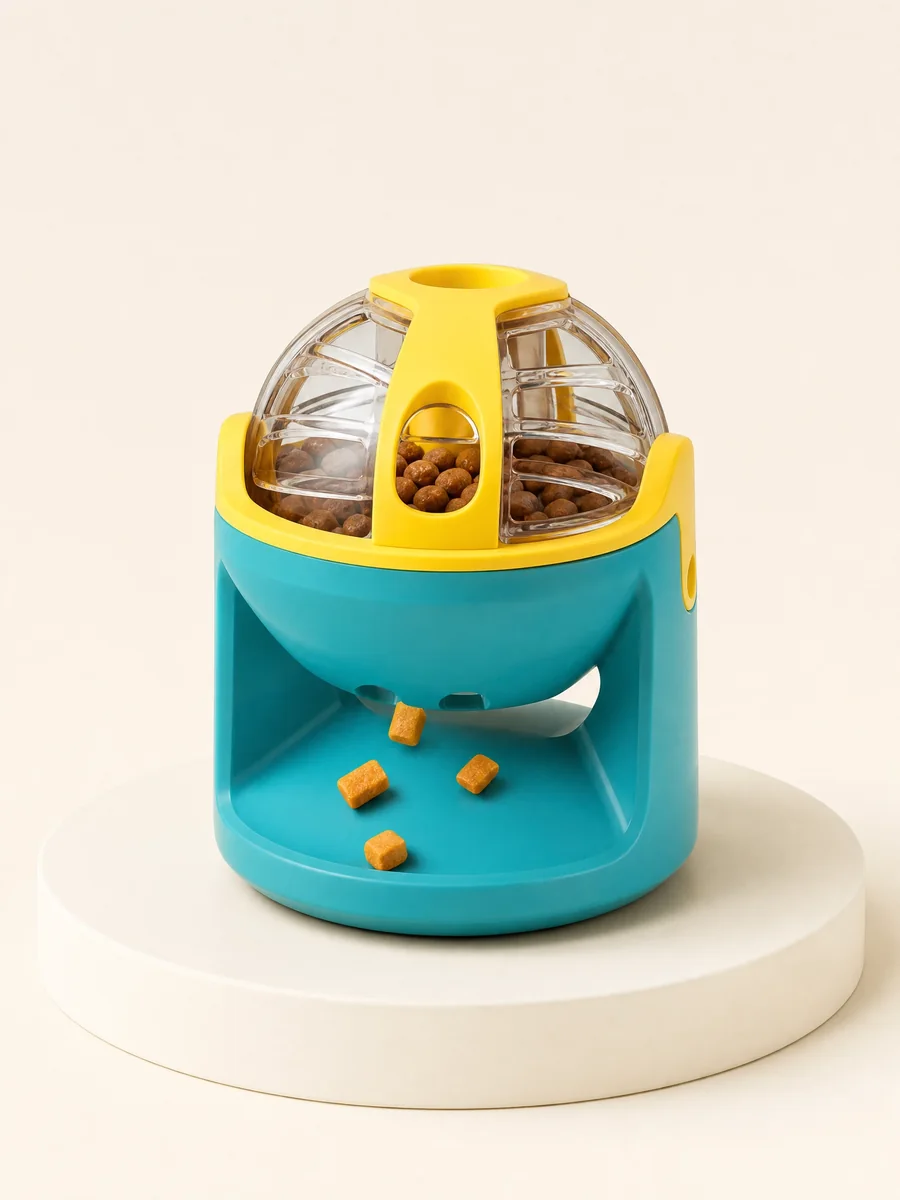
This guide is written for U.S.-market pet-product retailers, importers, distributors, and private‑label teams evaluating ceramic slow feeder dog bowl custom offers and adjacent SKUs. It focuses on decision-making criteria, supplier evidence, sampling and pilot checks, packaging and retail readiness, quality‑control measures, and commercial tradeoffs — without product-performance or regulatory guarantees. Buyer/importer confirmation is required for final claims and target‑market obligations.
Decision framework
A concise, repeatable framework helps compare offers across price tiers and supplier types:
- Business goals: brand positioning (value vs. premium), target price points, expected margins, order cadence (one-off vs. rolling replenishment), and private‑label requirements (dog bowl custom logo, hangtags, UPCs).
- Risk tolerance: lead time variability, certification/documentation requirements, intellectual property (IP) protection, and willingness to accept minor cosmetic variation.
- SKU strategy: core slow feeder designs (maze depth, diameter), complementary SKUs (silicone feeding mats, collapsible bowls), and cross-sell packaging.
- Technical must-haves: material statements, test evidence, kiln and glaze process descriptions, and inspection plans.
- Commercial constraints: MOQ, landed cost sensitivity, FOB vs. DDP terms, payment terms, and warranty/return policy responsibilities.
Use the framework below to score each supplier proposal (0–5) across six dimensions to produce a comparable supplier shortlist.
| Scoring dimension | What to check | Weight |
|---|---|---|
| Technical evidence | Material spec sheet, test reports, glaze composition | 25% |
| Manufacturing capacity | Monthly output, kiln count, lead times | 15% |
| Quality systems | AQL, inline checks, final inspection process | 20% |
| Compliance documentation | Food-contact claims, third‑party lab tests | 15% |
| Commercial terms | MOQ, pricing breaks, incoterms | 15% |
| Supply risk | Single-supplier exposure, contingency plans | 10% |
Score suppliers, then run financial sensitivity (landed cost ±10–20%, defect rate scenarios) before final selection.
Supplier screening: credentials and red flags
What to require up front:
- Legal identity and factory details: business license, GMP or factory photos, production lines and kiln capacity, and a singular contact at the plant responsible for quality.
- Product portfolio and references: actual photos of comparable slow feeder runs, export history to the U.S., and three business references (distributors/retailers, not retail consumers).
- Manufacturing capability: capacity per SKU, typical lead times, tooling timelines for custom molds or impressed maze patterns, and after‑sales support for defect handling.
- Documentation: material declarations, MSDS for glazes, standard test reports (see next section), and packing specs.
Red flags:
- Refusal to share factory photos or provide plant contact.
- Overly generic certificates without SKU‑level test reports.
- No internal inspection process, no AQL stated, or unwillingness to accept third‑party inspection.
- MOQ or payment terms that clash with your cash-flow or inventory plans.
When screening, ask if the supplier also handles related product types you may add later (for example, silicone or collapsible bowls). If they offer other categories, you can leverage consolidated shipments and lower logistics overhead. For example, ensure they can coordinate with or are themselves an experienced silicone dog bowl manufacturer or have proven subcontractors. Multiple product types can improve freight economics but increase cross‑contamination risk in shared production lines.
Product specifications and design decisions
Define clear, testable specifications you will use for supplier evaluation and sampling.
Essential spec areas:
- Geometry and function: outer diameter, inner bowl diameter, maze depth, wall thickness, and stable base dimensions to prevent tipping. Specify tolerance ranges (e.g., ±2 mm).
- Materials and composition: dominant body material (porcelain, stoneware), fired density, and recommended glaze types. Specify any restrictions (lead, cadmium limits in glaze; if you intend to sell as food-contact in the U.S., buyer confirmation and testing are required).
- Durability: thermal shock resistance claims, chip resistance test method, and acceptable failure modes.
- Surface finish and decoration: decal vs. underglaze vs. hand-paint; color tolerances, and exact placement for dog bowl custom logo.
- Weight and packaging size: weight per unit for shipping calculations, packed dimensions, and inner fill protectors.
- Marking and traceability: production lot code, country of origin marking, UPC placement, and any consumer labeling (care instructions, warnings).
Include granular acceptance criteria in the technical pack (tech pack) to avoid ambiguity. Example tech pack checklist:
- CAD drawing with dimensions and tolerances
- Material specification and firing schedule
- Glaze formulation summary (for supplier use)
- Decoration files and Pantone references
- Packaging dielines and mockups
- QC punch list and AQL thresholds
Table: minimum tolerances and acceptable cosmetic grades
| Attribute | Target | Acceptable tolerance / Grade |
|---|---|---|
| Outer diameter | 180 mm | ±2 mm |
| Wall thickness | 8 mm | ±1 mm |
| Maze depth | 10 mm | ±1 mm |
| Surface finish | Matte glaze | No visible hairline cracks; pinholes ≤2 per 1000 cm² |
| Decoration registration | Centered | ≤2 mm shift |
Your spec must reference how you will evaluate glaze safety and performance; do not assume compliance without evidence and testing.
Material and component evidence: what to request and how to interpret it
Ceramic production involves body clays, glazes, and sometimes rubber feet or silicone inserts. Each requires evidence.
Documents to request:
- Material declarations: names of raw material suppliers, clay types, and glaze base. Suppliers commonly provide a Material Safety Data Sheet (MSDS) or Safety Data Sheet (SDS) for chemical inputs.
- Third‑party lab testing: specific reports for heavy metals (lead, cadmium) in glaze and surface migration tests where applicable. Request sample‑specific tests, not generic factory certificates.
- Firing profile: kiln temperature and atmosphere. Different temperatures and cooling rates affect porosity and durability.
- Component specs: if adding non‑ceramic components (silicone inserts, rubber feet), ask for those manufacturers' test reports. If you plan multi-material lines, document that you may work with a silicone dog bowl manufacturer for inserts or offer collapsible pet bowl custom SKUs alongside ceramic ones.
How to interpret evidence:
- Test reports should name the lab, include test method used, sample photograph, and test lot number matching the sample you provided. Prefer accredited labs (ISO/IEC 17025).
- MSDS/SDS indicate handling hazards but do not replace migration or leach testing.
- Beware of lab reports that lack sample traceability or use unspecified limits. Request clarification if test method is absent.
If a supplier claims "food‑safe glaze," insist on SKU‑level migration tests and batch traceability. State that buyer/importer confirmation is required for final market claims.
Table: common tests and typical use-case
| Test | Purpose | When to require |
|---|---|---|
| Lead & cadmium migration | Verify heavy metal transfer from glaze to food | Always for glazes; SKU-level report required |
| Thermal shock test | Assess cracking when exposed to temperature change | Required if product marketed as microwave/oven safe |
| Chip/impact resistance | Simulated drop or rim chipping | Required for high‑volume retail SKUs |
| Tensile adhesion (for decals) | Ensure decoration adhesion | If using decals or printed logos |
| Silicone component safety | Extractables/leachables for food-contact silicone | If silicone inserts are used; request silicone dog bowl manufacturer reports |
Sampling and pilot-run checks
Sampling is your primary opportunity to validate specs, fit, and consumer experience proxies.
Sampling steps:
- Tooling mock-up and photo approval: for any new mold or impressed maze, receive photos and dimensions before die release.
- Pre-production sample (PPS): hand-made or initial run sample representing the approved tool and decoration process.
- Lab testing sample: take from the PPS or small pilot run and submit to an accredited lab for required migration and durability tests.
- Pilot production run: order a limited batch under production settings to validate lead time, packing, and defect rate before committing to full MOQ.
Checks to perform on samples:
- Dimensional inspection against tech pack tolerances.
- Visual inspection: glaze consistency, pinholes, crazing, decoration registration, and color match.
- Functional validation: slow-feed maze geometry tested with representative kibble sizes and measured to ensure desired feeding slowdown characteristics (note: avoid performance guarantees; this is to validate consistency).
- Drop and chipping test: simulate expected retail handling and consumer use.
- Packaging trial: pack samples into final retail cartons and assess crush resistance and retail shelf presentation.
Sample acceptance criteria should be absolute: one rejected PPS should trigger corrective actions and could require a new PPS. Define allowable defect rates at the pilot-run level (for example, ≤2% critical defects, ≤5% major defects) and require root-cause analysis if exceeded.
Cost and timeline notes:
- Tooling for ceramic molds / plaster molds: expect lead times of 2–6 weeks for small modifications, longer for complex custom logo reliefs.
- Kiln cycles mean batch outputs are time-boxed; discuss queueing and planned production slots to avoid delays.
- Expect sample costs (including testing) to be charged; negotiate partial credit against first bulk order.
Packaging, retail readiness and labeling
Packaging is a sales and loss-prevention tool. For retail, protect ceramics and ensure on-shelf appeal.
Key packaging considerations:
- Inner protection: custom corrugated inserts, molded pulp trays, or dual-layer corrugated for high-value SKUs.
- Unit vs. multipack: unit box size for single retail display or bulk pack for e-commerce bundles.
- Point-of-sale information: printed care instructions, barcode placement, country of origin marking, and any disclaimers required by your legal team.
- Retail-ready packaging: shelf-ready cartons (SRP) or display-ready packs that reduce in-store labor; include SKU dimensions and pallet configuration.
- Sustainability: negotiate recycled content and recyclability, but do not assume compliance without supplier evidence.
Packaging test checklist:
- ISTA 3A or similar transit test for e-commerce fulfillment or parcel shipping.
- Box compression test for pallet stacking.
- Shelf face mockup for retail layout and UPC readability.
Example packaging cost matrix
| Packaging option | Protection level | Typical cost impact per unit |
|---|---|---|
| Simple carton with kraft filler | Low | +$0.20–$0.50 |
| Molded pulp insert + printed box | Medium | +$0.60–$1.20 |
| Custom foam + retail display box | High | +$1.50–$3.00 |
Include dog bowl custom logo placement and printing tolerances in packaging dielines. If you require hang-tags or polybags for multi-channel retail, include these in the packaging approval samples.
Quality-control controls and acceptance strategy
Design QC for ceramics with layered checks: incoming raw materials, in-process checks, final inspection, and post-shipment verification.
QC elements to require:
- Incoming inspection: supplier verifies clay batches and glaze raw material quality; provide material lot records.
- In-process control: kiln temperature logs, glaze thickness checks, and visual inspections at critical points (pre-firing, post-firing, decoration stage).
- Final inspection (AQL): define sampling plans (common AQLs: 2.5% major, 4.0% minor, but specify based on SKU and channel). Require photographic evidence and report format.
- Third-party inspection: use independent inspectors for initial and periodic bulk shipments to validate supplier inspections and random sampling for lab testing.
- Corrective action process: non-conforming product procedure, root cause analysis, and rework or scrap disposition criteria.
Suggested AQL and sampling schema
| Defect category | Definition | Suggested AQL (example) |
|---|---|---|
| Critical | Safety or compliance failure (e.g., glaze contamination) | 0% |
| Major | Functionally unacceptable (e.g., cracked, severe deform) | 2.5% |
| Minor | Cosmetic deviations not functionally affecting product | 4.0–6.5% |
Require suppliers to retain batch samples for a defined period (e.g., 6 months) for traceability efforts. For private label lines, ensure the supplier prints lot codes on each carton and keeps lot-wise production logs.
Quality cost tradeoffs:
- Lower unit price often translates into higher allowable defect rates or looser cosmetic standards. Establish the maximum defect rate acceptable for each sales channel (online shoppers expect near-perfect units; value brick-and-mortar may accept higher cosmetic variance).
- Investing in better packaging and stricter AQLs reduces return rates but increases unit cost.
Commercial tradeoffs and go-to-market decisions
Balancing cost, lead time, and quality is central to sourcing.
Key commercial tradeoffs:
- MOQ vs. unit price: ceramic production has tooling and firing batch economies. Smaller MOQs typically increase unit cost but reduce inventory risk. Negotiate price breaks and consider rolling replenishment to keep inventory lean.
- FOB vs. DDP: FOB offers lower upfront cost but requires you to manage freight and customs; DDP simplifies landed cost but increases supplier responsibilities and margins.
- Consolidation of SKUs: sourcing multiple items (e.g., slow feeder dog bowl wholesale bundles, silicone collapsible add-ons) from a single supplier reduces logistics complexity but can increase per‑SKU risk if the factory has quality lapses.
- Private label modifications: adding dog bowl custom logo, bespoke colors, or new maze patterns increases tooling and sample costs; evaluate lifetime sales projections before approving tooling spend.
- Parallel suppliers: keeping a backup supplier reduces supply risk but increases vendor management overhead. For high-volume core SKUs, maintain at least two qualified sources with staggered capacity.
Pricing model to run:
- Landed cost = FOB unit + Packaging + QC/testing amortized + Freight + Customs + Inland distribution + Buffer for returns/warranty
- Model multiple scenarios (best-case, likely, worst-case) for yield, freight surcharges, and defect rates to understand unit economics.
If you plan to buy slow feeder dog bowl wholesale for multiple channels, catalog both unit economics and channel-specific acceptance criteria.
Frequently asked questions
Q1: What documentation should I require to confirm food-contact safety? A1: Request SKU‑level third‑party test reports (lead/cadmium migration or equivalent) with lab accreditation details, SDS for glaze inputs, and sample traceability. Buyer/importer confirmation is required for final market claims.
Q2: Can a supplier provide both ceramic and silicone products? A2: Yes; some factories or trading partners handle multi-material SKUs. If you plan to add silicone components, ask if they source them from a certified silicone dog bowl manufacturer and request the silicone supplier’s test evidence.
Q3: How can I protect a custom maze design or dog bowl custom logo? A3: Use non-disclosure agreements, clearly document design ownership in purchase terms, and where appropriate, register design IP in relevant jurisdictions. Also control tooling ownership and require return of molds or assert rights in contracts.
Q4: What inspection frequency is recommended for ongoing orders? A4: For new suppliers: inspect every shipment until stability is proven (3–6 shipments). For established suppliers: reduce to periodic inspections (e.g., 1–2 per year) plus random post-shipment lab verification. Adjust based on defect trends.
Conclusion
Sourcing a ceramic slow feeder dog bowl custom program for the U.S. market requires deliberate trade-offs between cost, quality, and time-to-market. Build a clear technical pack; insist on SKU-specific material and lab evidence; run structured sampling and pilot runs; and define packaging and retail requirements early. Implement layered QC (incoming, in-process, final inspection and third‑party audits), and quantify commercial tradeoffs with landed cost and risk models. Use the supplier scoring framework in this guide to shortlist vendors, then validate with sampled products and independent lab testing before scaling.
Remember: do not rely on verbal assurances; require documented, SKU‑level evidence and maintain buyer/importer confirmation for regulatory or safety claims.
Buyer search scope
This guide addresses the following U.S. B2B procurement search phrases. Each phrase is considered in the context of supplier selection, product specifications, samples, packaging and quality evidence rather than as a consumer recommendation.
| Search phrase | Buyer use |
|---|---|
| ceramic slow feeder dog bowl custom | Primary procurement focus for this guide |
| slow feeder dog bowl wholesale | Related specification, supplier or range-planning query |
| slow feeder dog bowl custom | Related specification, supplier or range-planning query |
| dog bowl custom logo | Related specification, supplier or range-planning query |
| silicone dog bowl manufacturer | Related specification, supplier or range-planning query |
| dog bowl manufacturers usa | Related specification, supplier or range-planning query |
| collapsible pet bowl custom | Related specification, supplier or range-planning query |
Final CTA — Prepare a focused pet feeding accessories sourcing brief with PawViso.
Share your target U.S. channel, product format, estimated order structure, packaging direction and customization requirements for a practical B2B discussion.
Email: info@PawViso.com
WhatsApp: +86 186 8106 4480
Related PawViso resources
- Continue with How to Source Slow Feeders for Dogs and Cats to compare a related supplier, sample and quality-control route.
- Browse the PawViso product catalogue to identify product formats for your purchasing brief.
- Follow the PawViso sourcing process and review the B2B buyer FAQ before sharing requirements.
External reference
Use ISO 9001 quality-management systems guidance as general quality-system context, and confirm the product-specific evidence that applies to the selected SKU, channel and target market.