
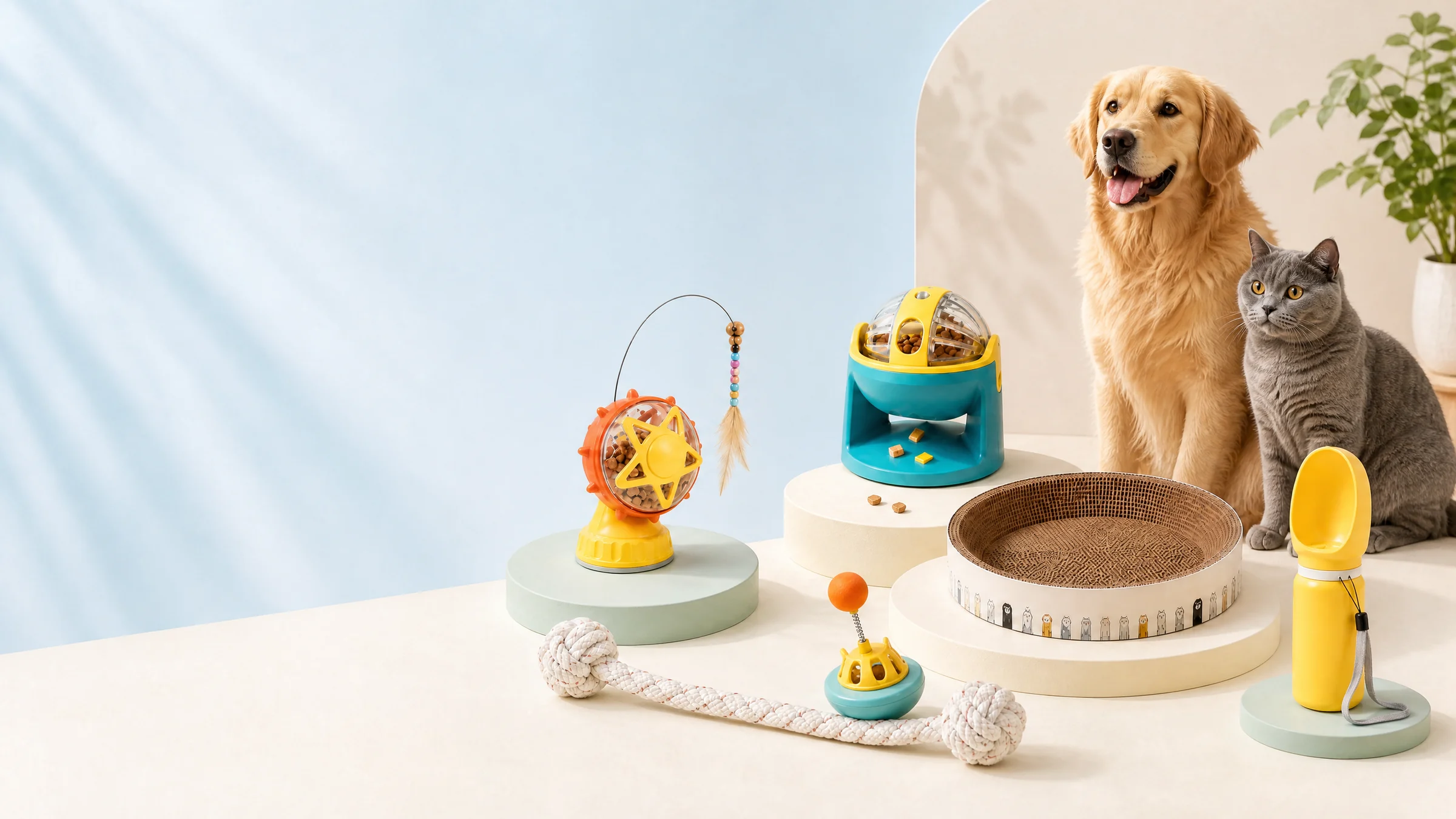
For an online pet retailer, premium should be a documented merchandising position rather than a synonym for a higher price. A product is easier to position when its use case is clear, its visible design differences can be shown in a listing, and the buyer can confirm the relevant specifications before quotation and launch. In practice, premium positioning is a sourcing and communication decision: the retailer must be able to explain what the customer is paying for without using unsupported performance, safety, or market-success claims.
This guide provides a neutral framework for importers, distributors, online retailers, and private-label teams reviewing pet accessories for e-commerce. It does not represent a product specification, certification statement, price list, MOQ, lead-time promise, capacity claim, or sales forecast for PawViso. Confirm all actual specifications, materials, packaging, compliance documents, commercial terms, and availability with the supplier and buyer.
Define the premium proposition before comparing prices
Start with the customer problem and retail role. A premium item may offer a distinctive form, clearer interaction, coordinated collection, or presentation that helps shoppers understand it quickly. The value should fit the title, images, packaging, and customer-service script. If the only difference is price, the listing may be difficult to defend.
Ask whether the buyer can identify the functional purpose, show a design difference in approved assets, and explain the proposition without implying an untested result. Record the answers in the sourcing brief.
Retailers should also separate factual copy from merchandising language. Words such as “durable,” “safe,” “non-toxic,” “eco-friendly,” “premium,” and “long-lasting” may require evidence, qualification, or market-specific review. Seller and product information should remain consistent across the product page, order records, packaging, and support route. Clear seller information is also a recognized consumer-protection consideration for online marketplaces.1
Screen product categories by retail role
The following table is a starting framework, not a catalog of confirmed PawViso specifications. Before approval, request the relevant sample, drawing, material declaration, packaging details, instructions, warnings, and testing or inspection information. Confirm with the supplier and buyer whether the proposed wording is accurate for the exact version and destination market.
| Product category | Neutral online-retail positioning angle | Buyer checks before approval |
|---|---|---|
| Interactive puzzle toys | Demonstrable play format, distinctive form, and a clear sequence for product photography or video | Confirm construction, materials, component attachment, size guidance, pack contents, warnings, and approved use language with supplier and buyer |
| Slow-feeder products | A non-food pet accessory whose form and cleaning presentation can be explained clearly | Confirm dimensions, material declaration, cleaning instructions, packaging, warnings, and destination-market requirements with supplier and buyer; do not publish feeding, nutrition, or health advice |
| Cat scratching boards | Surface presentation, placement context, and coordinated home-interior styling | Confirm structure, materials, mounting or placement details, packaging protection, and warnings with supplier and buyer |
| Cat teaser toys | Color story, interaction format, and giftable presentation | Confirm component attachment, materials, small-part considerations, pack contents, and use warnings with supplier and buyer |
| Pet grooming tools | Demonstration-friendly form, organized storage, and clear handling instructions | Confirm dimensions, working components, materials, instructions, warnings, and packaging with supplier and buyer |
| Cotton-rope tug toys | Tactile construction, recognizable play format, and strong visual merchandising | Confirm rope composition, construction, size range, care notes, warnings, and pack contents with supplier and buyer |
| Travel water bottles | Portable format, closure design, handling context, and travel-oriented photography | Confirm capacity, closure design, material declaration, leak-test method, packaging, and market requirements with supplier and buyer |
For slow-feeder products, the safe editorial boundary is especially important. Treat the item only as a non-food pet accessory. Describe observable form, handling, cleaning, packaging, and general use instructions once confirmed. Do not provide food recommendations, recipes, portions, feeding schedules, nutrition, allergy statements, medical claims, or veterinary advice. Any customer-facing instructions must be reviewed for the destination market and the exact approved product version.
Build a product page around verified evidence
Premium merchandising depends on content readiness. Before ordering, ask for an asset brief covering product angles, details, scale, packaging, context, care, and assembly images where relevant. Video may demonstrate handling, but should not imply guaranteed behavioral, health, durability, or safety outcomes. Assets should make the product easier to verify.
The title should state the category and use case plainly. Opening images should answer what the item is, how it is handled, and which design feature matters. Distinguish confirmed facts from positioning language, and keep the approved sample, parameters, colors, pack contents, carton information, and revision history in one record.
The retailer should keep seller identity, product information, origin details where required, and customer support consistent across the catalog. The FTC’s INFORM Consumers Act guidance discusses information consumers may encounter on online marketplaces.1 This supports a transparency practice; it does not prove any PawViso certification, marketplace status, or product attribute.
Compare total commercial value, not only unit price
Evaluate a premium SKU across launch and replenishment. Compare configuration, packaging cube, carton quantity, sample cost, content effort, inspection scope, shipping assumptions, platform fees, returns, and variation management. A distinctive collection may simplify photography or cross-selling, but validate that hypothesis with channel data.
Request quotations that separate configuration, branding method, packaging, carton information, sample terms, inspection scope, and shipping assumptions. Confirm currency, Incoterms, payment terms, MOQ, lead time, documents, and revision control with the supplier and buyer. Indicative information is not a final commitment until confirmed in writing.
A compact launch assortment can improve operational clarity. Give each SKU a distinct role, establish an approval checkpoint, and document which variations are standard, customizable, or subject to tooling or separate review. Replenishment remains subject to supplier confirmation and buyer approval.
Prepare a private-label sourcing brief
Private-label buyers should define the brand system before requesting artwork. Include the target customer, channel, price architecture, tone, color range, packaging hierarchy, barcode requirements, carton marks, language needs, approval checkpoints, and claims the brand will not make. Instructions, warnings, and market requirements may vary by product and destination.
Ask the supplier to identify documents available for the exact version, and ask the buyer or importer to verify destination-country and channel rules. Confirm materials, dimensions, components, packaging, labeling, testing, and inspection with the supplier and buyer. A draft listing or generic sample is not evidence of compliance.
Frequently asked questions
What makes a pet accessory suitable for premium positioning?
A suitable candidate has a clear use case, an observable design or presentation difference, and documentation that supports the factual copy. The buyer should be able to show the value in approved images and explain it without unsupported superlatives or outcome claims.
Can a slow-feeder product be described with feeding or health benefits?
No. In this editorial framework, it is a non-food pet accessory. Limit copy to confirmed form, handling, cleaning, packaging, and general instructions. Do not provide food, recipe, portion, nutrition, allergy, medical, or veterinary advice. Confirm every instruction with the supplier and buyer.
What should be confirmed before a private-label order?
Confirm the approved sample, exact dimensions, materials, colors, components, logo method, packaging, pack contents, carton details, labeling, testing or inspection scope, MOQ, pricing, payment terms, Incoterms, lead time, and document set. Written confirmation should control the listing and order record.
How can a retailer avoid misleading product-page claims?
Create a claim register that links every factual statement to an approved specification, document, sample, or test record. Remove claims that cannot be supported, and ask the supplier and buyer to review the final copy and images before publication.
CTA: Request a PawViso sourcing review
If you are an importer, online retailer, distributor, or private-label buyer, send PawViso your target market, sales channel, preferred category, brand direction, packaging expectations, and required documentation. Use the PawViso contact page to start a reviewable conversation. Any product direction, customization option, specification, compliance document, price, MOQ, lead time, or availability should be confirmed with the supplier and buyer before sampling, quotation, listing, or order placement.
Related PawViso resources
- Continue with How to Build a Private Label Pet Product Line. Use this guide to connect customization, packaging and MOQ decisions.
- Browse the PawViso product catalogue to identify product formats for a sourcing brief.
- Follow the PawViso sourcing process and review the B2B buyer FAQ before sharing project requirements.
External reference
For independent product identification and barcode context, review GS1 guidance on Global Trade Item Numbers (GTINs). Confirm the requirements that apply to the selected product, target market and order.
References
Editorial status: review pending. Product parameters, materials, packaging, testing, compliance, claims, and commercial terms require confirmation with the supplier and buyer before publication or order placement.