
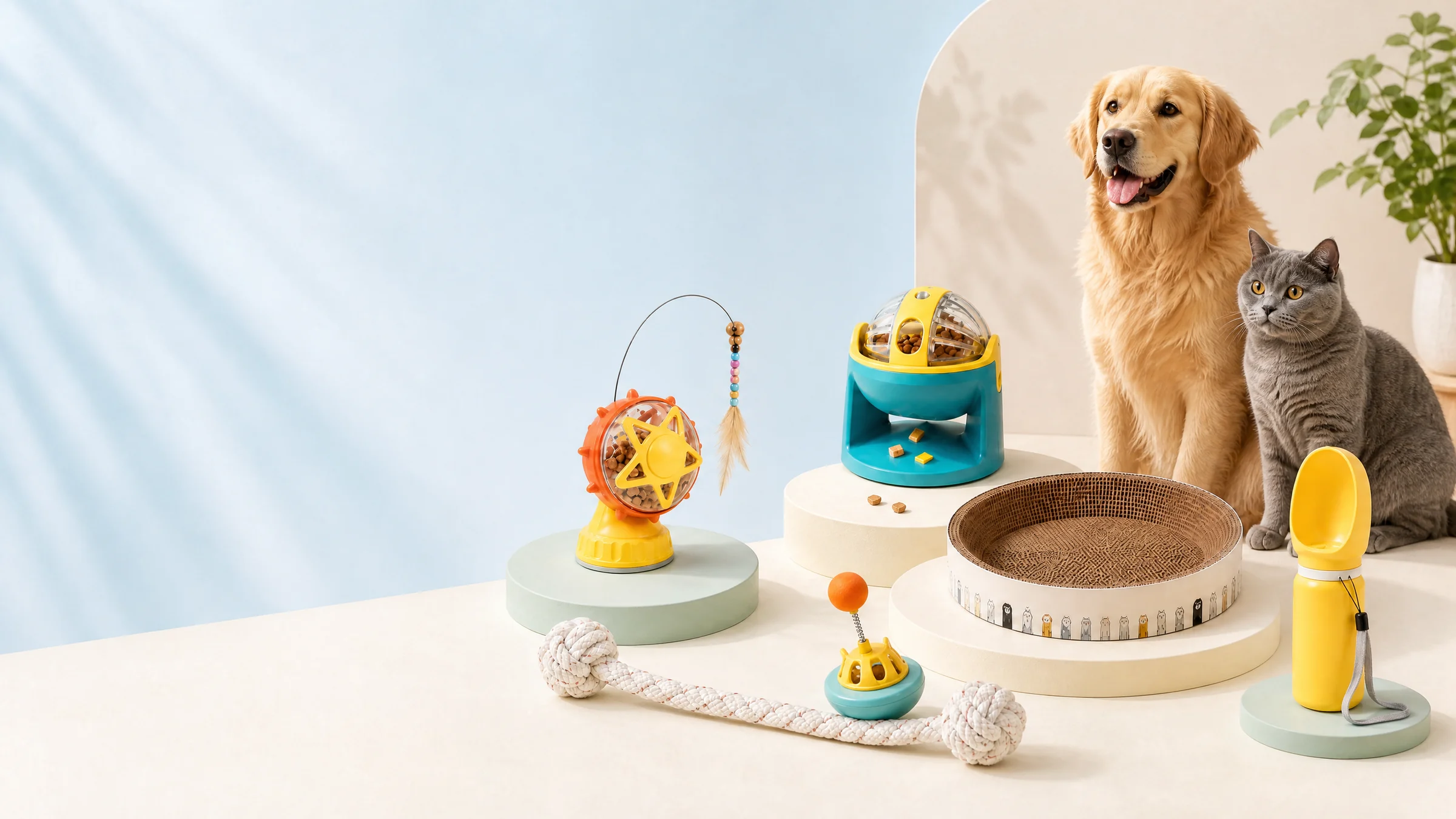
A new-owner collection should be easy to understand, practical to merchandise, and disciplined enough for a buyer to review one SKU at a time. Instead of treating an assortment as a long catalogue, importers, retailers, distributors, and private-label teams can organize it around shopping missions such as play, home routines, grooming, travel, and gifting. This approach helps teams compare roles, identify gaps, and limit unnecessary duplication.
This article is a procurement framework, not a product catalogue or a claim about PawViso’s current inventory, manufacturing scope, certifications, pricing, order quantities, lead times, or market performance. Any product availability, specification, material, packaging, compliance, customization, and commercial detail must be confirmed with the supplier and buyer for the relevant project.
Start with customer missions and channel requirements
The first decision is not how many products to order; it is which customer problems the range is intended to address. A “first play” mission might include an interactive toy, a teaser toy, and a cotton-rope tug toy. A “home routine” mission could include a cat scratcher and grooming accessories. A “travel and outings” mission may include a travel water bottle. These are category examples for planning and must not be treated as confirmed PawViso offerings.
Channel context changes the buying brief. A specialist pet retailer may provide more shelf education, while a general retailer may need compact packaging and very clear navigation. A distributor serving several markets may need neutral naming, editable artwork, and market-language files. Before samples are reviewed, document the destination countries, sales channels, animal categories, intended use, packaging language, display constraints, and any buyer-specific policies.
Build a balanced opening range
A practical first range should cover selected missions without requiring every size, color, or design variation. Begin with a shortlist, then compare samples against the role each SKU is expected to perform. The table below is a neutral planning tool rather than a specification sheet.
| Retail mission | Possible accessory categories | Buyer comparison points | Confirm with supplier and buyer |
|---|---|---|---|
| First play | Interactive toys, teaser toys, cotton-rope tug toys | Interaction format, display appeal, intended-use wording | Exact SKU, materials, dimensions, pack contents, warnings, carton details |
| Home routine | Cat scratchers, grooming tools, non-food slow-feeding bowls | Footprint, storage, cleaning instructions, shelf logic | Construction, finish, material description, care language, packaging, labeling |
| Travel and outings | Travel water bottles and portable accessories | Portability, closure concept, handling, display format | Capacity, dimensions, leak-test method, pack format, transport protection |
| Giftable or multi-pet | A curated mix across approved categories | Price architecture, color coordination, bundle logic | Bundle contents, artwork, labeling, MOQ, master-carton details |
When reviewing samples, use the same record for every item. Photograph the sample and packaging, note dimensions and visible construction, record questions, and separate observations from assumptions. Do not infer durability, safety, suitability, or performance from appearance alone. Request product information and agree on inspection or testing requirements before placing an order.
Treat slow-feeding bowls as non-food accessories
A slow-feeding bowl may be included in a retail assortment as a non-food pet accessory intended for a feeding-related use occasion. This article does not provide food, recipe, portion, nutrition, allergy, medical, or veterinary guidance. Buyers should avoid product copy that implies a health outcome unless a qualified review and market-specific substantiation support it.
For this category, confirm the exact construction, material description, dimensions, surface finish, cleaning instructions, intended animal type, packaging language, and any applicable test documentation with the supplier and buyer. The final wording should describe only the approved product function and verified care information. If a market requires additional warnings or labeling, identify those requirements before artwork approval.
Create a disciplined SKU and price architecture
Every SKU should have a clear role. An entry item may support trial, a more distinctive design may provide visual interest, and a practical accessory may support attachment within the same collection. These are assortment-planning roles, not promises about consumer demand. Model the commercial case using destination-market costs, duties, logistics, currency assumptions, retailer margins, and channel fees. Pricing, margin, MOQ, and reorder assumptions are buyer-specific and must be confirmed with the supplier and buyer.
Avoid creating multiple SKUs merely by changing colors. A variation is more defensible when it improves shelf navigation, serves a documented local preference, fits a bundle, or supports a deliberate private-label architecture. For private label, agree the hierarchy of master brand, collection name, product name, importer details, instructions, and market-language text before artwork is released. Do not print unverified terms such as “certified,” “indestructible,” “non-toxic,” or “safe for all pets.”
Add a quality, labeling, and compliance gate
Pet accessories can fall under different consumer-product obligations depending on the product, destination, claims, and sales channel. In the United States, the U.S. Consumer Product Safety Commission provides business resources on product safety responsibilities, reporting, recalls, and applicable requirements.1 For products placed on the European Union market, buyers should review the applicable obligations under the General Product Safety Regulation and identify the relevant economic operators and technical documentation needs.2
These sources do not create a universal approval for any specific SKU. Build a project-specific gate covering destination market, product classification, intended-use wording, materials, dimensions, warnings, traceability, packaging artwork, and inspection records. Where testing is requested, define the scope, laboratory, sample quantity, acceptance criteria, and report ownership in writing. Confirm requirements with the supplier and buyer, using qualified local advisers where necessary. Before approval, review translated copy, packaging and carton markings, inspection points, and complaint or corrective-action procedures.
Plan merchandising and replenishment together
A range needs consistent information across stores and online channels. Request an approved product name, dimensions, pack contents, carton information, care or use instructions where applicable, barcode requirements, photography specifications, and structured attributes. Check every selling point against approved information and market requirements; images and category names should not imply unconfirmed specifications.
Merchandising can be organized by mission, species, use occasion, or price tier. A slow-feeding bowl can be presented as a non-food accessory, with only verified care and use language. The final layout should follow the buyer’s channel standards.
Replenishment should be based on observed performance rather than unsupported “best-selling” language. Track sell-through by SKU, returns, damage or defect reports, customer-service themes, repeat-order timing, and channel-specific results where the buyer can share them. Initial quantities, safety stock, reorder points, and forecast periods are commercial assumptions; confirm them with the supplier and buyer.
Buyer questions before approval
Ask which mission each SKU serves, which specifications and documents are approved, what can be customized, and how artwork, packaging, labeling, samples, inspections, complaints, and bundle contents will be controlled.
FAQ: How many products should a new-owner collection include?
There is no universal number. Start with the missions the channel can explain and support, then remove overlapping items. Validate the final count against shelf or page space, forecast confidence, working capital, target margin, and the buyer’s replenishment process.
FAQ: Can PawViso support private-label assortments?
Private-label scope should be treated as project-specific. Ask PawViso to review the requested categories, artwork, packaging, labeling, sampling, and commercial requirements, then confirm what is available with the supplier and buyer before making any commitment.
FAQ: Are specifications standardized across the range?
No. A category name or product image is not sufficient evidence of a specification. Materials, dimensions, colors, pack contents, warnings, care instructions, and performance information must be confirmed for the specific SKU and destination market.
FAQ: What should an importer request before ordering?
Request the approved quotation, sample reference, product information, packaging artwork, carton details, inspection plan, and applicable market documentation. Review the set with the buyer and retain the approved version.
Build a reviewable range with PawViso
If you are planning a new-owner collection, contact PawViso with your target market, channel, product missions, packaging language, and order structure. Establish a shortlist and confirmation process. Product availability, specifications, documentation, customization scope, pricing, MOQ, lead time, and other commercial terms must be confirmed with the supplier and buyer before approval.
Related PawViso resources
- Continue with How to Create a Custom Pet Toy Sampling Plan. Use this pet-toy guide to structure approvals, samples and evidence.
- Browse the PawViso product catalogue to identify product formats for a sourcing brief.
- Follow the PawViso sourcing process and review the B2B buyer FAQ before sharing project requirements.
External reference
For independent product identification and barcode context, review GS1 guidance on Global Trade Item Numbers (GTINs). Confirm the requirements that apply to the selected product, target market and order.
References
- 1U.S. Consumer Product Safety Commission — Business and Manufacturing Resources
- 2European Commission — General Product Safety Regulation
Editorial note: This draft is for review. All product parameters, regulatory applicability, packaging, commercial terms, and publication dates require confirmation with the relevant supplier and buyer.