
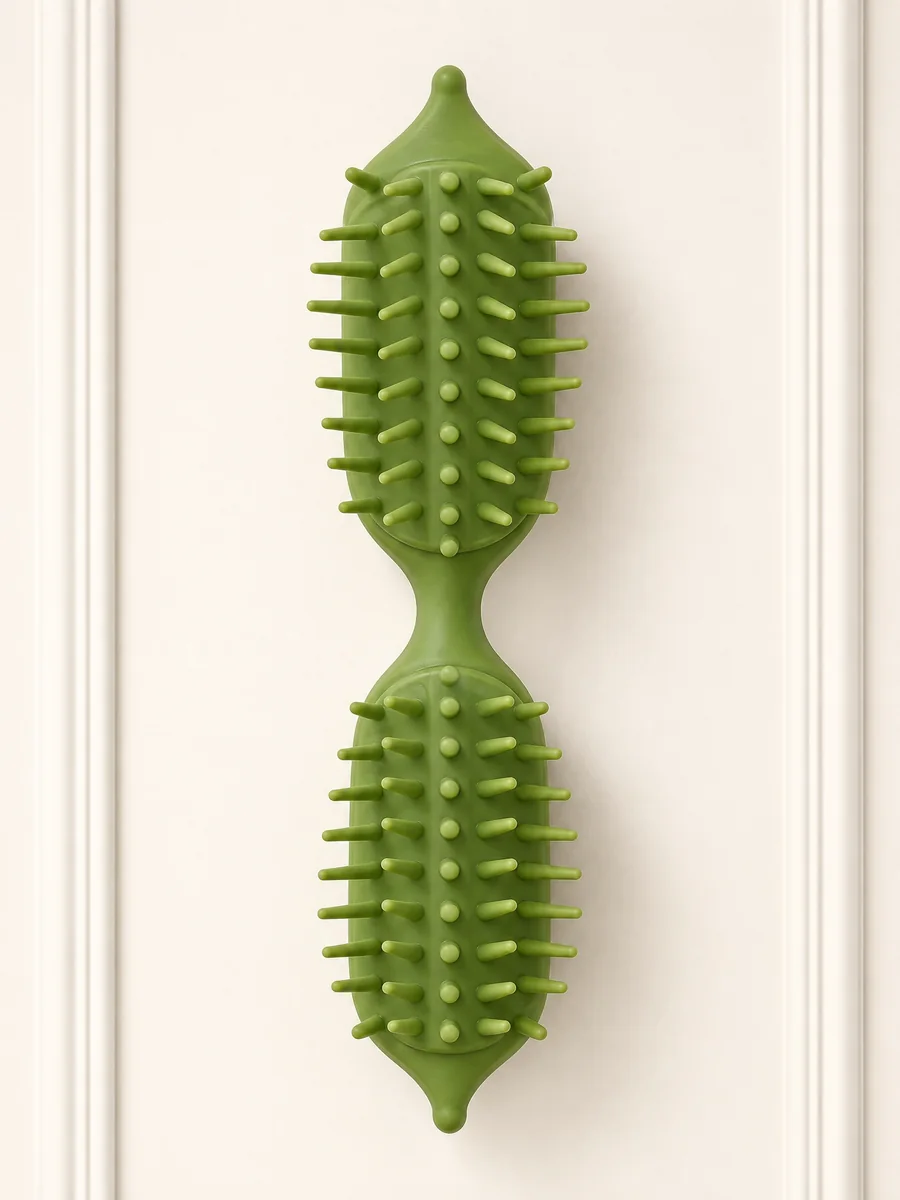
A self-grooming wall brush is best sourced as an installation-dependent pet accessory, rather than as a standard brush with a logo added at the end. The buying decision begins with where the unit is expected to sit, what surface it will meet, how it is retained, and how a customer understands the setup. The brush body, bristle field, mounting base, removable parts, instructions and retail pack are therefore one commercial system. A Chinese B2B pet-product factory or procurement partner should help turn that system into a controlled brief before quotation, not fill the gaps with assumptions.
This guide gives buyers a practical sequence for wall-brush positioning, installation, mounting alternatives, component records, bristle-retention controls, packaging, claims and reorder review. It does not promise a universal mounting result or a benefit for an animal. The responsible buyer or importer must confirm the actual SKU’s product, labeling, installation, claims and market requirements before production and sale. That review should follow the product’s intended market and retail channel; pet products should not be treated as children’s products merely because they are small consumer goods.
Module 1 — Decide the placement and assortment before requesting quotations
Start by naming the intended placement, because placement determines the shape, base contact area, instruction artwork and retail expectation. Ask whether the assortment is for a flat vertical surface, an internal corner, an external corner, a panel, or a coordinated set of formats. A corner-oriented item may suit one layout but not another; it should not be described as universally suitable simply because the brush field looks similar. The buyer should also decide whether the offer is a single hero SKU, a small format family, or a base product with replacement brush modules. That choice controls the number of component records and the complexity of replenishment.
Use an assortment map that distinguishes the customer decision from the supplier deliverable. The map does not need to dictate dimensions, materials or performance values at the earliest stage. It should instead make clear which visual form, mounting path and service concept require a separate sample and a separate SKU record. This avoids a common error: approving a flat reference image while expecting a corner product, alternative base or replacement part to be equivalent without review.
| Assortment tier | Buyer decision | Factory or procurement brief | Approval focus |
|---|---|---|---|
| Entry configuration | One visual format and one named placement | Product view, proposed mount route, pack contents | Does the item match the intended retail use case? |
| Format family | Flat and corner variants under one brand direction | Separate component and artwork identifiers for each format | Are placement limitations clear for every variant? |
| Service-led range | Fixed base plus replacement or removable brush element | Interface drawing, removal sequence and replenishment pack concept | Does the replacement part fit the approved base consistently? |
Module 2 — Select the primary mounting route and define its limitations
Choose one primary mounting route before approving tooling, artwork or consumer-pack copy. Adhesive mounting, screws with suitable anchors, and a dual-mount design are different products from an instruction and returns-management perspective. Adhesive can support a simple pack and a clean visual presentation, but suitability depends on the actual adhesive, preparation method and the surfaces named in the brief. Screw mounting adds hardware, tool and wall-construction questions, while dual mounting can help a broader positioning strategy but introduces more components and a greater risk of confusing instructions. Do not ask a supplier to state that any route works on every wall, finish or environment.
For pressure-sensitive adhesive designs, the brief should identify the adhesive source or approved equivalent, pad geometry, release-liner configuration, eligible surfaces, excluded surfaces and the exact installation sequence to validate. As general technical context, 3M notes that tape-bonding surfaces should be unified, clean and dry, that firm application pressure improves contact, and that porous or fibre-based surfaces may require sealing; it also emphasizes evaluating the actual tape, preparation and process for suitability.1 This is not a performance promise for a wall brush or a substitute for project evaluation. The buyer should request a proposed instruction sequence and review it against the chosen wall-surface scope before releasing production artwork.
| Mounting route | When a buyer may choose it | Information that must be controlled | Commercial limitation to disclose |
|---|---|---|---|
| Adhesive base | The intended surfaces and installation process are tightly defined | Adhesive identity or approved source, contact area, liner, surface wording | Compatibility is limited to the approved substrate and process scope |
| Screw-mounted base | The pack and retailer can support hardware and installation steps | Hole pattern, fastener list, anchor decision, cover treatment, tool wording | Wall construction and hardware suitability require buyer confirmation |
| Dual-mount base | Retail positioning genuinely needs two routes | Primary route, supplied components, unused-hole appearance, instructions | More parts and choices can increase pack and support complexity |
| Removable brush on fixed base | Cleaning or replenishment is an explicit range feature | Base route, latch interface, removal direction, re-engagement check | The base and removable element must be managed as linked components |
Module 3 — Convert the concept into a quotation-ready specification
A usable quotation request answers the supplier’s essential questions before cost is discussed: what is being quoted, how it is mounted, what is included, how it is packed, and what evidence the buyer expects at each approval stage. Reference photos alone are not a controlled specification. They can communicate style, but they rarely resolve which surface is intended, whether a base separates from the brush, what the consumer receives or which artwork revision applies. A Chinese sourcing partner can compare quotations fairly only when every respondent works from the same scope and lists exceptions separately.
Create one quote-scope sheet for each configuration and require a response against every line. Use “to be approved” where the buyer has not selected an option; do not silently turn an open decision into a factory assumption. The sheet should distinguish product components from supplied accessories and packaging components. It should also request the supplier to identify any substituted or omitted item, rather than treating a broadly similar catalogue version as compliant with the brief.
| Quote-scope category | What the buyer should state | Evidence or response to request |
|---|---|---|
| Product identity | Configuration name, reference images, intended placement and revision | Supplier’s product interpretation and exceptions list |
| Mounting system | Primary route, alternative route if any, supplied hardware and instruction scope | Component list and proposed installation diagram |
| Brush assembly | Bristle-field construction, removable or fixed status and appearance criteria | Component view and sample plan |
| Branding and artwork | Logo position, colour direction, required languages and artwork owner | Artwork input list and revision-control method |
| Packaging | Consumer unit concept, inserts, barcode need, carton-mark needs and assortment packing | Proposed pack breakdown and list of open decisions |
| Quality evidence | Sample checkpoints, inspection records and shipment-release information | Proposed control points, not unverified test claims |
Module 4 — Define bristle retention and component records as controlled requirements
Treat bristle retention as a defined characteristic, not as a general statement such as “strong bristles.” First identify the construction: a bristle field formed with the brush body, a field retained in a separate carrier, or another documented arrangement. The failure modes differ. A formed field calls for visual review of incomplete formation, excessive flash, bent elements and root condition. A separately retained field also needs review of seating, carrier engagement and consistency across the brush face. The buyer should not assume a visible sample demonstrates durability beyond the observed condition.
The practical control is a component record plus an agreed evaluation method. Record the component name, version, visible appearance, joining method, allowed movement or no-movement expectation, observation method and acceptance criterion. If the buyer wants a pull, flex, stroke, removal or reattachment check, define its sequence, direction, conditioning, sample selection, record format and accept/reject standard before the sample is approved. The factory should report observations against that agreed method, not promote an undefined “retention test” or invent a result.
| Component record | What to document | Review question |
|---|---|---|
| Brush face | Layout, density appearance, edge condition and visible defects | Is the field visually consistent with the signed sample? |
| Bristle root or carrier | Construction description, join location and relevant interface | What could loosen, crack, deform or separate during expected handling? |
| Base-to-brush interface | Fixed, sliding, clipped or otherwise defined engagement | Does the approved part seat and release in the stated direction? |
| Mounting element | Adhesive pad, holes, hardware or other route-specific element | Does the supplied component match the installation artwork? |
| Cover, cap or insert | Presence, fit, artwork revision and pack location | Can an inspector identify a missing or wrong component? |
Module 5 — Approve a sample as a baseline, not as an informal reference
Approve a sample only after the buyer can state exactly what it represents. A complete sample decision covers the product configuration, brush and base relationship, visible finish, mounting route, supplied accessories, installation instructions, cleaning wording, consumer pack and artwork revision. If a feature is still being developed, label it as open and request a revised sample or artwork proof. A verbal confirmation that the product is “the same as the sample” is weak when the sample had temporary hardware, a different pack, unfinalized attachment material or no traceable revision.
Use a signed sample-approval record that connects physical pieces to documents and images. Photograph the product from the relevant sides, list every loose component, identify the reference code, note the mounting route and attach the instruction draft. Then state the change-control rule: no material, construction, component-source, artwork, pack or mounting-route change without buyer review. This does not imply that PawViso operates a factory or approves products for a market. It gives the buyer and the selected supplier a common baseline for commercial review and production communication.
| Sample-approval item | Record to retain | Decision status |
|---|---|---|
| Physical sample | Dated photos, configuration code and visible-condition notes | Approved, conditional or resample required |
| Mounting pack | List of pads, hardware, caps, liner or inserts as applicable | Confirmed against the selected route |
| Brush and base | Interface photographs and removal or fit observations where relevant | Confirmed or open for adjustment |
| Instructions | Artwork file, language version and installation sequence | Approved only after buyer review |
| Packaging | Dieline or visual proof, contents list and barcode placeholder if needed | Approved, provisional or not included |
Module 6 — Make installation and cleaning instructions part of the product
The buyer should require a short, ordered installation sequence that matches the actual mounting route, not generic copy copied across the category. For an adhesive version, that sequence may identify the approved surface scope, preparation step, positioning, application step and any wait instruction that the selected adhesive documentation supports. For a mechanical version, it may identify the supplied parts and the order in which the base and brush are fitted. Instructions should say what is included and what is not included. They should not imply universal compatibility, damage-free removal or a specific holding outcome unless the buyer has separately substantiated the precise claim.
Cleaning and servicing deserve equal attention because they determine whether a removable-element concept adds value or confusion. State whether the brush is removed, whether the base remains in place, which component is to be cleaned, how it is reconnected, and what visual check confirms seating. Avoid medical, veterinary, hygiene or animal-behaviour promises. The useful buyer question is operational: can an end customer understand the approved sequence from the pack and insert without guessing which part stays mounted? Review that question with the physical sample and record any changes in the same revision system as the product.
Mid-article CTA — Build a clearer wall-brush sourcing brief. Share your product reference, target market, intended placement, preferred mounting route and packaging direction with PawViso at info@PawViso.com. We can help organize the questions for a project-specific sourcing discussion.
Module 7 — Separate private-label design choices from market classification decisions
Private-label work should begin with the elements that affect product identity: logo location, colourway, retail name, instruction tone, insert style, packaging hierarchy and the relationship between main unit and replacement part. Put each choice in an artwork and component matrix, with a buyer-owned revision code. This lets a procurement team distinguish a cosmetic update from a change to the mounting system or component interface. It also makes it easier to compare a branded SKU and a neutral SKU without losing track of which instruction sheet, insert or barcode artwork belongs with each.
Do not automatically attach children’s-product rules to a pet product. In the United States, the CPSC explains that a children’s product is one designed or intended primarily for children aged 12 or younger, and classification considers such matters as manufacturer statements and how the product is represented in packaging, promotion and advertising.2 That definition is market-specific context, not a classification of this item. The responsible buyer, importer and appropriate advisers must confirm the actual SKU’s classification and applicable requirements for its destination; pet-product status alone does not answer the question.
Module 8 — Build an inspection plan that follows the approved baseline
An effective inspection plan checks whether finished goods conform to the approved product and pack, rather than attempting to convert a generic factory checklist into evidence of every possible outcome. Set clear inspection stages: incoming components where relevant, first-off assembly, in-process observation, finished-goods inspection and shipment-release review. At each stage, identify the record, sampling approach if one is chosen by the buyer, defect categories and escalation path. The plan should compare against signed samples, component records and artwork files, not an inspector’s memory or an old catalogue image.
Focus inspection on visible and countable points that influence buyer acceptance: correct configuration, brush-face condition, base and brush fit, supplied mounting-component count, cap or insert presence, instruction revision, barcode artwork, retail-pack completeness and carton marks. Where an agreed project-specific functional check exists, its method and result field should be recorded exactly as approved. Do not replace an unresolved requirement with a broad “passed QC” statement. A production record helps a buyer make a release decision; it does not constitute certification, a market approval, a test report or a guarantee of retail performance.
| Control point | What to compare | Record for the buyer |
|---|---|---|
| First-off unit | Signed sample, current drawing and assembly sequence | Configuration confirmation and deviation note |
| Brush field | Approved appearance and defined defect criteria | Visual observations and exception count if used |
| Base and interface | Fit, orientation, removable-element seating where applicable | Fit observation against sample baseline |
| Accessory set | Approved component list and quantity per consumer unit | Pack-count record and missing-item exceptions |
| Artwork and barcode | Current approved file, legibility and correct SKU relationship | Revision verification and scan observation if requested |
| Outer packing | Carton marks, assortment plan and pack protection concept | Carton inspection note and release status |
Module 9 — Approve packaging at consumer, transit and information levels
Packaging should do three jobs without obscuring the product: preserve the approved component set, communicate the installation concept and support the buyer’s retail handling process. Separate the consumer unit from inner and outer levels. The consumer pack needs product identity, included components and clear access to the instruction sequence. Inner and outer packs need the correct SKU relationship, quantity arrangement and marks requested by the buyer. Packaging changes can affect component count and barcode placement, so they should be released through the same change-control process as the product.
If retail data requires a GS1 identifier, establish the item hierarchy before final artwork. GS1 describes a Global Trade Item Number (GTIN) as a company-used identifier for trade items, which it defines as products or services priced, ordered or invoiced at any point in the supply chain.3 The buyer should decide which consumer unit, multipack or other sellable configuration receives which identifier, then provide approved data to the artwork process. A supplier should not create or reuse a buyer’s barcode assignment without written instruction. Scanning a printed code can be an agreed packaging check, but it does not decide the buyer’s data-management rules.
| Packaging level | Primary purpose | Buyer approval question |
|---|---|---|
| Consumer unit | Present the SKU, contain its components and carry approved instructions | Are the route, contents, claims and revision visible and accurate? |
| Protective inner pack | Maintain the planned unit arrangement before outer packing | Does it preserve the selected parts without changing the retail configuration? |
| Outer carton | Support shipment identification and assortment handling | Do marks, SKU relationship and quantity notation match the order? |
| Insert or quick-start sheet | Explain the selected setup and component relationship | Does it match the physical components and approved mounting route? |
Module 10 — Control claims, labels and destination-market review before release
Every product claim should have an owner, an exact wording, an intended market and a support file or a decision to omit it. This includes statements about mounting compatibility, material attributes, cleaning convenience, durability, recyclability and environmental benefit. Broad claims create the most avoidable risk because readers may infer more than the product brief supports. The FTC’s Green Guides summary cautions against unqualified general environmental benefit claims such as “green” or “eco-friendly” and says qualifications should be clear, prominent and specific.4 That U.S. marketing guidance is a useful claims-control principle, not a substitute for confirmation in the target market.
Destination-market release is a buyer and importer responsibility that must be confirmed for the actual SKU. In the EU, Regulation (EU) 2023/988 sets the General Product Safety Regulation framework for products placed or made available on the Union market, including obligations addressed to economic operators.5 Requirements vary with product facts, sales route and destination. The buyer should therefore maintain a market-review checklist covering product identification, traceability, instructions, label content, claims, online listing content and any documentation required for the real SKU. PawViso does not claim market approvals, certifications, laboratory reports or legal determinations; seek appropriate qualified advice where required.
| Claim or label area | Control question | Release action |
|---|---|---|
| Mounting statement | Which surface, process and product version does it describe? | Keep only wording supported by the approved scope |
| Environmental wording | What component or packaging level does it cover, and in which market? | Qualify, substantiate or remove before artwork release |
| Material wording | Does the term match the documented actual component? | Verify supplier documentation and buyer-approved copy |
| Cleaning statement | Is it an operational instruction rather than an unsupported benefit claim? | Align with the signed product and instruction sequence |
| Marketplace copy | Does listing text match pack copy and destination review? | Approve separately; do not copy catalogue claims automatically |
Module 11 — Use inspection results and reorder reviews to protect the next order
A reorder should not be treated as automatic simply because the SKU code has not changed. Before placing the next purchase order, compare the current approved baseline with the last order’s component records, artwork revision, pack specification, inspection observations, customer-service themes supplied by the buyer and any intended change. Ask direct questions: is the mounting route unchanged; is the brush/base interface unchanged; has the adhesive, hardware, liner, carton or insert changed; and does the retailer still require the same barcode and claims? Record an explicit answer to each question in the new order file.
The reorder review is also the right place to separate corrective actions from unverified improvements. If an inspection note identified a missing insert, a fit concern or artwork mismatch, define the corrective action, evidence required and owner before production begins. If the buyer wants a new format, colour or mounting alternative, create a new revision and, where appropriate, a new sample approval rather than calling it a running change. This disciplined loop gives a Chinese B2B procurement partner a clear way to communicate with suppliers while leaving product acceptance, market compliance and commercial release decisions with the responsible buyer.
Frequently asked questions
Can one adhesive wall brush be promoted for every wall surface?
No. The approved surface scope, preparation sequence, adhesive configuration and limitations should be specific to the SKU and project. Painted, textured, porous, damp or otherwise variable substrates may require different evaluation. Write only the compatibility statement the buyer can support for the actual product; do not use “all walls,” “universal” or similar wording as a shortcut.
Is a screw-mounted version automatically a better sourcing choice?
Not automatically. A mechanical route changes the pack, hardware list, hole pattern, instructions, retailer presentation and customer installation expectations. It may be the right commercial choice when the buyer wants that route and has confirmed the relevant wall-construction and market considerations. It should be selected for the defined use case, not assumed to solve every placement or returns issue.
How should bristle retention be checked without inventing a test claim?
Agree the method before sample approval. Identify the construction, sample selection, observed action, direction, conditioning if any, repetitions if any, acceptance criterion and record format. Then use the same documented check at the agreed production stage. Report what was observed against the method; avoid converting a limited internal check into an unsupported durability or animal-benefit claim.
What should be retained in the component record?
Retain the product and component codes, approved photos or drawings, join or interface description, mounting-component list, instruction revision, packaging revision and any agreed inspection method. The aim is traceability across purchasing and quality communication, not to create a claim that the product has third-party certification or official market approval.
What belongs in a reorder review?
Review the approved sample baseline, current quotation scope, components, artwork, instructions, packaging, barcode assignment, inspection observations and requested changes. Then decide whether the order is unchanged, needs a controlled correction or requires a new sample. The responsible buyer or importer should also reconfirm market and marketplace requirements for the actual SKU before sale.
Conclusion
The most reliable self-grooming wall-brush program begins with a narrow decision: where the product will sit and how it will be mounted. From there, a buyer can define the brush/base architecture, component records, bristle-retention evaluation, instructions, packaging and inspection plan without relying on generic promises. A signed sample is valuable when it ties physical parts, artwork and the mounting route to a clear revision. A quote is comparable when every supplier responds to that same controlled scope.
For a China-sourced pet accessory, procurement discipline is more important than buzzwords. Keep mounting alternatives separate, ask suppliers to state exceptions, control every component and artwork change, and use reorder reviews to prevent old assumptions from returning. Claims, labels and market obligations need their own buyer-led confirmation for the actual SKU and destination. That approach supports a clearer commercial handoff from concept through packaging and shipment-release review without making medical, veterinary, legal or universal performance claims.
Final CTA — Discuss your self-grooming wall-brush brief. Email: info@PawViso.com. WhatsApp: +86 186 8106 4480. Share your target market, placement, mounting preference, reference images, packaging needs and estimated quantity so PawViso can help structure a project-specific sourcing conversation.
This article provides general B2B sourcing information only. It is not legal, regulatory, veterinary, medical or product-safety advice; the responsible buyer or importer must confirm requirements and claims for the actual SKU and market.
Related PawViso resources
- Continue with What Tools Should a Complete Dog Grooming Kit Include?. Use this guide to compare grooming formats and build a clearer buying brief.
- Browse the PawViso product catalogue to identify product formats for a sourcing brief.
- Follow the PawViso sourcing process and review the B2B buyer FAQ before sharing project requirements.
External reference
For independent product identification and barcode context, review GS1 guidance on Global Trade Item Numbers (GTINs). Confirm the requirements that apply to the selected product, target market and order.