
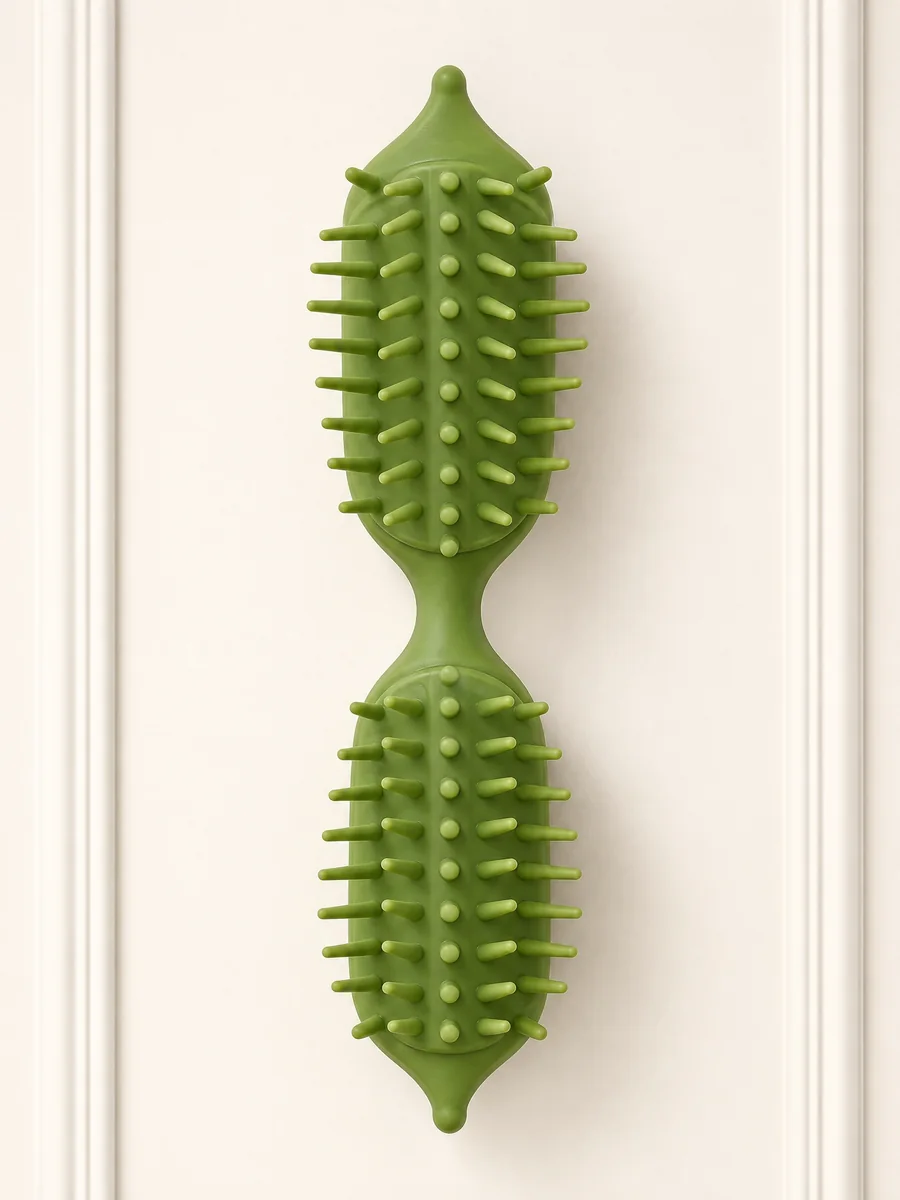
Sourcing pet grooming gloves wholesale requires clear buyer decisions up front, controlled specification language, an inspection plan, and documented sample gates. From a Chinese factory and procurement-partner perspective, this guide gives direct answers first, then practical evidence, tradeoffs and next steps. It explains what buyers must decide, what supplier inputs to expect, and what records and controls will limit misunderstandings during quoting, sampling, production and reorder.
This guide focuses on the procurement workflow: glove construction, palm surface selection, fastening and edge interfaces, sizing, marketing claims and labeling, sample approvals, retail packaging and pack-out, inspection, ownership/handover and reorder control. It avoids therapeutic or grooming-result claims and concentrates on actions buyers should take and supplier responses to manage commercial risk and specification conformity.
Module 1 — Decide glove construction and main materials
Direct answer: Define the glove’s construction (single-layer, multi-layer, bonded assembly) and list main materials by name, supplier-grade code and minimum physical property requirements (e.g., silicone Shore hardness range, microfiber denier, pile length in mm). Require the supplier to supply material data sheets (MDS) and photos of raw-material rolls or compound batches with lot numbers and retain samples for a technical file.
Explanation, evidence and tradeoffs: Buyers choose a construction based on end-customer positioning and tolerance for cost vs. perceived quality. For example, a bonded assembly (outer grooming surface + inner liner + backing) adds steps and cost but gives consistent fit and hides seams; single-layer molded silicone can be lower labour but requires molding capacity. Ask suppliers for supplier-grade codes and factory stock-keeping records while avoiding claims about performance. Supplier inputs should include MDS, batch photos, and traceable lot numbers so buyers can link finished goods to raw-material batches for issue investigation. Use a short spec table in the RFQ and require the supplier to confirm acceptance or propose alternatives with documented reasons.
Specification / quote control (compact table)
| Buyer spec item | Example control | Supplier response expected |
|---|---|---|
| Main surface material | Silicone, Shore A 15–45 | MDS, Shore test result, lot photo |
| Backing material | 80% polyester knit, 20% spandex | Fabric code, GSM, roll photo |
| Edge finish | Overlock stitch, folded hem | Stitch type, thread spec, sample photo |
| Assembly method | Ultrasonic weld or stitch | Process description, equipment photo |
Practical next steps: Build the technical file before PO: material MDS linked to each SKU, a one-line spec sheet for the factory, and a “no-change” clause specifying when buyer approval is needed for material substitutions. Insist on photographic evidence of raw-material lot numbers and reserve the right to request a pre-production sample (PPS) linked to those lot numbers.
Module 2 — Specify the palm contact surface (pile, nodules or texture)
Direct answer: Define the palm contact surface precisely — pile length (mm), pile density (tufts/cm²), nodule geometry (height, diameter, spacing) or microfiber denier — and require sample photos and a measured sample report. If using molded nodules or silicone textures, specify Shore hardness and nodule tolerances; if using fabric pile, specify yarn type, needle-to-fabric ratio and pile cut height.
Explanation, evidence and tradeoffs: Different surface constructions affect manufacturing lead time and tooling needs. Molded silicone nodules require tooling and molding runs; cut-pile fabrics involve tufting or knitting and shearing. Ask for a dimensional drawing for nodules and measurable acceptance criteria (e.g., nodule height 1.5 ±0.3 mm). For fabric piles, request a pile-count and show how acceptance will be measured under a magnifier or caliper. Supplier inputs should include a close-up macro photo (with scale), measurement report, and the sample’s material lot reference.
Sample control checklist (compact table)
| Surface type | Buyer measurable | Supplier deliverable |
|---|---|---|
| Molded nodules | Height, diameter, spacing | Nodule drawing, caliper measurement |
| Cut pile fabric | Pile height (mm), density | Photo with scale, pile count |
| Microfiber | Denier, weave | Denier report, fabric roll photo |
Practical next steps: Define measurement methods in the sample approval worksheet. For molded surfaces add tooling identification and expected lifetime (shots) as supplier input. For fabric piles require a visual acceptance chart against which the PPS will be compared.
Module 3 — Fastening, cuffs and edge interfaces
Direct answer: Specify how the glove is retained on the hand (adjustable strap, elastic cuff, long gauntlet) and detail edge finishing (folded hem, binding tape, overlock, serging). For adjustable fastenings stipulate closure type (hook-and-loop with loop stitch length, buckle, snap), strap width and attachment method. Buyers should include pull and cycle tests as part of sample approvals.
Explanation, evidence and tradeoffs: Fastening choices influence assembly time and unit cost. Hook-and-loop is common but varies in holding force by material and stitch; elastic cuffs are low-cost but can stretch out. Specify objective metrics: strap width 20 mm, hook-and-loop tensile hold > X N (buyer sets threshold), elastic relaxed width and elongation range. Supplier must document closure supplier brand, part number and lot. For edge interfaces, decide whether visible stitching is acceptable or if the aesthetic requires hidden seams; the supplier should provide edge finish samples and production photos.
Attachment and interface controls (compact table)
| Interface | Buyer metric | Supplier evidence |
|---|---|---|
| Hook-and-loop strap | Width, stitch pattern, tensile hold | Closure part no., tensile test photo |
| Elastic cuff | Relaxed width, stretch % | Elastic roll photo, elongation test |
| Edge finish | Stitch per cm, hem width | Sample photo, stitch spec |
Practical next steps: Include a strap and cuff pull test in the sample gate and ask for a simple cycle test (e.g., 50 cycles open/close) with before/after photos. Tie fastening components to supplier part numbers so replacements can be controlled.
Module 4 — Lining, hand comfort and internal interfaces
Direct answer: Define whether the glove will have an inner liner (e.g., mesh, foam interlayer, terry) and list required properties: GSM, air permeability or foam density range, and any finishing chemistry only as buyer-required claims (which require evidence) 4. Specify seam placement and whether a wrist gusset or padding is allowed. Require the supplier to provide liner MDS and sample swatches.
Explanation, evidence and tradeoffs: Liners add cost and change hand feel. Mesh liners improve breathability but add an additional assembly step; foam interlayers add perceived padding but increase thickness. If a buyer plans to market a glove using terms like "antibacterial liner" or "odor control," require documented third-party test data and defined evidence for the claim before using it on labels or marketing materials; see claims control below 4. Supplier inputs should include liner fabric codes, MDS, and photographic evidence of stitch-through and seam placement.
Practical next steps: Add liner compatibility checks to the PPS: confirm liner attachment integrity, measure internal dimensions with the liner inserted, and record seam placement on a technical drawing. If any finishing treatment is desired (e.g., hydrophilic finish), require the supplier to state the chemical supplier and provide an MSDS.
Module 5 — Sizing decisions, fit ranges and size labeling
Direct answer: Define the size set (e.g., S, M, L, XL) and provide measurable body dimensions for each size (palm width across metacarpal heads in mm, glove length from cuff to fingertip). Use a standard measurement template and require supplier samples for human fit testing (ideally on technicians or a small user panel provided by the buyer). Record size tolerances and label size placement. Assign a primary size reference piece that the factory must match in production.
Explanation, evidence and tradeoffs: Buyers must decide whether to offer graded sizes (S, M, L) or one-size-fits-most. Graded sizes increase SKU count and cost but reduce customer returns for poor fit. One-size designs reduce SKUs but require elastic or adaptable construction. Ask suppliers to provide a first-article size chart and to confirm cut allowances. For glove products, palm width and circumference are the most important measurable points; use a calliper or tape measurement and require the factory to return measurements for the PPS and pre-production run.
Size matrix (compact table)
| Size label | Palm width (mm) | Glove length (mm) | Tolerance |
|---|---|---|---|
| S | 80–90 | 190–200 | ±5 mm |
| M | 91–100 | 200–210 | ±5 mm |
| L | 101–110 | 210–220 | ±5 mm |
| XL | 111–120 | 220–230 | ±5 mm |
Practical next steps: Provide the factory with a size master (physical sample) and require measurement returns for the PPS and production first pieces. Add a clause that dimensional failures require immediate corrective action and re-sampling before mass production.
Module 6 — Claims control, labeling and regulatory confirmations
Direct answer: Buyers must write any marketing or regulatory claims they intend to make and supply the supporting evidence before the factory prints labels or packs retail boxes. Do not assume supplier can authorize claims — the buyer/importer holds responsibility to confirm market acceptance and regulatory fit for claims 3. For product marketing claims (e.g., “anti-odor”, “hypoallergenic”, “biodegradable”) require defined test reports and protocols from accredited labs, and record those reports in the technical file. Use the FTC Green Guides and similar national guidance when defining environmental or comparative claims 4.
Explanation, evidence and tradeoffs: Decisions about claims affect supplier tasks: printing labels, adding care instructions, or using special treatments. If the buyer requires a claim, specify the exact wording, the required test evidence, the acceptable laboratories or test methods, and where the claim will appear (hangtag, carton, online copy). Supplier inputs should include label mock-ups, sample labels, and an acknowledgment of whether the proposed label content requires additional processing steps or lead time.
Label and claim control (compact table)
| Buyer item | Required evidence | Supplier action |
|---|---|---|
| Marketing claim (words) | Third-party test, method, lab | Accept/flag for extra lead time |
| Care instructions | Buyer text or standard symbol | Print proof, placement |
| Warning/hazard text | Buyer/importer confirmed | Apply to hangtag/carton |
Regulatory note and market confirmation: Buyers and importers must confirm claim acceptability and product safety per their market regulations 3. If a claim implies a functional property, capture the test method and lab on the specification sheet. Keep claim evidence on file tied to the SKU and label artwork.
**Mid-article CTA — If you need PawViso to coordinate label proofs or manage sample gates, contact our sourcing team to discuss timelines and the documentation we require.
Practical next steps: Produce a claim-owner matrix that assigns responsibility (buyer: claim and evidence; supplier: label printing and placement). Require artwork approval sign-off from the buyer before bulk printing. Track claim evidence as part of the SKU master.
Module 7 — Sample approvals, gates and tests
Direct answer: Define sample gates and acceptance criteria. Typical gates are: Design sample (photo and spec), Prototype/Pilot sample (PPS) with materials linked by lot number, Pre-production sample (PP) manufactured on intended production line and with nominated materials, and First Article Inspection (FAI) from the first batch. Require a signed sample approval form for each gate and set re-sample triggers (e.g., dimensional failure, visual defect rate above agreed threshold).
Explanation, evidence and tradeoffs: A clear sample gate reduces production surprises. For each gate set the tests required (visual, dimensional, pull, stitch count, chemical finish). Require suppliers to label samples with material lot numbers and to submit a sample-measurement report. Make acceptance objective: include photographed evidence, tolerances and defect classifications for visual checks.
Sample gates and acceptance (compact table)
| Gate | Purpose | Buyer acceptance deliverable |
|---|---|---|
| Design sample | Visual confirmation of concept | Photo approval, spec sign-off |
| PPS | Confirm materials and construction | PPS with linked lot numbers, measurement report |
| PP | Production process confirmation | PP from line, FAI report |
| FAI | Confirm first batch conforms | FAI checklist, sample retained |
Practical next steps: Include a contractual clause that production will not commence without buyer sign-off at the PPS and PP gates. Define timelines for supplier to respond with remedial action if a sample fails. Keep one approved physical sample in the buyer’s technical file as the production reference.
Module 8 — Retail packaging, pack-out and barcode master data
Direct answer: Specify retail pack-out units, inner/outer carton counts, artwork coordinates, and GTIN/UPC assignment for each packaged SKU. Provide complete artwork files (with colour proofing references and dielines) and define carton dimensions and palletization. Require the factory to confirm pack counts, carton strengths, and provide a barcode sample (printed and scanned). All GTIN/UPC/master data must be confirmed by the buyer and included in the master SKU record 2.
Explanation, evidence and tradeoffs: Packaging decisions affect logistics, unit cost and shelf presence. Decide whether each glove will ship in header card, retail box, polybag or blister pack and set pack counts per master carton. For barcode master data, the buyer must generate and supply GTINs or authorize the supplier to apply buyer-provided codes; the supplier should not invent GTINs. If packaging is tested for transit, specify ISTA test levels and require reports for critical exports 5.
Pack-out and barcode table (compact table)
| Pack level | Example buyer spec | Supplier deliverable |
|---|---|---|
| Retail unit | Blister card with hang hole, GTIN on hangcard | Artwork proof, printed hangcard sample |
| Inner carton | 10 units, inner carton dims | Carton sample, strength test |
| Outer pallet | 40 inner cartons, pallet pattern | Pallet plan, weight/dim confirmation |
| Barcode | GTIN per SKU from buyer | Printed barcode sample, scan test |
Practical next steps: Create a packaging spec sheet with dielines, barcode placement and print colours. Require a pre-shipment packaging confirmation and, if requested, an ISTA compatible transit test report when buyers want validated packaging that matches their supply chain risks 5.
Module 9 — Inspection plans, AQL and factory checks
Direct answer: Define the inspection plan: supplier in-line checks, quality control (IQC) on incoming trims, AQL levels for final inspection, and responsibility for rework. Decide whether you will use a third-party inspection provider or the factory QC and document the acceptance criteria for cosmetic and functional defects. Clarify how ISO-style management systems differ from SKU-level conformity responsibilities — an ISO certificate indicates a quality management system, not automatic SKU conformity 1.
Explanation, evidence and tradeoffs: A higher frequency of inspections increases assurance but also cost and potential production delays. Typical AQL references for finished consumer textiles may be specified in the contract, but actual levels should be negotiated based on product complexity. Supplier inputs should include IQC checklists, pop-up photo evidence, and production-line sampling plans. If buyers require a third-party inspector, agree on inspection timing, pass/fail criteria, and remedial timelines.
Inspection role matrix (compact table)
| Task | Buyer | Supplier | Third-party (optional) |
|---|---|---|---|
| IQC on trims | Provide trim spec | Perform incoming trim checks | N/A |
| In-line QC | Review process KPIs | Document CVs and photos | Spot-check if engaged |
| Final AQL | Approve AQL level | Perform final QC | Perform independent final inspection |
| Rework approval | Approve rework sample | Execute rework | Verify rework if engaged |
Practical next steps: Attach an inspection checklist to the PO describing critical, major and minor defects and the required remedial timeline. Make sure contracts state whether the buyer or supplier bears cost for rework and recall. Keep inspection records linked to lot numbers and FAI documentation.
Module 10 — Ownership, transfer and handover terms
Direct answer: Specify the trade term (Incoterm) for the order and define exactly when ownership, risk and responsibility for export documentation transfer from supplier to buyer 6. Clarify who arranges export customs, who books freight, who pays duties and who is responsible for insurance. Record required handover documentation: commercial invoice, packing list, certificate of origin (if requested), and any third-party test reports.
Explanation, evidence and tradeoffs: Incoterm selection affects pricing, freight control and liability. For example, under Ex Works (EXW) the buyer arranges pickup and export; under FOB the supplier clears goods for export and handles cargo loading. Ensure the contract includes the agreed Incoterm and the named port/terminal. Supplier inputs should include export documentation timelines and any shipment photos required before release. Add a handover checklist tied to shipment release.
Ownership and handover checklist (compact table)
| Item | Buyer or supplier responsibility | Evidence to provide |
|---|---|---|
| Export clearance | Supplier (FOB) or buyer (EXW) | Export docs, customs release |
| Freight booking | Buyer or supplier per Incoterm | Booking confirmation |
| Insurance | Buyer or supplier per Incoterm | Policy or certificate |
| Handover photos | Supplier | Pallet photos, carton markings |
Practical next steps: Confirm Incoterm in the PO and attach the handover checklist. If buyers require the factory to deliver to a named forwarder, include cut-off timelines for ready-for-carrier and a carrier acceptance confirmation procedure. Keep shipment records and transfer of ownership documentation with the technical file.
Module 11 — Reorders, SKU versioning and change control
Direct answer: Implement a reorder and change-control policy: maintain a SKU master that records material lot references, approved artwork, approved sample sign-offs and claim evidence. Require supplier to notify buyer in writing of any material or process change and forbid changes to approved items without documented buyer approval. For reorders, specify acceptable tolerance for dimensional drift and a re-qualification sample trigger level (for example, after three production runs or when supplier changes material lot).
Explanation, evidence and tradeoffs: Without a change-control process, “the same SKU” can drift over time due to material substitutions, tooling wear or production adjustments. Require a formal change notice and a decision matrix — minor changes might be handled with a photograph and measurement; major changes should require a PP and buyer sign-off. Keep the SKU master as the single source of truth for GTIN allocation and artwork 2. Buyers should decide whether to allow supplier-initiated continuous improvement proposals and, if allowed, specify the evaluation and approval steps.
Reorder decision table (compact table)
| Trigger | Action | Supplier deliverable |
|---|---|---|
| Repeat PO, same SKU | Proceed if within tolerance | Confirmation, batch numbers |
| Material substitution | Hold production until approval | MDS, sample, reason |
| Tooling change | PP required | New PP, tooling record |
| Long gap re-order (>12 months) | Re-qualify | New PP, FAI |
Practical next steps: Maintain a record of master samples and require the supplier to hold a retained sample for each production lot for a defined period. Add a clause that for any change the supplier must complete a formal change request form with impact analysis and proposed verification steps.
Frequently asked questions
Q: Who decides the GTIN/UPC for my packaged SKU? A: The buyer/importer should supply GTINs or authorize their creation; the supplier prints the buyer-provided GTIN. Confirm master data and barcode artwork as part of pack-out approval 2.
Q: Can the factory change trim suppliers mid-season without telling me? A: No — require written notice and buyer approval for any trim or material change. Define minor vs. major changes and the approval steps in the contract and SKU master.
Q: What records should I expect from the supplier after a production run? A: At minimum: production date, lot numbers for major materials, inspection reports, FAI, packing list, photos of packed pallets, and any requested test reports. Keep these linked to the order and SKU master.
Q: Do factories provide test reports for marketing claims automatically? A: Factories typically will not provide third-party validation unless the buyer requests and pays for specific testing. If you plan to make claims, state the claim, required test method and lab, and include this in the sample gate plan 4.
Q: When should I require transit packaging tests? A: When products are fragile, when shipments travel through many handling points or when claim-sensitive packaging is critical. Specify ISTA-compatible testing levels if you need validated transit performance 5.
Q: How do I limit SKU drift over repeated reorders? A: Require a master sample, maintain a SKU master with material codes and approved artwork, define change-control requirements, and request a re-qualification PP under defined triggers (material substitution, tooling change, long gaps).
Conclusion
Sourcing pet grooming gloves wholesale at scale requires clear, measurable specifications, controlled sample gates, documented packaging and barcode master data, and a formal change-control process. From the buyer side, define claims, GTINs, size masters and inspection criteria up front; from the supplier side, require material MDS, lot-linked PPS/PPs and transparent inspection documentation. Use the tables and checklists above to build a technical file that will travel with each SKU and reduce commercial surprises.
Requirements need project-specific buyer/importer confirmation.
Related PawViso resources
- Continue with What Tools Should a Complete Dog Grooming Kit Include?. Use this guide to compare grooming formats and build a clearer buying brief.
- Browse the PawViso product catalogue to identify product formats for a sourcing brief.
- Follow the PawViso sourcing process and review the B2B buyer FAQ before sharing project requirements.
External reference
For independent product identification and barcode context, review GS1 guidance on Global Trade Item Numbers (GTINs). Confirm the requirements that apply to the selected product, target market and order.
References
- 1ISO 9001:2015 Quality Management Systems — Requirements
- 2Global Trade Item Number (GTIN) — GS1
- 3Regulation (EU) 2023/988 on General Product Safety
- 4Green Guides — Federal Trade Commission
- 5ISTA Test Procedures
- 6Incoterms® 2020 — International Chamber of Commerce
**Final CTA —
If you want PawViso to review your glove specification checklist, sample gates or packaging proofs, we can schedule a document review.
Email: info@PawViso.com
WhatsApp: +86 186 8106 4480 — https://wa.me/8618681064480