
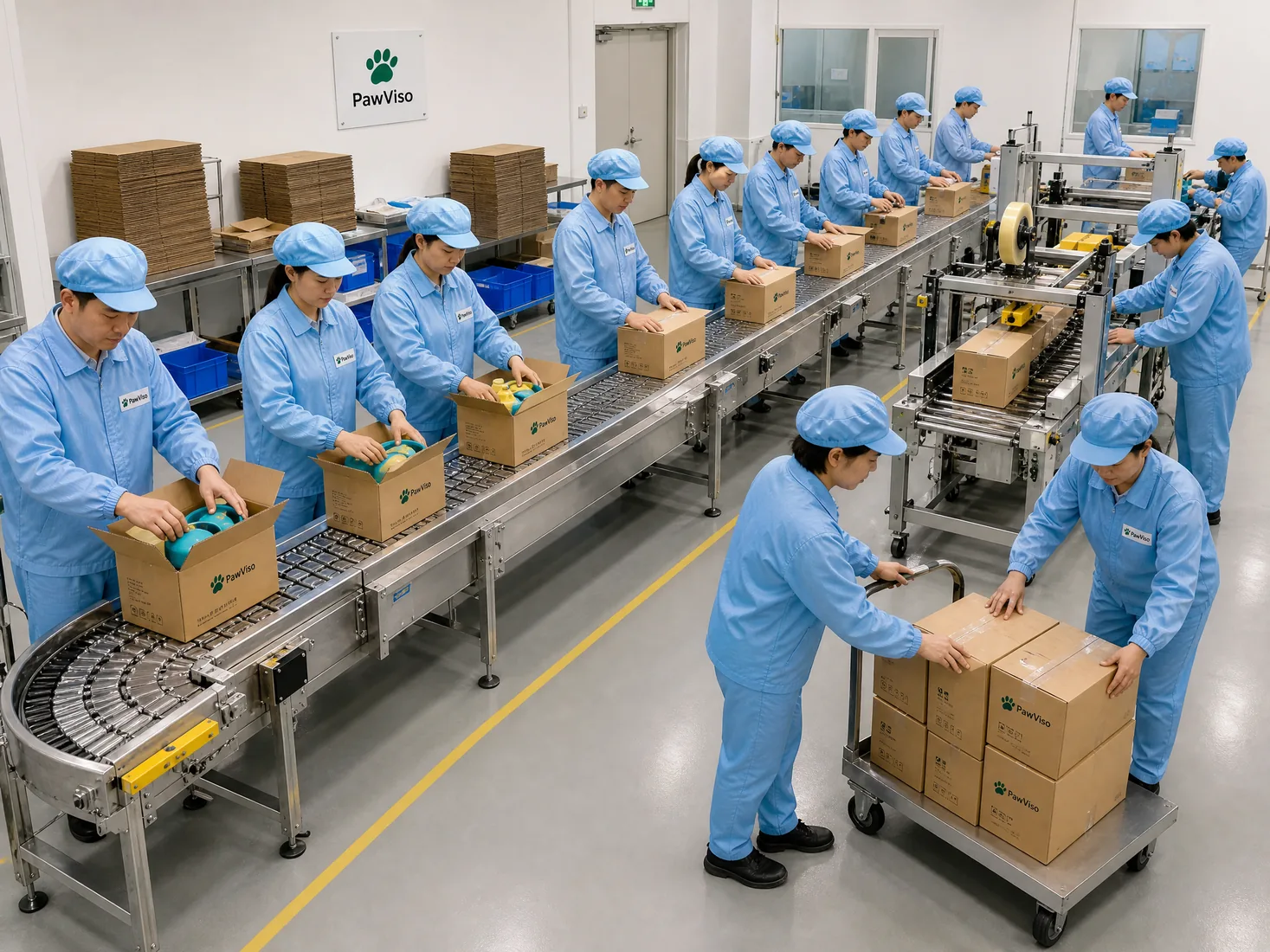
This guide helps U.S.-market pet retailers, importers, distributors, and private-label buyers evaluate suppliers and make informed commercial decisions when purchasing dog training pads and related waste accessories at scale. It focuses on a procurement framework you can use immediately: supplier screening, product specifications, material/component evidence, sampling and pilot checks, packaging and retail readiness, quality-control controls, commercial tradeoffs, and a practical buyer action plan. Buyers must confirm final claims and comply with target-market obligations before sale.
Decision framework: what a pragmatic buyer needs first
Begin with a checklist that separates commercial fit from technical fit. For efficient sourcing meetings, bring three prioritized procurement outcomes: cost per usable unit landed, brand-differentiating features (absorbency, odor control, eco claims) and time-to-shelf (lead times, logistics).
Quick decision checklist:
- Annual and seasonal demand volumes by SKU.
- Acceptable landed unit cost and gross margin targets.
- Non-negotiable technical specs (size range, layers, leakage protection).
- Regulatory and labeling obligations to verify later.
- Timeline for samples, pilot order, and full production.
Use this minimalist scorecard to screen prospects quickly in the first contact. Ask for lead times for MOQ, sample policy, and manufacturer evidence (factories, certifications, testing labs) before detailed negotiations.
Supplier screening and choosing the right dog pee pads manufacturer
Primary supplier types: contract manufacturer, trading company, and vertically integrated manufacturer. For product categories like dog training pads bulk and dog pee pads bulk, a vertically integrated dog pee pads manufacturer usually offers tighter control of materials and lower unit cost at scale, but can require higher MOQ.
Screening criteria
- Factory verification: photos of production lines, third-party audit summaries, and capacity data (m2/day or units/day).
- Product focus: years producing disposable absorbent pet products and references for B2B clients.
- MOQ and flexibility: clear MOQ tiers for private-label and white-label programs.
- Compliance documentation: laboratory test reports for absorbency and barrier performance; if supplier claims compostability or recycled content, request third-party certification evidence.
- Logistics and lead time: typical production lead times, peak-season constraints, and port-of-origin.
Practical questions for first contact
- “What is your typical MOQ for a private-label 60×60 cm four-layer pad?”
- “Can you provide a recent factory audit or BSCI/SMETA summary?”
- “Do you perform absorbency, strike-through and retention testing in-house or via a third-party lab?”
Table: Supplier-type tradeoffs
| Supplier type | Typical MOQ | Control over materials | Pricing flexibility | Best use case |
|---|---|---|---|---|
| Vertically integrated manufacturer | High | High | Best at scale | Long-term private-label |
| Contract manufacturer (CM) | Medium | Medium | Moderate | Custom specs with smaller runs |
| Trading company / reseller | Low | Low | Variable | Fast market testing, limited customization |
Table: Verification checklist for initial screening
| Evidence | Why it matters |
|---|---|
| Factory photos & production schedule | Confirms capacity and equipment |
| Third-party audit summary | Shows labor/management controls |
| Recent lab test results (absorbency/barrier) | Demonstrates product performance baseline |
| Material specification sheets (MSDS) | Identifies polymer types and additives |
| Sample policy and pilot pricing | Enables feasible testing path |
When evaluating a dog pee pads manufacturer, prioritize verifiable evidence over verbal claims. If a supplier cannot produce basic test data or production records, treat their offer as high risk.
Product specifications and materials: what to demand in writing
Define a specification sheet for each SKU. Specifications serve as the contract’s technical appendix and reduce disputes.
Essential spec items
- Dimensions and tolerance (e.g., 22" × 23" ± 0.5").
- Total layers and intended materials per layer (top sheet, acquisition/distribution, absorbent core, waterproof backing).
- Target absorbency (mL/g or mL/pad) and strike-through time (seconds).
- Peel strength and ultrasonic bonding details for multi-layer pads.
- Odor control approach (activated carbon pouch, finished additive, or none) with evidence required.
- Packaging count per retail carton, master carton dimensions, and orientation (lay-flat or folded).
- Shelf-life guidance and storage conditions.
Material evidentiary requests
- MSDS for polymers, SAP (superabsorbent polymer) certificates, pulp grade for fluff, and raw material origin.
- Certificates for any eco-claims (certified compostable by recognized body, recycled content percentage with proof).
- Data on chemicals of concern (phthalates, heavy metals, fluorinated chemicals) if marketed with safety or sustainability claims—buyers must verify before making claims.
Avoid vague specs like “high absorbency” without numeric targets. Require numeric performance goals to permit objective pass/fail evaluation during sampling and QC.
Sampling, pilot-run checks, and acceptance criteria
Samples are the most important negotiation lever. Use a structured sampling program: initial design sample, functional sample, and a pilot production batch.
Sampling stages
- Design/sample phase: A prototype to confirm size, feel and appearance.
- Functional testing sample: Enough units to run performance tests in-house or at a third-party lab (absorbency, leak resistance, adhesive strength).
- Pilot run: Small production run (usually 1–5% of first full PO) to test manufacturing consistency, packaging, and labelling.
Acceptance tests to include
- Absorbency test (target mL per pad) and strike-through time.
- Leak test under weight (simulate a 20-lb dog sitting for 1 minute).
- Packaging integrity after simulated handling and pallet transport.
- Batch-to-batch appearance and dimension consistency.
Minimum sample quantities
- Functional tests require a sample set: recommend 10–30 units per SKU for initial lab measures, 50–200 units for pilot-run evaluation across packaging permutations.
Document acceptance criteria in the purchase agreement. Include allowable defect rates and remedies (rework, replacement, price adjustment) if pilot fails.
Packaging, retail readiness and merchandising considerations
Packaging affects shelf presentation, SKU economics, and fulfillment efficiency.
Packaging specs to agree
- Retail-ready pack sizes and UPC/GTIN allocation.
- Shrink-wrap vs. box vs. polybag, and whether retail-ready shelf trays are required.
- Retail labeling: mandatory text, bilingual requirements if applicable, and placement of private-label branding.
- Consumer convenience features (resealable closures, dispensing perforations) have manufacturing cost and MOQ implications.
Merchandising and logistics
- Master carton optimization for retail distribution centers: cartons per pallet, cube utilization, case weight limits.
- Shelf-ready packaging must allow easy restock and have brand-facing graphics.
- For ecommerce, specify polybag protection, carton void-fill, and unit barcoding to reduce returns.
Table: Common packaging formats and buyer considerations
| Format | Pros | Cons |
|---|---|---|
| Retail polybag (printed) | Low cost, good for promos | Less shelf presence; tear risk |
| Retail box with window | Premium look, good branding | Higher cost, larger cube |
| Refillable bulk pack | Good for value buyers | May require dispenser for home use |
If you plan to offer a complete shopper set, also source accessories like dog poop bags bulk or dog poop bag dispenser for home as coordinated SKUs; bundling improves average order value but adds SKU management complexity.
Quality-control controls and inspection protocols
Define your QC program before first bulk shipment. A robust program combines supplier self-testing, third-party lab verification, and pre-shipment inspection.
QC components
- Incoming raw material checks: Microsoft sheets, SAP batch numbers and basic on-site checks (basis weight, visual).
- In-line production checks: SPC (statistical process control) for weight, dimensions, and bonding consistency.
- Final random inspection (AQL): Decide an AQL level appropriate for disposable hygiene products—document sample plans and acceptable defect limits.
- Third-party lab testing schedule: initial release and periodic re-testing for absorbency and barrier integrity.
Pre-shipment inspection checklist (example)
- Visual conformity to approved pilot sample.
- Random selection for performance testing (absorbency, leak test).
- Packaging and label verification.
- Palletization and carton condition.
Inspections and dispute resolution
- Include remedial terms in contracts: rework vs. price deduction vs. order cancellation criteria.
- Use photographic evidence and inspection reports in email threads to document issues and resolutions.
Note: buyers should confirm any safety or regulatory testing requirements for their final retail claims with appropriate authorities; this guide does not guarantee regulatory compliance.
Commercial tradeoffs: cost, lead time, MOQ, and private-label choices
Sourcing is a series of tradeoffs. Lay out the primary variables to align with your commercial strategy.
Key tradeoffs to consider
- Cost vs. customization: Lower per-unit costs typically require higher MOQ and longer lead times. Custom prints, added odor control, or unique dispensers increase tooling and per-unit cost.
- Lead time vs. inventory carrying cost: Shorter lead time suppliers often have higher per-unit pricing but reduce working capital tied in inventory.
- Private-label vs. white-label: Private-label provides brand differentiation and margin control but increases design, sampling, and upfront costs.
- Sustainability claims vs. cost and supply chain complexity: Compostable or recycled-content pads require verified inputs and often cost more; confirm supply reliability if marketing these attributes.
Illustrative cost-effectiveness table (simplified)
| Strategy | Typical MOQ | Unit cost | Lead time | Best for |
|---|---|---|---|---|
| Low-cost large runs | 20,000+ | Low | Long | National chains, baseline SKUs |
| Flexible small runs | 1,000–5,000 | Higher | Shorter | Test SKUs, niche products |
| Private-label premium | 5,000+ | Medium–High | Medium | Brand differentiation |
When sourcing related SKUs like pet waste bags bulk or dog training pads wholesale, evaluate bundling logistics. Combining orders for pads and bags into a consolidated container shipment can cut landed costs but complicates vendor management and inspection.
Frequently asked questions
Q1: What minimum tests should I insist on from a dog pee pads manufacturer before placing a bulk order? A1: Require numeric absorbency and strike-through data, leak resistance tests, MSDS for key materials, and photographic evidence of production lines. Include an agreed pilot-run acceptance protocol in the contract.
Q2: How can I reduce risk when buying dog training pads bulk from new suppliers overseas? A2: Use staged commitments: paid samples, a small pilot run, third-party pre-shipment inspection, and hold a portion of payment until satisfactory QC results. Verify factory audits and request test reports from accredited labs.
Q3: Are there packaging considerations specific to dog training pads wholesale that affect shelf standards? A3: Yes. Choose retail-ready packaging that balances brand presence and cube efficiency. Confirm barcode and labeling placement, resealability, and that protective packaging survives distribution-handling tests.
Q4: Should I include accessories like dog poop bag dispenser for home or dog poop bags bulk in the same purchase order? A4: Only if your supplier can reliably produce both to your specs and meet overall lead times. Combining SKUs can reduce freight costs, but increases complexity in QC and packaging integration.
Conclusion
Sourcing dog training pads bulk for the U.S. market is a structured process: screen suppliers for verifiable factory and test evidence, lock down numeric product specifications, run staged sampling up to a pilot production batch, and document acceptance criteria and remedial terms. Packaging and merchandising choices materially affect retail performance and landed costs, while QC programs and inspection plans reduce defect risk. Commercial tradeoffs—MOQ versus customization, lead time versus inventory cost, and private-label strategy—must align with your business model and margin targets.
Next steps for buyers
- Create a short RFI template covering MOQ, lead times, factory verification, sample policy, and test evidence.
- Define numeric performance targets for each SKU and include them in PO technical appendices.
- Assign a single procurement lead to manage sampling, pilot approvals, and QC to ensure clear accountability.
Buyers must confirm final product claims, regulatory and labeling obligations, and safety testing requirements for their specific target market before commercial launch. If needed, engage third-party labs and inspection firms for independent verification.
Buyer search scope
This guide addresses the following U.S. B2B procurement search phrases. Each phrase is considered in the context of supplier selection, product specifications, samples, packaging and quality evidence rather than as a consumer recommendation.
| Search phrase | Buyer use |
|---|---|
| dog training pads bulk | Primary procurement focus for this guide |
| dog pee pads manufacturer | Related specification, supplier or range-planning query |
| dog pee pads bulk | Related specification, supplier or range-planning query |
| pet waste bags bulk | Related specification, supplier or range-planning query |
| dog training pads wholesale | Related specification, supplier or range-planning query |
| dog poop bags bulk | Related specification, supplier or range-planning query |
| dog poop bag dispenser for home | Related specification, supplier or range-planning query |
Final CTA — Prepare a focused dog training & waste accessories sourcing brief with PawViso.
Share your target U.S. channel, product format, estimated order structure, packaging direction and customization requirements for a practical B2B discussion.
Email: info@PawViso.com
WhatsApp: +86 186 8106 4480
Related PawViso resources
- Continue with How to Compare Cost per Use for Dog Training Pads to compare a related supplier, sample and quality-control route.
- Browse the PawViso product catalogue to identify product formats for your purchasing brief.
- Follow the PawViso sourcing process and review the B2B buyer FAQ before sharing requirements.
External reference
Use ISO 9001 quality-management systems guidance as general quality-system context, and confirm the product-specific evidence that applies to the selected SKU, channel and target market.