
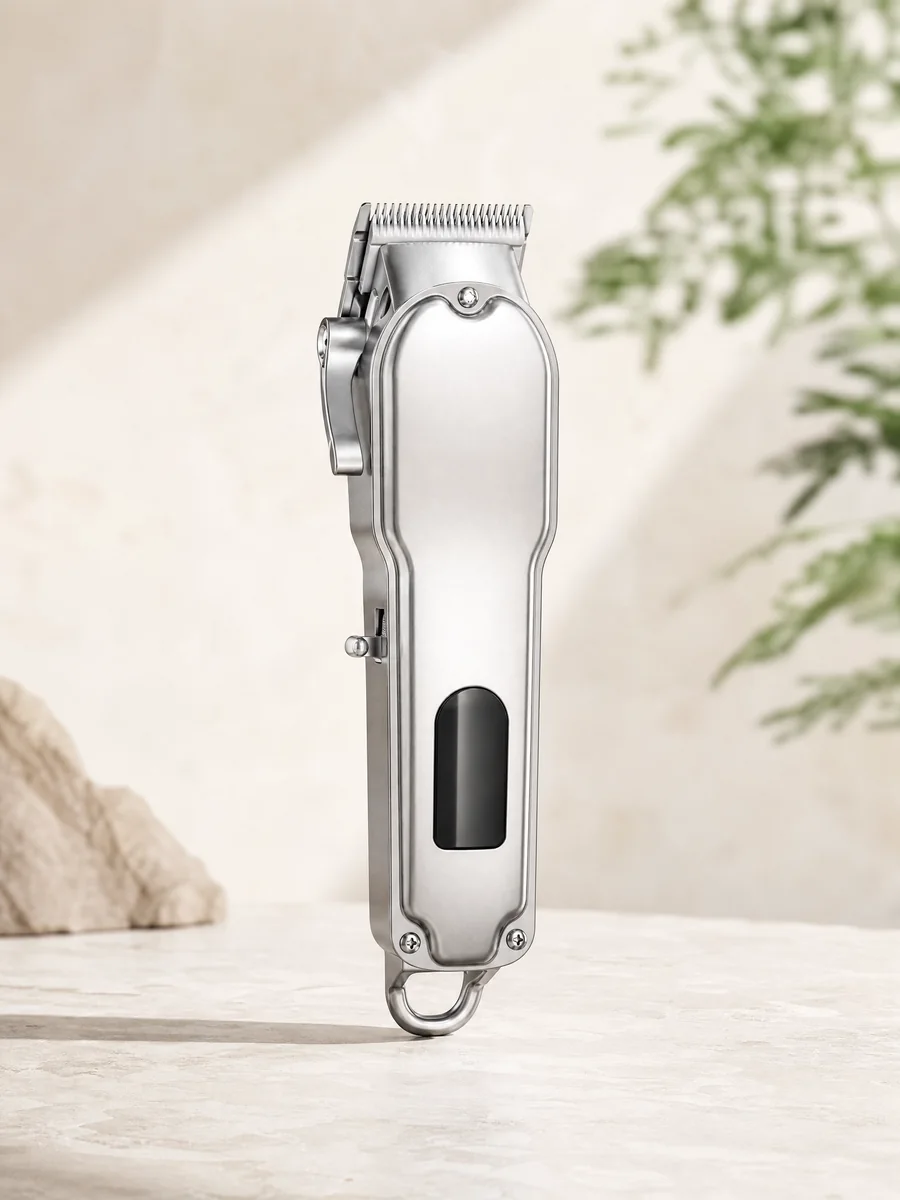
This guide helps U.S.-market pet-product retailers, importers, distributors, and private-label teams evaluate and procure dog grooming supplies bulk. It lays out a practical decision framework, five targeted procurement modules, sampling and test checkpoints, packaging and retail readiness criteria, quality controls, commercial tradeoffs, and a buyer action plan you can apply to dog grooming kit wholesale, dog grooming equipment wholesale, pet shampoo private label and related sourcing categories. This is practical sourcing guidance, not a performance or regulatory guarantee — final importer/buyer confirmation of compliance and claims for your target market is required.
Decision framework
Start with a decision framework that structures sourcing into repeatable milestones. Use this checklist as a procurement flow you can put into an RFQ/RFP process and supplier scorecard.
-
Define assortment by SKU family and commercial entry point
- SKU family examples: clippers & blades, brushes & combs, grooming tables, nozzles/sprayers, towels, scissors, nail trimmers, shampoos and conditioners (including hydra dog shampoo wholesale or pet shampoo private label variations), starter dog grooming kit wholesale bundles.
- Prioritize by margin, sales velocity, and store/category space.
-
Set minimum technical specifications and allowable tolerances
- Materials, dimensions, electrical ratings (for powered equipment), chemical composition limits (for liquids), packaging dimensions, shelf life.
-
Supplier pre-qualification
- Company registration, production capacity, export experience, relevant certifications or test-lab partnerships, insurance, past reference checks.
-
Sampling / pilot-run plan
- Pre-production sample, production sample, pilot production lot, and first-ship inspection checkpoints.
-
Regulatory and labeling obligations
- Identify claims and required statements for the U.S. market (importer identity, ingredient listing for cosmetic/shampoo products, electrical safety labels for powered devices). Buyer must confirm obligations for final claims and labeling with their legal/compliance team and regulators 1.
-
Commercial terms
- MOQ, lead time, payment terms, freight and incoterms, warranty and RMA policy, private-label branding rules.
-
Quality acceptance and recurring audit plan
- Incoming inspection plan, AQL thresholds, production-line audits, certificate renewals.
Use this framework to turn supplier conversations into scored decisions and contract milestones.
Supplier screening: how to qualify dog grooming equipment suppliers
Screen suppliers to reduce onboarding risk. The goal is to move from a long list to a shortlist of 3–5 qualified partners.
Essential pre-qualification items
- Corporate identity and trade credentials: legal company name, business license, tax ID, DUNS number or equivalent, export license (if applicable).
- Capacity and lead time proof: factory production lines, monthly output by SKU, confirmed lead times for typical PO sizes.
- Quality system evidence: ISO 9001 or other quality management documentation (helpful but not mandatory), documented QC process, AQL acceptance levels.
- References and export history: verifiable client references and recent export shipments to the U.S.
- Insurance and liability: product liability coverage limits.
Technical competence checks
- For dog grooming equipment wholesale (powered tools): factory capability to meet electrical safety testing (UL/ETL recognition pathway or recognized third-party lab for U.S. market compliance) and tooling for plastic/metal parts.
- For grooming tables and hardware: weld quality, load ratings, and materials certificates for metals/alloys.
- For brushes/combs/scissors: material composition certificates (stainless steel grades, ABS/PP resin grades), hardness and corrosion-resistance test results.
Supply-chain transparency and ESG screening
- Ask for component sourcing maps, conflict-mineral statements if relevant, and documented chemical management for liquid/chemical products.
- Require supplier confirmation that they can provide Material Safety Data Sheets (SDS) and full ingredient declarations for shampoos and conditioners.
Initial supplier scorecard (example)
| Criterion | Weight |
|---|---|
| Production capacity & lead time | 20% |
| Quality system & inspection evidence | 20% |
| Regulatory/test capability | 15% |
| Packaging & private-label capability | 15% |
| Cost structure & commercial flexibility | 15% |
| References & export experience | 15% |
Use the scorecard to rank suppliers and determine which to sample.
Product specifications and material/component evidence
For bulk buying, precise specifications prevent costly rework. Document both product-level specs and component-level evidence you will require in the contract.
Minimum product-specification template
- SKU ID and variant (size/color/model)
- Intended retail price band and target margin
- Primary materials (e.g., 430 stainless steel blade; PP handle grade X)
- Critical dimensions and tolerances (± tolerances for critical parts)
- Functional requirements (e.g., clipper motor RPM range, blade hardness)
- Performance acceptance tests (e.g., sustained run-time, corrosion test)
- Shelf life and storage conditions (for liquids and sponges)
- Labeling and language requirements (UPC placement, bilingual labels if needed)
- Packaging spec (inner case, master case, retail-ready hang/shelf configuration)
Material and component evidence to request
- Mill/test certificates for metals (e.g., stainless grade certificate)
- Resin data sheets for plastics (tensile strength, melt flow index)
- Coating/finish certificates (chromate-free, passivation results)
- MSDS/SDS and full ingredient panels for shampoos/conditioners. If you intend to sell hydra dog shampoo wholesale or private-label dog shampoo private label, require full ingredient disclosure and stability data.
- Electrical component specs and test reports for corded/cordless equipment (battery chemistry datasheets, motor specs).
- Photographs and technical drawings, preferably CAD files for tooling review.
Compact materials decision table (example)
| Component | Common supplier evidence | Buyer acceptance threshold |
|---|---|---|
| Clipper blade | Steel grade certificate, hardness test | Stainless grade 420/430; Rockwell hardness range |
| Grooming brush bristle | Resin data sheet / bristle tensile test | Specified nylon grade, bend/rebound test |
| Shampoo formulation | Full ingredient list, stability/ preservative efficacy data | SDS + 12-month stability at 25°C |
For pet shampoo private label and hydra dog shampoo wholesale products, insist on allergen and preservative documentation, and require third-party microbiological stability data if the product will be stored at warm temperatures. Final label claims and safety obligations must be confirmed by the buyer/importer and legal counsel 1.
Sampling and pilot-run checks
Sampling is the place to prove the spec sheet. Structure sampling into tiers with clear acceptance criteria.
Sampling tiers and purposes
- Pre-production sample (PPS): verifies form/fit/appearance. Accept/reject based on visual and dimensional checks.
- Production sample (PS): produced on the intended tooling and processes; verifies function, materials, and finishes.
- Pilot production lot (pilot run): a small production batch (e.g., 1–5% of first order) run under normal production and shipped to a U.S. inspection point or distributor for field checks.
- First-ship inspection (FSI): full incoming inspection on first commercial shipment before final acceptance.
Tests and checkpoints to include
- Dimensional inspection against CAD/spec (use CMM for precision parts).
- Functional testing (e.g., clipper runtime under load, motor temperature rise limits).
- Corrosion and salt-spray testing for blades and metal parts when applicable.
- Chemical stability and preservative challenge tests for shampoos (microbial growth test, pH stability).
- Packaging drop-test and transit simulation for retail readiness confirmation.
- Shelf-ready display tests if product ships in retail-ready trays or hanging cards.
Sampling acceptance table (example)
| Sample type | Purpose | Acceptance actions |
|---|---|---|
| PPS | Visual & dimensional confirmation | Approve or request modified PPS |
| PS | Performance & material verification | Run functional & lab tests; sign-off before tooling run |
| Pilot run | Process verification & retail validation | Inspect sample lot; ship test lot to one or two retail outlets for live validation |
| FSI | Verify first commercial shipment quality | Accept/reject shipment; issue NCRs and corrective action plan |
Practical sampling tips
- Use a neutral third-party lab for objective test reports where needed.
- For private-label shampoos and hydra dog shampoo wholesale products, test for preservative efficacy and pH drift over a 12-month period or accelerated stability equivalent.
- Build explicit rework and scrap tolerances into contracts for pilot failures to avoid disputes.
Packaging and retail readiness
Packaging is both cost and sales-impacting. For retail channels, packaging must protect product and present correctly on shelf or e-commerce imagery.
Key packaging considerations
- Retail format: hanging card, clamshell, full color carton, blister, refill pouch.
- Retail-ready design: master case dimensions and shelf-facing counts should minimize store labor.
- Durable protection: consider moisture, puncture, UV exposure for liquids and textiles.
- Labeling and compliance: ingredients, net weight/volume, manufacturer/importer name and address, UPC/EAN, country of origin marking, barcodes, and cautionary statements where required.
- Artwork and proofing: require pre-press proofs and digital color standards; include die-lines and print tolerances.
Packaging test requirements
- Transit simulation: ISTA drop & vibration tests relevant to your logistics profile.
- Package compression: to ensure master cartons survive pallet stacking.
- Seal integrity for liquids: leak tests and headspace evaluation.
- Retail display test: check hanging hole reinforcement, shelf stability.
Packaging cost vs. merchandising tradeoffs
- Minimal protection and cheap packaging reduces landed cost but increases return and damage rates.
- Premium or retail-ready packaging increases COGS and upfront tooling costs (for custom trays and clamshells) but can reduce in-store labor and returns.
Packing and retail-ready decision table
| Requirement | Lower-cost option | Retail-ready option | Tradeoff |
|---|---|---|---|
| Protection | Basic inner wrap, bulk master case | Molded inserts, sealed blister | Cost vs. damage rate |
| Merchandising | Shrinkwrap, basic carton | Shelf-ready tray or hanging blister | Cost vs. on-shelf conversion |
| Labeling | Vendor label only | Full retail artwork + UPC + panel copy | Setup cost vs. retail compliance & branding |
For private-label projects (dog shampoo private label, hydra dog shampoo wholesale), include artwork approval cycles, PMS color matching, and packaging-material approvals as milestone payments in the contract.
Quality control, certifications, and commercial tradeoffs
Quality systems and certification evidence lower downstream risk but add cost and lead time. Balance certificate requirements against commercial priorities.
Quality control program elements
- Incoming inspection: sample size and AQL (e.g., AQL 2.5 for critical defects).
- In-process checks: frequency and control points for critical features.
- Final inspection: lot-level acceptance criteria and shipment hold rules.
- Non-conforming materials and corrective action: documented CAPA process and timeline for corrections.
Certifications and test reports to request
- Electrical safety: recognized test lab report for appliances intended for U.S. electrical markets. You can require supplier evidence of third-party testing but must confirm U.S. mark acceptance with your compliance team 2.
- Material safety: SDS and ingredient declarations for all chemical products, preservative efficacy testing for shampoos.
- ISO 9001 or factory audits: useful for complex suppliers.
- Third-party lab reports: corrosion, hardness, tensile tests for mechanical parts.
Commercial tradeoffs to evaluate
- Price vs. lead time: cheaper sources often have longer lead times or higher MOQ. Model landed cost including inventory carrying costs.
- MOQ vs. SKU breadth: smaller MOQs let you test new variants but reduce per-unit economics.
- Certification vs. cost: demanding third-party certification reduces supplier pool and increases unit cost.
- Private label vs. white label: private label allows branding and margin but requires more CAPEX (tooling, packaging, artwork) and longer lead times.
Insurance, warranties, and recall readiness
- Require suppliers to maintain product liability insurance and provide an indemnity clause appropriate to your risk appetite.
- Agree on recall playbook and cooperation terms in the contract; verify supplier traceability systems for lot-level recalls.
Quality-control decision checklist
- Are AQL levels and inspection plans specified in the contract? (Yes/No)
- Are test-lab scopes and acceptance criteria defined for critical tests? (Yes/No)
- Are supplier CAPA timelines and penalties for repeated failures included? (Yes/No)
- Is first-ship inspection or pre-shipment inspection mandatory? (Yes/No)
Document all QC clauses and batch traceability fields in your purchase order templates to avoid disputes.
Buyer action plan: contracting, logistics, and launch checklist
Turn the framework and modules into executable steps with accountable owners and timelines.
Stage 1 — Pre-RFQ (2–4 weeks)
- Finalize SKU list and target retail price bands.
- Draft specification pack (technical sheets, packaging requirements, labeling requirements).
- Define MOQ bands for testing vs. full launch.
- Identify required tests and lab scopes (include third-party lab contact if using one).
Stage 2 — RFQ and screening (2–3 weeks)
- Issue RFQ with scorecard and required submission items (corporate docs, capacity proof, certifications, sample policy).
- Score suppliers and shortlist 3–5 suppliers for sampling.
- Negotiate preliminary commercial terms (INCOTERMS, payment, lead times).
Stage 3 — Sampling and pilot (4–12 weeks depending on tooling)
- Receive PPS and PS; run acceptance tests and document results.
- Approve packaging artwork and return pre-press proofs.
- Conduct pilot run; arrange FSI or third-party inspection.
- Approve final pricing and MOQ for full production.
Stage 4 — Contracting and pre-shipment (2–6 weeks)
- Sign supply agreement covering warranty, liability, lead times, MOQ, rework policy, IP ownership for private-label artwork and formulations, recall cooperation.
- Schedule production slots and delivery milestones.
- Book freight and confirm customs/importer of record processes for U.S. entry.
Stage 5 — Launch and post-launch (first 3 months)
- Monitor first two shipments with tightened incoming inspection.
- Collect retailer/consumer feedback and return rates.
- Adjust reorder quantities and safety stock based on sell-through.
Checklist highlights
- Ensure UPC barcodes are registered and match packaging.
- Confirm importer-of-record responsibilities and customs documentation for the U.S.
- Confirm any claims on bottles (e.g., "hypoallergenic," "tearless") are supported by evidence or remove claims until validated; buyer/importer confirmation is required for final claims.
- For dog grooming kit wholesale bundles, confirm component compatibility (blade sizes, clipper guards) and single-SKU barcoding for bundles.
Commercial negotiation tactics
- Secure price breaks at clear volume tiers tied to calendar or cumulative annual purchases.
- Use pilot-run performance to negotiate better lead times or lower tooling amortization fees.
- Consider split shipments or staggered inventory to reduce cash outlay on first large orders.
Frequently asked questions
Q: What documentation should I always request before paying for a sample? A: Request company registration, recent export invoice, production capacity statement, photos of the production line, and the product spec sheet. For chemical products, also request a provisional SDS and ingredient list.
Q: How do I verify electrical safety for clippers sold in the U.S.? A: Require third-party laboratory test reports for safety standards applicable to small appliances; verify the test scope covers voltage, grounding, leakage current, and battery safety. Final mark acceptance must be confirmed by the buyer/importer and compliance counsel 2.
Q: Can I request custom formulations for dog shampoos and still get reasonable MOQs? A: Yes, but expect higher MOQs or tooling/recipe setup fees. Negotiate pilot batch sizes and amortization of formulation development costs across future orders. For pet shampoo private label and dog shampoo private label, ensure batch retention and stability testing are included.
Q: What is an appropriate AQL level for grooming tools? A: Typical AQLs range: 1.5–2.5 for critical defects on high-risk items (powered equipment), 2.5–4.0 for cosmetic parts. Define “critical,” “major,” and “minor” defects in the contract and align AQL levels accordingly.
Conclusion
Sourcing dog grooming supplies bulk for the U.S. market requires disciplined specifications, supplier evidence, structured sampling, and clear commercial terms. Use the decision framework and module checkpoints above to reduce risk: pre-qualify suppliers with documented capacity and test capability, demand material and ingredient evidence (especially for pet shampoo private label and hydra dog shampoo wholesale products), run staged sampling and pilot production, validate packaging for retail readiness, and lock quality control and contractual remedies into purchase orders. Always confirm final labeling, safety and marketing claims with your legal and compliance teams — buyer/importer confirmation is required for target-market obligations and regulatory claims 1. Apply the buyer action plan to convert qualified suppliers into reliable partners that support repeatable launches and scale.
Buyer search scope
This guide addresses the following U.S. B2B procurement search phrases. Each phrase is considered in the context of supplier selection, product specifications, samples, packaging and quality evidence rather than as a consumer recommendation.
| Search phrase | Buyer use |
|---|---|
| dog grooming supplies bulk | Primary procurement focus for this guide |
| dog grooming kit wholesale | Related specification, supplier or range-planning query |
| dog grooming equipment wholesale | Related specification, supplier or range-planning query |
| dog grooming equipment suppliers | Related specification, supplier or range-planning query |
| pet shampoo private label | Related specification, supplier or range-planning query |
| hydra dog shampoo wholesale | Related specification, supplier or range-planning query |
| dog shampoo private label | Related specification, supplier or range-planning query |
Final CTA — Prepare a focused pet grooming supplies sourcing brief with PawViso.
Share your target U.S. channel, product format, estimated order structure, packaging direction and customization requirements for a practical B2B discussion.
Email: info@PawViso.com
WhatsApp: +86 186 8106 4480
Related PawViso resources
- Continue with How to Source Pet Grooming Clippers to compare a related supplier, sample and quality-control route.
- Browse the PawViso product catalogue to identify product formats for your purchasing brief.
- Follow the PawViso sourcing process and review the B2B buyer FAQ before sharing requirements.
External reference
Use ISO 9001 quality-management systems guidance as general quality-system context, and confirm the product-specific evidence that applies to the selected SKU, channel and target market.