
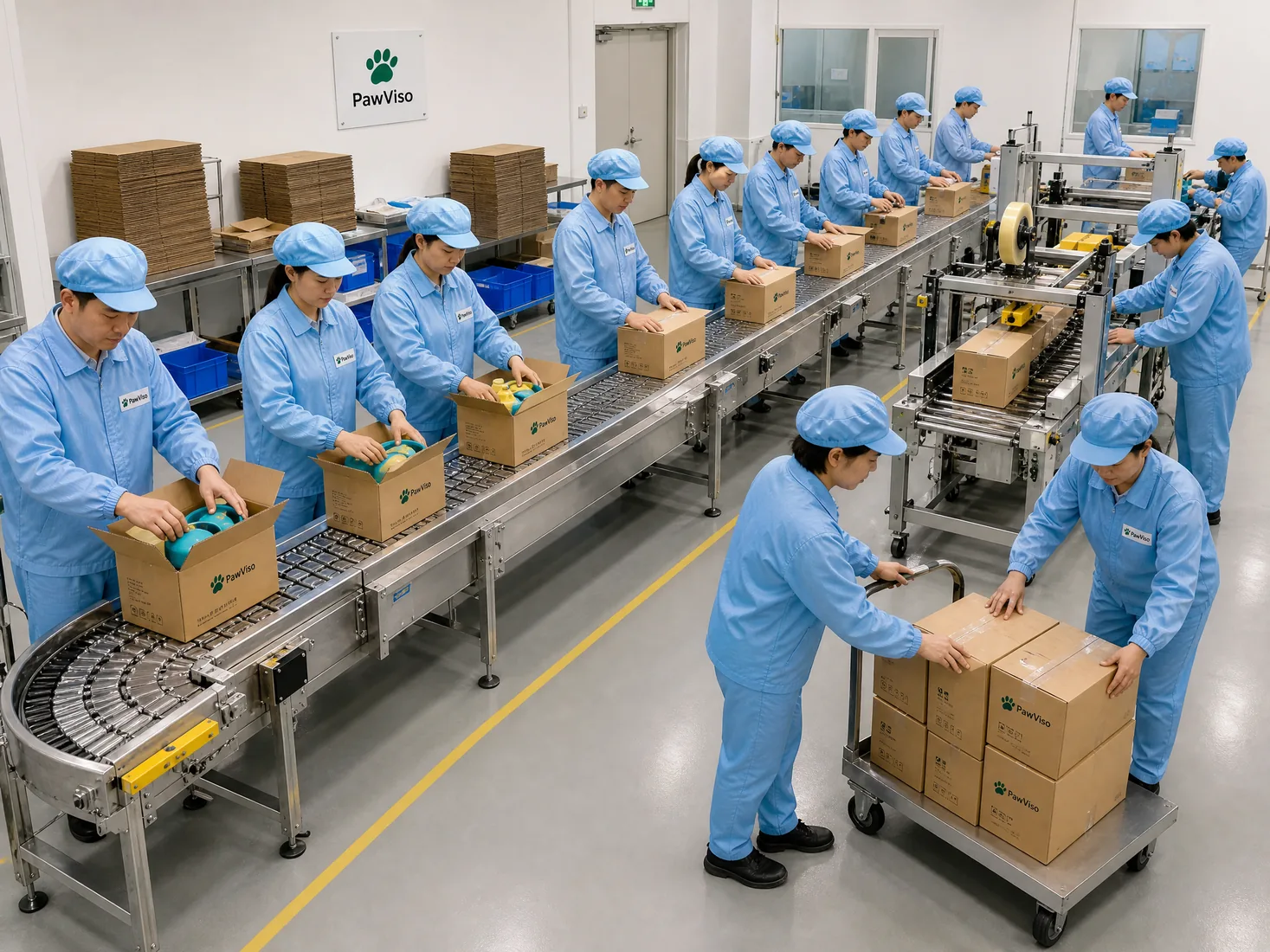
Localizing pet toy packaging is a project-driven activity that combines buyer-owned content decisions with supplier execution. As the buyer or importer you control final claims, mandatory warnings, and which markets receive which language and artwork variants. Your job is to define the scope, provide authoritative source text, and set acceptance criteria; your supplier’s job is to implement editorial changes, produce proofs, manage plate/label variations, and deliver production-ready files that match the agreed specifications.
This guide breaks the localization workflow into six modules so procurement teams can assign responsibilities, gather evidence, and make timely selections. Each module focuses on a clear buyer decision and outlines what to ask from suppliers, what evidence to collect, and practical tradeoffs: from selecting languages and translating claims to versioning artwork and separating barcodes for logistics. Where the guide mentions recordkeeping, use your company’s quality-management system as the place to store final approvals and traceability 1 2 3.
Module 1 — Choose languages and target markets — Buyer decides target markets and acceptable language set
Start by listing the destination markets and the precise languages you will require on each SKU. Decide if you need full localized packaging (complete translation of front, back, inserts and hangtags) or a minimal compliance panel (e.g., warnings and mandatory markings only). The buyer must own the final decision: which languages are required, in what font sizes and placement, and whether one SKU will carry multi-language panels or market-dedicated artwork. Provide this decision as a formal packaging brief or template that becomes part of the purchase order.
Supplier inputs: request from your supplier a language-capacity statement showing which in-house or partner linguists they use, samples of previous multilingual panels, and file samples demonstrating how text blocks are handled in layout (e.g., text expansion allowances). Evidence to collect includes supplier proofs with all language variants on the intended dieline and metadata showing which variant maps to which SKU or market code. Tradeoffs include balancing stock complexity (more language variants = more SKUs or more complex multi-language panels) against regulatory simplicity and market clarity. Practical next steps: finalize your market list, define minimum font/legibility requirements, and schedule a translation handoff with deadlines tied to artwork milestones.
Module 2 — Source claims, warnings and mandatory text — Buyer provides authoritative source text and required scope
As the buyer, supply the supplier with a single source of truth for all claims, warnings, and mandatory texts. For claims and marketing copy, include exact phrasing you want on-pack and any substantiation files you will retain internally (do not send unapproved substantiation to the factory). For warnings and mandatory statements, specify the full text and, if applicable, the legal or importer-determined rationale for including or excluding elements (e.g., age grading, choking hazard language, material composition phrases). This is the point where you define whether the supplier should translate marketing claims or limit translations to regulatory/warning language only.
Supplier inputs: ask the supplier to prepare a claims matrix that maps each on-pack statement to the content owner (buyer), translation requirement, and whether it is mandatory for the market. The supplier should also produce an annotated dieline showing where each statement will appear and the expected text length after translation. Evidence to capture: the buyer-approved source text file, the supplier claims matrix, and a signed document confirming the supplier will not alter claim meanings without buyer approval. Tradeoffs: more restrictive buyer control reduces risk of mistranslation but increases review cycles; allowing supplier editorial leeway can speed time-to-market but requires stronger post-translation review. Next steps: create a version-controlled source-text file and circulate it to translators and artwork teams with explicit change-control rules.
Module 3 — Select translation approach and manage vendor handoff — Buyer chooses translation type and approves providers
Decide whether to use in-country linguists, centralized agency translators, or supplier-managed translation resources. For marketing copy that requires tone and brand voice, in-country linguists or specialist agencies are usually preferred. For standardized warnings and short mandatory texts, a centralized glossary and translation memory can speed the process and improve consistency. As buyer, require translators to work from your source-text file and any in-country phrasing instructions you provide, and specify whether machine translation (MT) is acceptable as a first draft or strictly forbidden for final print text.
Supplier inputs: the supplier should confirm receipt of the translation files, provide translation memory (TM) support if available, and produce bilingual proofs indicating original text and localized text side-by-side. Evidence to collect: final translated text files in editable format (e.g., spreadsheet or tagged file), TM/glossary exports where available, and translator CVs or agency credentials if brand-sensitive material is present. Tradeoffs: in-country specialists increase cost but reduce rework and tone issues; centralized MT with human post-editing is faster but requires tighter QA. Practical next steps: approve translators, lock the source-text file, and set milestone dates for translated copy delivery and supplier-side layout insertion.
Sample translation handoff table:
| Item | Provided by Buyer | Expected from Supplier |
|---|---|---|
| Source text file (final) | Yes | Acknowledgement of receipt |
| Glossary and TM | Optional | Import into layout tools / note usage |
| Translation memory export | Buyer if available | Confirmation of TM usage and any conflicts |
Proof control table:
| Proof Type | Who Approves | Evidence to Store |
|---|---|---|
| Linguistic proof | Buyer (or in-country reviewer) | Annotated bilingual PDF |
| Artwork proof | Buyer | Print-ready PDF with dieline and color spec |
Module 4 — Manage artwork variants and proofs — Buyer defines artwork variants, approval workflow and proof criteria
Decide which artwork variants you need: market-dedicated fronts, universal panels with variable market inserts, or separate SKUs per language. Define an approval workflow that lists who sign-offs each stage (translator, buyer brand manager, procurement, supplier QC) and what constitutes an approval (signed PDF, timestamped email, or digital signature). Require the supplier to submit layered source files (AI, PDF/X) and flattened print-ready files, along with a proofing checklist showing font embedding, trim, bleed and color specifications.
Supplier inputs: the supplier should produce layout mockups for each variant, a proof-control sheet showing differences between variants, and production proofs such as color-matched digital proofs or press proofs where feasible. Evidence to collect: final approved artwork files, dated approval records, and proof images that match the dieline. Tradeoffs: having many market-dedicated fronts improves localization and marketing effectiveness but multiplies files and change control; universal panels reduce SKUs but may clutter design and confuse consumers. Next practical steps: define a revision limit before re-price, specify how to handle emergency updates, and store final artwork and approvals in your quality-management system 1.
**Mid-article CTA — If you want a checklist PDF of these modules for your procurement package, confirm your email address with your PawViso contact and request the “Localization Packaging Checklist.” Please confirm project timelines before requesting expedited proofs.
Module 5 — Barcode, GTIN and logistics separation — Buyer specifies barcode handling and product-data linkage
Define how barcodes and GTIN/product data 2 are applied across artwork variants. Decide if each market-dedicated artwork receives its own barcode area or if a secondary logistics label will be applied during packing. Specify whether barcodes should be structural elements in artwork files or supplied as separate label files to be applied at carton/inner packaging stages. The buyer must also decide how product data (GTIN, batch, expiration where applicable) will be encoded and whether serialized or aggregation workflows are required.
Supplier inputs: suppliers should provide barcode placement templates, verify scannability in proofs (digital and press), and confirm whether they will print barcodes directly or accept separate label files. Evidence to capture: scannability test reports, barcode image files (vector preferred), and mapping records showing which GTIN maps to which artwork variant. Tradeoffs: embedding barcodes in artwork simplifies final packing for single-market SKUs; separating barcodes onto application labels simplifies inventory and allows post-production assignment but adds a packing step. Next steps: decide on a barcode strategy, require supplier scannability verification, and record the mapping between SKU/artwork and GTIN/product data in your project folder 2 3.
Barcode placement and logistics table:
| Scenario | Barcode in Artwork | Separate Logistics Label | Tradeoff |
|---|---|---|---|
| Single-market SKU | Recommended | Optional | Simpler fulfillment, fewer steps |
| Multi-market universal art | Not recommended | Recommended | Flexibility at packing stage |
| Serialized/aggregated supply | Varies | Often required | Supports traceability, adds handling |
Module 6 — Packing controls, revision history and post-production checks — Buyer defines acceptance tests and version control
Specify what packing controls you require at goods-in: how many units to sample for label verification, scannability checks, and visual confirmation of language correctness. Define the revision history process: every artwork revision must have a unique revision code, date, reason, and approver recorded. Require the supplier to provide a final “as-produced” proof showing the first production run and any minor deviations from the approved proof (e.g., color delta within specified tolerance). The buyer controls acceptance criteria and must state them clearly in the contract or order.
Supplier inputs: expect the supplier to deliver packing checklists, first-article photographs or scans, and a revision log that maps changes to PO numbers and print runs. Collect evidence: first-article samples, packing list annotations, and signed acceptance records. Tradeoffs include stricter packing controls increasing lead time and inspection cost but reducing risk of market returns; looser controls accelerate shipments but increase the need for corrective actions later. Practical next steps: embed acceptance criteria into the PO, set standard sampling levels for incoming inspection, and ensure revision history is captured in your quality-management system 1.
Final practical checklist (short):
| Action | Responsible | Stored Evidence |
|---|---|---|
| Approve final language set | Buyer | Final source-text file |
| Approve translations | Buyer/in-country reviewer | Bilingual proofs |
| Approve artwork | Buyer | Print-ready PDFs + approval record |
| Verify barcodes | Supplier + Buyer | Scannability test reports |
| First-article check | Supplier | Photos + packing checklist |
Use this module-based approach to assign responsibilities, gather documentary evidence and reduce revision cycles. Keep your buyer-owned content and decision records centralized so translation, artwork handoff, and packing teams can reference the definitive version at each stage 1 2 3.
Module 7 — Artwork variants, SKU families and print-ready files
Decide which artwork variants belong to a single SKU family before assigning file-naming conventions and production approvals. A SKU family can include multiple languages, colorways, age-graded warnings, or regional graphic variants (e.g., CE vs. non-CE icon sets). For each family, buyers must specify mandatory and optional variants, list the exact trigger conditions for each (country, language, color, material), and define whether these variants will be treated as engineering changes or as separate SKUs for inventory and traceability. This upfront decision streamlines artwork proofing, tooling labels, and packing instructions and reduces mis-shipments caused by ambiguous scope.
Buyers must provide final, approved print-ready files for each variant, or authorize the supplier to prepare print-ready art from buyer-owned masters. Where buyers supply masters, include a version-controlled archive (master_v1, master_v2…) with a clear instruction on which master is authoritative. If the supplier prepares files, require an agreed handoff format list (e.g., layered PSD/AI for artwork and vector PDF for print), color profile requirements (e.g., CMYK, known local press profiles), and whether spot colors or Pantone matching is required. For each variant, specify die-line overlays, bleed, safety-margin zones, and where variable text (e.g., batch number, expiry date) will be placed. Buyers must state whether variable elements will be printed in-line, using thermal transfer/inkjet, or applied as labels during packing.
Create a print-ready file checklist that the supplier must confirm before a pre-production sample: correct language copy, approved translations, regulatory icons as directed, barcode placement and clear quiet zones, die-line alignment, color callouts, and dieline-hold areas for packaging windows. Use a consistent filename convention and embed revision metadata in file names and in PDF/X output (where supported). Use the table below to standardize variant metadata across SKU families.
| Field | Example / Buyer Requirement |
|---|---|
| SKU family ID | PT-TOY-001 |
| Variant suffix | EN-EU / FR-FR / CN |
| Master file name | PT-TOY-001_master_v3.ai |
| Print-ready file name | PT-TOY-001_EN-EU_print_v1.pdf |
| Color profile | CMYK ISO Coated V2 / buyer-specified |
| Die-line/version | DL_v2 (with cut & fold) |
| Variable data method | Inline variable print / label |
| Approval holder | Buyer art-approval email + PO number |
Cite where to include claim substantiation context within artwork for future review 4. Buyers should mandate that any on-pack claims that require substantiation have a clear inline reference code linking to off-pack substantiation documents in the product technical file. This eases later audits and supports controlled claim revisions without repackaging the master art.
Module 8 — Translation handoff, review and quality gates
Define translation scope and responsibilities. Buyers must decide whether translations are buyer-supplied, supplier-arranged with buyer review, or handled by a third-party linguist. For buyer-supplied translations, deliver final text as a translation memory (TM) entry or bilingual spreadsheet with context notes, allowable synonyms, and target register (formal, conversational, regulatory). For supplier-arranged translations, require that the supplier provide translator credentials, native-speaker confirmation, and back-translation samples for critical content (warnings, claims, ingredient lists). In all cases, specify whether translations require locale variants (e.g., Brazilian Portuguese vs. European Portuguese), local orthographic conventions, and public holiday or cultural nuance checks.
Set quality gates within the production timeline. Typical gates include: translation delivery, linguistic review by a second native reviewer, typeset proof (text-in-layout), buyer review of typeset proof, and sign-off for print. Require the supplier to provide bilingual typeset PDFs (source language vs. target) so buyers can check truncation, line breaks, and context. Where space is constrained (small labels, hanging cards), buyers must approve abbreviated text or alternative layout options rather than assuming literal line-for-line transfer. For warnings and mandatory blocks, require that translations be positioned exactly as instructed in the die-line critical area list and that font sizes adhere to minimum-legibility specs you define.
Include acceptance criteria for translations: accuracy (no mistranslation of key terms), appropriate register, correct numerals and units, and proper formatting for dates, decimals, and contact information. Require the supplier to flag characters or glyphs not supported by the specified font and propose font fallbacks. For buyer-managed glossaries or TM usage, set a control frequency (e.g., update TM monthly) and require supplier confirmation of TM version used for each production run.
Mention where translation decisions intersect with claim substantiation and regulatory checks; buyers must confirm that translated claims align with substantiation documents and that any mandatory warnings are not softened in translation 4.
Module 9 — Proofs, pre-production approval and barcode separation
Require staged proofs and explicit sign-offs before moving to mass production. Define mandatory proof stages: digital preflight (PDF/X or buyer-agreed format), pre-production physical mockup (unprinted structural board sample with artwork-position proofs), and a pre-production color proof (where color fidelity is critical). Buyers must decide which proof stages are mandatory for each SKU family and which can be waived for repeat orders. Specify acceptable proofing methods (e.g., contract proof certified to ISO standards) and whether a photographic color match report is required.
Establish an approval process that names the buyer approver, alternative approver, and required artifact (annotated PDF, sign-off email, or formal approval portal entry). Require that approvals reference specific file names, die-line versions, and PO numbers to avoid ambiguity. Include an expiration for approvals (e.g., approvals valid for the current lot/PO only) and describe how engineering changes will be handled—define whether minor typographic corrections need a reproof or an annotated list is sufficient.
Separate barcode management from graphic artwork handoff. Buyers must supply GS1-registered BARCODE numbers or instruct the supplier to print buyer-provided barcode images and confirm scannability on final substrate. Specify whether barcodes will be printed directly as vector in artwork or applied as labels at packing; require scannability tests on the chosen substrate and varnish/laminate combination. If suppliers generate barcode artwork, mandate that they provide a scannability report and keep barcode-source files in the project folder. Cite package/transit-test context for barcode and scannability testing under expected production finishes 5.
Require clear instructions on variable data printing: format (EAN-13, UPC-A, GS1-128), human-readable line formatting, and quiet zone requirements. For marketplaces that demand specific barcode placements (e.g., bottom panel, hang tab), buyers must state this in the dieline and product label placement list.
Module 10 — Packing controls, inner/outer packing language and consolidation
Define packing controls linked to artwork variants and SKU families. Buyers must decide language and artwork treatments for inner pack (polybag, blister card, inner box) and outer cartons. For inner packs that include language-critical copy (e.g., warnings on blister cards), buyers should require that the inner art match the regional language variant and that sample inner-pack proofs be produced for review. For consolidation centers or cross-dock operations, buyers must specify whether the outer master carton language must include multilingual content or a master-language-only label (e.g., English master carton with destination labels applied later). Make a decision tree on whether to localize outer carton copy or rely on applied shipping labels at destination.
Set packing controls for kit components and multi-SKU packs: require component verification lists (pick lists), separate inner packing lists per language where needed, and a method for applying SKU-level artwork variants within mixed-SKU cartons. Buyers should specify quantity tolerances, allowable substitution rules, and corrective measures for mispacked language variants. For example, require that the packing list include SKU family ID and variant suffix so warehouse staff can check language composition before sealing.
Specify how packing-sample approvals will work: buyers may request a photoset of pre-packed cartons showing inner packs, carton labeling, and pallet configuration. For export, require that pallet labels include buyer PO, SKU family IDs, number of cartons, and any required shipment level language to satisfy receiving operations. Connect these requirements with trade terms and shipment handover responsibilities so that buyers know who is responsible for labeling and documentation at each Incoterm stage 6.
Require instructions for fragile, oversized, or temperature-sensitive SKUs that affect packing materials and palletization—buyers must state cushioning materials and orientation markings, and whether on-pack artwork orientation (e.g., logo upright) must be preserved across stacked pallets.
Module 11 — Revision history, change control and post-shipment updates
Establish a formal revision-history system linked to SKU family masters and print-ready files. Buyers must require that every artwork file and packaging spec include a revision header with: revision number, date, author, approver, brief change note, and affected SKU ranges. Decide whether low-impact typographical fixes can be batch-approved or require new proofs. For each change, define whether it triggers a controlled-engineering-change (ECN) process that requires re-approval, re-sampling, or a simple administrative update.
Set rules for emergency or field corrections (e.g., urgent typo in a mandatory warning). Buyers must predefine an emergency handling process: who may authorize a one-off correction, what limited production volume is permitted under emergency approval, and how replacement artwork will be scheduled for the next standard run. Require traceability by marking cartons with revision numbers or batch codes to distinguish units produced under interim approvals.
Define post-shipment update expectations. If buyers want to change artwork after a shipment has left the factory but before it reaches a downstream node (e.g., consolidation center), they must specify whether they accept relabeling upon arrival, and who is financially responsible for that relabel. Buyers must also decide how to handle market feedback that triggers artwork changes — require a documented feedback loop with timelines for investigation, design updates, and rollout scheduling. Use the change-control table below as a template to capture decisions.
| Change type | Trigger | Proof required? | Re-approval required? | Expected lead-time |
|---|---|---|---|---|
| Minor typo | Non-critical text | No (admin note) | No (buyer acknowledgement) | 1–2 weeks |
| Warning change | Safety/regulatory text | Yes (typeset proof) | Yes | Dependent on buyer schedule |
| Brand update | Logo or pack look | Yes (pre-production mock) | Yes | As agreed |
| Emergency fix | Production-stop issue | Yes (photo and sign-off) | Limited emergency approval | Immediate to next PO |
Cite trade terms or shipment handover context when allocating responsibilities and costs associated with relabeling or rework after shipment handover 6. Buyers should require suppliers to keep a searchable revision archive for at least the duration specified in the procurement contract and to export a change-log as part of each packing and shipping documentation set.
Frequently asked questions
Q: Who should own translations — buyer or supplier? A: Decide based on control need and buyer resources. If you require consistent brand voice and integrated glossaries, own translations and supply TMs. If you lack language resources, authorize supplier-arranged translations but mandate buyer review steps, translator credentials, and back-translation for critical copy 4.
Q: How many proof stages are truly necessary? A: That depends on risk tolerance. For new SKUs or major art changes, require digital preflight, typeset proof, and physical pre-production mockups. For repeat orders with unchanged art, you can reduce stages, but keep at least a digital preflight and barcode scannability check to avoid surprises 5.
Q: What if a barcode fails scannability on the final substrate? A: Require pre-shipment scannability testing on the same substrate and finish. If a barcode fails after handover, allocation of corrective costs should follow Incoterm-specified responsibilities and the change-control rules you set in the contract 5.
Q: How do I manage mixed-language cartons for multi-country shipments? A: Define whether cartons should carry multilingual graphics or a neutral master art plus applied destination labels. If receiving centers expect localized inner packs, require inner art to be localized at factory and mandate sample photos to confirm language mixes before shipment.
Q: Can I require suppliers to archive all pre-production proofs? A: Yes—buyers should require the supplier to retain a searchable archive of PDFs, physical mock photos, approval records, and barcode source files for the contractually defined retention period. This supports audits and saves time for repeat orders.
Conclusion
Standardize decisions for artwork variants, translation responsibilities, proof gates, barcode handling, packing controls, and revision history at the project start. Make buyer-owned rules explicit in the PO and artwork approval checklists to reduce errors, speed approvals, and maintain traceability across production and shipment. Treat claim substantiation and mandatory warnings as buyer-controlled items that must be confirmed for each market and linked to artwork via referenced documentation 4. Ensure scannability and packaging performance are validated before shipment 5, and allocate post-shipment responsibilities clearly under agreed trade terms 6.
Project requirements, regulatory applicability and final claim decisions must be confirmed by the buyer/importer for each market and cannot be assumed by the supplier.
Final CTA — Start a controlled pet-toy sourcing conversation with PawViso. Share the product concept, target market, customization route, package direction and estimated order structure for a focused B2B discussion. Email: info@PawViso.com WhatsApp: +86 186 8106 4480 — https://wa.me/8618681064480
Related PawViso resources
- Continue with How to Create a Custom Pet Toy Sampling Plan. Use this pet-toy guide to structure approvals, samples and evidence.
- Browse the PawViso product catalogue to identify product formats for a sourcing brief.
- Follow the PawViso sourcing process and review the B2B buyer FAQ before sharing project requirements.
External reference
For independent product identification and barcode context, review GS1 guidance on Global Trade Item Numbers (GTINs). Confirm the requirements that apply to the selected product, target market and order.