
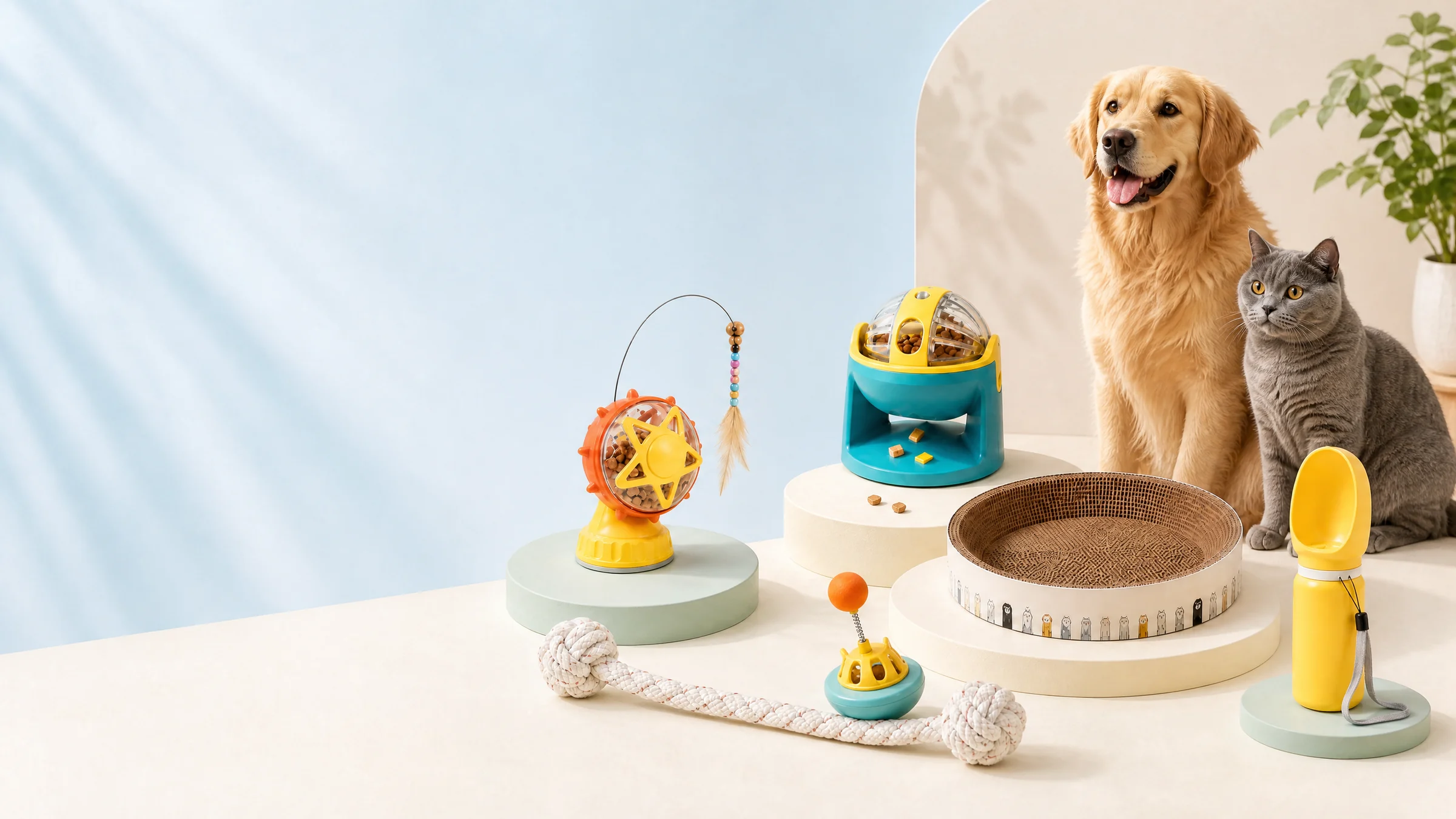
The right size cat toy should be large enough for a cat to grip, bat, and carry without easily swallowing it, yet small enough to encourage natural play. Start with the cat’s age, body size, mouth and paw size, and preferred play pattern. Then assess the toy’s shape, detachable parts, material durability, and whether an adult will supervise play. For a B2B buyer, these same criteria should be translated into clear product dimensions, recommended age or pet-size guidance, packaging information, and inspection requirements before an item is listed or purchased.
Why cat toy size matters
Cats interact with toys in different ways. A mouse-shaped toy may be dragged or carried, a wand attachment chased, a ball batted, and a kicker toy hugged and bitten. Size affects how easily a cat can perform these actions and how much control the owner has during play.
A toy that is too large may be difficult for a small cat or kitten to move. A toy that is too small can present a swallowing or choking concern, especially if it contains bells, eyes, strings, feathers, or other components that can loosen. The American Veterinary Medical Association explains that pet toys should be selected with the animal’s size and behavior in mind and inspected regularly for damage. Size is therefore part of a broader product-safety and usability decision. Product pages should identify dimensions, weight, play mode, and supervision guidance.
Start with the cat, not the product label
Consider age and physical development
Kittens usually need toys that are easy to move and visually engaging, but their smaller mouths and developing coordination call for extra care. Avoid assuming that a toy marketed for “all ages” is appropriate without checking its smallest components, seams, attachments, and intended play method. Young cats can also be more persistent chewers, so the owner should inspect toys more frequently.
Adult cats vary considerably in body size and strength. A petite adult may prefer light, compact toys, while a larger or more muscular cat may handle a bigger kicker or sturdier interactive object. The goal is not to choose the largest available toy. It is to choose a toy the cat can control without forcing an awkward grip or creating an unnecessarily small loose part.
Senior cats may appreciate toys that are light, easy to reach, and simple to bat. Age alone does not determine the correct size, so owners should also consider mobility, vision, dental condition, and interest in different forms of play. If a cat has a diagnosed medical condition, pain, or a sudden change in play behavior, a veterinarian should be consulted rather than treating toy selection as a substitute for professional advice.
Match the toy to the cat’s play style
A cat that likes to carry objects may need a toy with a size and shape that can be held comfortably in the mouth without obstructing breathing or being swallowed. A cat that prefers pawing may do better with a ball or flat object that is large enough to track and strike easily. A chase-oriented cat may engage with a wand toy, but the owner should control the distance and store the wand safely after use.
For cats that bite or tear at toys, construction details may matter as much as dimensions. Look for clearly documented seams, attachment methods, and component specifications. No toy should be described as indestructible unless that claim has been substantiated for the exact product and use conditions. The RSPCA advises checking toys for wear and removing damaged items.
A practical cat toy size comparison
The table below is a starting framework, not a universal sizing standard. Actual suitability depends on the complete design, the cat, and the way the toy is used.
| Toy format | General sizing direction | Best questions for an owner or buyer | Supervision considerations |
|---|---|---|---|
| Small plush or fabric toy | Compact enough to bat or carry, but without easily detachable tiny parts | Can the cat carry it comfortably? Are eyes, noses, bells, or tags securely attached? | Inspect seams and attachments frequently; remove if damaged |
| Ball | Large enough to avoid being easily swallowed and light enough to bat | Does the diameter suit the cat’s mouth and paw size? Can it roll without trapping a paw? | Check for cracks, openings, and loose inserts |
| Kicker toy | Long enough for the cat to hug and kick, with a manageable girth | Can the cat wrap its front legs around it? Is the filling and outer fabric specified? | Watch for chewing, tearing, and exposed filling |
| Wand or teaser attachment | Light and proportioned for controlled interactive play | Are the string, hook, feather, or connector details documented? Is the attachment replaceable? | Use with an adult present; store out of reach after play |
| Tunnel or larger enrichment toy | Spacious enough for entry, turning, and exit without forcing the cat through | Does the opening and interior suit the cat’s size? Is the structure stable? | Check for collapsed sections, loose ties, and entrapment points |
Product specifications B2B buyers should request
A professional buying decision should move beyond a product photograph. Ask for the finished length, width, height, diameter, and weight of each toy or attachment. If a product is sold as a set, request dimensions for individual components as well as the packed set, noting whether measurements include a loop, tail, feather, or handle. Also request material composition, filling, construction method, and details of plastic, metal, bell, magnet, or electronic components. These details support accurate listings and inspection checklists.
Packaging should communicate intended use, care instructions, age guidance where applicable, and a warning that toys are not a substitute for supervision. Compliance requirements vary by destination, product type, and market. Before confirming an order, the buyer should ask the supplier to identify which documents and tests are available for the specific SKU and destination. Availability, specifications, pricing, MOQ, lead time, and compliance must be confirmed for the specific enquiry; they should not be inferred from a general catalogue statement.
A simple owner decision checklist
Before giving a cat a new toy, the owner can ask four questions. First, is the toy physically manageable for this cat? Second, could any component become small enough to swallow if it breaks, tears, or comes loose? Third, does the toy match the intended play activity? Fourth, can the owner inspect and store it responsibly?
Owners should check toys before first use and at regular intervals. Any item with frayed fabric, exposed filling, broken plastic, sharp edges, loose hardware, or detached accessories should be removed from use. Interactive toys involving strings, cords, or similar extensions should be used only during active supervision and stored securely afterward. These precautions are guidance.
Frequently asked questions
What size should a cat ball be?
There is no single diameter suitable for every cat. Choose a ball that the individual cat can bat and track but cannot easily fit fully into its mouth. Review the complete construction for openings, inserts, and parts that could loosen, and remove the ball if it becomes damaged.
Are small toys safe for kittens?
Small toys may be easy for kittens to move, but a small overall footprint does not automatically make a toy suitable. Kittens can chew and explore with their mouths, so owners should consider detachable parts, seams, and supervision. Follow the product’s specific guidance and seek veterinary advice if there is a concern about a kitten’s behavior or health.
Should a larger cat always use larger toys?
Not necessarily. A larger cat may prefer a compact toy for carrying or a larger kicker for wrestling, depending on its play style. The correct choice is the one the cat can control comfortably and that remains appropriate after considering component security and supervision.
How often should cat toys be replaced?
Replacement depends on condition and use rather than a fixed calendar. Inspect toys regularly and discard or repair them only when the repair method is appropriate and does not introduce a new loose part or hazard. Damaged interactive attachments should not remain available for unsupervised play.
Conclusion
Choosing the right size cat toys means matching the toy to the cat’s body, mouth and paw size, age, strength, and play style while evaluating the complete design rather than one measurement. Owners should supervise play and inspect toys for wear. B2B buyers should request specifications, component details, packaging copy, and documentation before committing. If you are evaluating cat-toy specifications for a private-label, wholesale, or distribution enquiry, contact PawViso with the target market and product requirements so the available details can be reviewed for that specific request.