
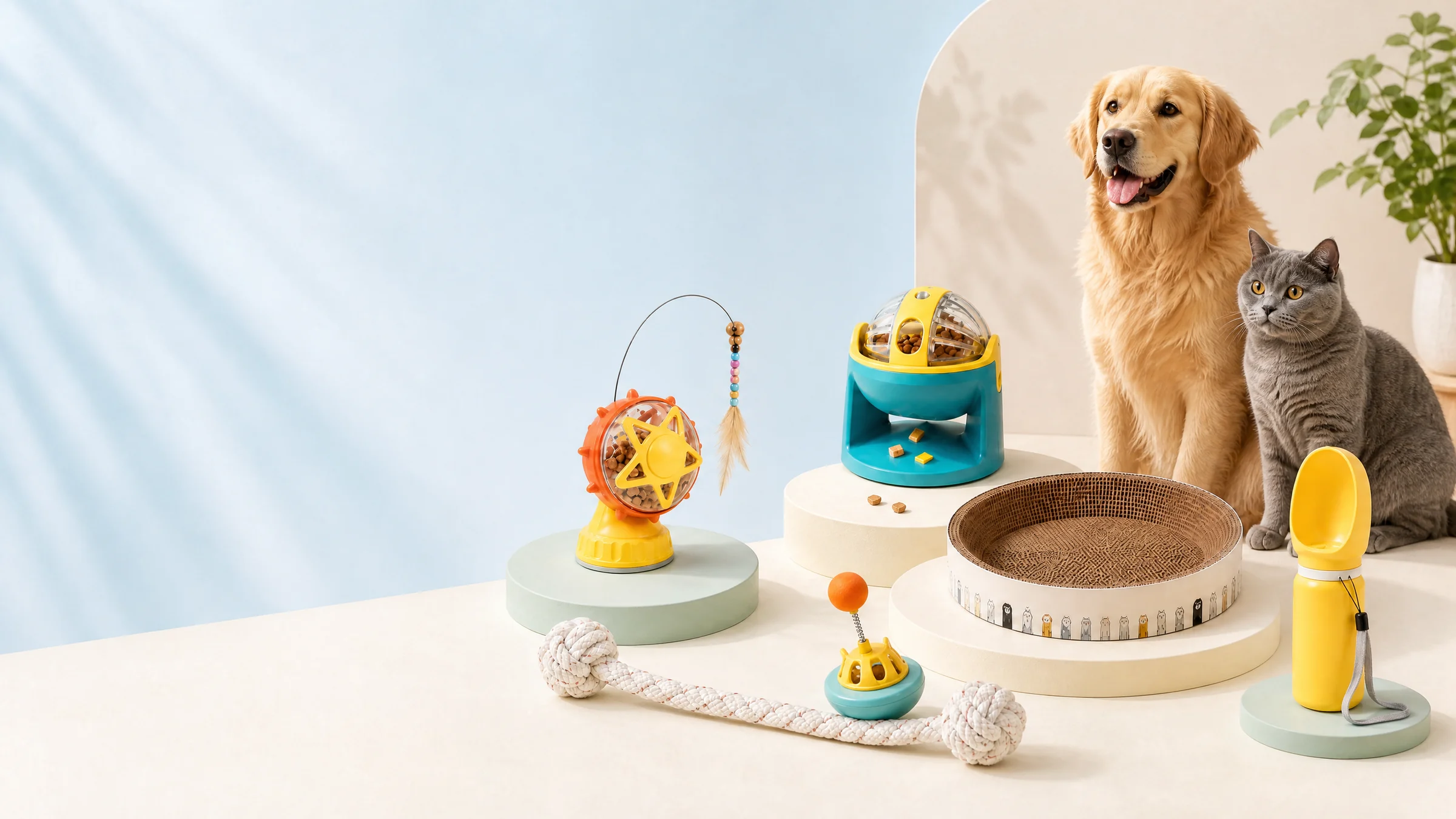
Most cats benefit from having their available toys refreshed about once a week, but there is no universal timetable. A weekly rotation is a useful starting point because it introduces novelty without removing every familiar option. Some cats may need a smaller change every few days, while others remain interested in the same toy for longer. The best schedule follows the cat’s engagement, the toy’s condition, and whether the item is designed for supervised or independent play. Veterinary guidance commonly recommends keeping a larger assortment available for rotation while presenting only a few options at one time.[1]
Why rotate cat toys?
Cats are natural hunters. Stalking, chasing, pouncing, batting, carrying, and solving simple problems are behaviors that toys can help express in a domestic environment. A varied selection can also support interaction between a cat and its owner, especially when play gives the cat an opportunity to catch the toy.[1] [2]
Rotation is not about making a cat play on command. It is about managing access so that an item does not become part of the background. When every toy is permanently available, some cats may stop noticing familiar objects. Putting selected toys away for a period and reintroducing them can make them seem different again, while preserving a few dependable favorites.
Toy rotation can be useful for indoor-cat households, multi-cat homes, foster environments, and retailers developing a practical assortment. It helps owners compare play preferences without buying a large quantity at once. For buyers, it provides a framework for organizing products by movement, texture, sound, activity level, and supervision requirements.
How often should you change the selection?
A seven-day rotation is a sensible default for many households. Offer a small group during the week, then replace some items with toys from a clean, safely stored group. The change does not need to be complete. Keeping one or two familiar favorites can make the transition less disruptive, while adding one different style may create enough novelty to renew interest.
Observe the cat rather than treating the schedule as a rule. If a toy is still being used appropriately, it can remain in the active group. If the cat repeatedly ignores one, remove it for a week or two and bring it back later. If interest drops across the whole selection, the issue may be the play method, location, timing, or the toy’s movement rather than the calendar.
Short play bursts are normal. VCA Animal Hospitals notes that cats often play in brief periods followed by longer rest periods, and that losing interest after a few minutes does not necessarily mean a cat dislikes its toys.[1] Owners can offer several brief sessions when the cat appears alert and receptive, rather than leaving every item out continuously.
How many toys should be available at once?
There is no required number for every cat, but a useful household approach is to display three to five toys or toy types at a time and store the rest. This creates choice without turning the play area into clutter. One active group might include a soft prey-style toy, a ball or track toy, a kicker, a puzzle or foraging item, and a wand toy reserved for interactive sessions.
The mix should reflect the cat’s preferences. A cat that enjoys chasing may respond to moving toys, while one that prefers manipulation may spend longer with a puzzle feeder or ball track. Some cats are attracted to crinkle sounds; others avoid them. Catnip is also not universally effective: VCA explains that response varies by individual cat, and a cat that becomes agitated should not be given catnip products.[1]
A rotation system should not force variety at the expense of comfort. Keep a familiar item available if it is in good condition and the cat uses it calmly. Novelty works best as an addition to a predictable environment, not as a substitute for observation.
A practical cat toy rotation checklist
Use this table as a starting framework. It is a management guide, not a guarantee that every cat will respond in the same way.
| Toy group | Suggested access | Rotation decision | Owner or buyer check |
|---|---|---|---|
| Wand, fishing-pole, or string-style toys | Interactive and supervised only | Put away after each session | Check attachment points, string, and detachable parts |
| Small plush or prey-style toys | Short, observed sessions; independent access only when appropriate | Refresh weekly or when interest falls | Inspect seams, stuffing, eyes, bells, and other loose parts |
| Balls, tracks, and rolling toys | Independent play only if intact and suitable | Keep a favorite and rotate alternatives weekly | Confirm size, construction, edges, noise level, and cleanability |
| Kicker or fabric toys | Available according to the cat’s chewing and play habits | Rotate when soiled, flattened, or ignored | Review fabric, stitching, filling, and care instructions |
| Puzzle or food-dispensing toys | Planned enrichment or feeding sessions | Change format or difficulty gradually | Check edges, cleanability, opening size, and instructions |
How to build a simple weekly rotation
Gather the cat’s toys and separate them into interactive toys, independent-play toys, and items that need inspection or cleaning. Exclude anything with damage, loose components, frayed strands, or an uncertain condition. Cornell’s Feline Health Center advises avoiding small pieces and strand-like parts that can separate and be ingested, and recommends considering the play environment as well as the toy itself.[2]
Choose a small active set with different play actions rather than several versions of the same object. For example, combine one rolling toy, one soft toy, one batting or scratching option, and one interactive toy controlled by the owner. Store the remaining sound items in a clean, dry place where the cat cannot access them unsupervised.
At the end of the week, inspect the active set. Clean items only according to their material and care guidance, and allow them to dry fully before returning them. Replace one or two toys with alternatives from storage. Record which items were used, ignored, damaged, or preferred during owner-led play. This simple log can guide future purchasing and reduce unnecessary repeat orders.
Safety and supervision come before novelty
Rotation should never be used to extend the life of a damaged toy. Check regularly for broken plastic, loose eyes, exposed filling, split seams, sharp edges, and parts that could be swallowed. Cornell specifically warns about feathers, string, and other linear pieces that may detach, as well as electrical cords that a cat could chew.[2]
Wand and fishing-pole toys require particular care. VCA advises that cats should not be left unattended with these toys because they may become tangled or ingest the string.[1] Store them out of reach after interactive play. Follow product instructions and consider the individual cat’s chewing, scratching, size, age, and play intensity. If a cat swallows part of a toy, appears injured, or shows an unusual change after play, stop using the item and contact a veterinarian promptly.
The surrounding space matters too. Remove unstable objects and avoid areas where a cat could fall or become trapped. In a multi-cat home, observe whether one cat guards toys or prevents another from participating. A qualified professional can help when play behavior is accompanied by injury, persistent distress, or a concerning change in normal behavior.
Buyer and owner decision criteria
Owners should prioritize the cat’s actual behavior, not packaging claims or a rigid rotation chart. Ask whether the toy encourages a preferred action, whether the cat can use it safely, whether it is easy to clean, and whether supervision is realistic. A modest assortment with varied functions may be more useful than a large collection of similar toys.
Pet-supplies buyers can apply the same questions at assortment level. Review material details, dimensions, attachment methods, packaging language, care instructions, and intended-use guidance. Confirm specifications, availability, pricing, MOQ, lead time, and applicable compliance requirements for the specific enquiry. These details should be verified with the supplier rather than assumed from a general category description. For interactive or food-related products, clear warnings and practical instructions can help retailers communicate responsible use.
FAQs
Is rotating cat toys every day better?
Not necessarily. Daily changes may suit a cat that loses interest quickly, but a weekly starting point is easier to manage and gives the cat time to become familiar with an item. Change the selection sooner if the cat is bored, or later if a toy remains engaging and safe.
Should I put away my cat’s favorite toy?
Only if the toy is safe, intact, and appropriate for the cat’s access level. Keeping a favorite available can provide familiarity. If it is a supervised toy, such as a wand, store it after play even if the cat prefers it.
What should I do with toys my cat ignores?
Inspect and clean them if suitable, then store them and reintroduce them later in a different location or play session. If the cat consistently avoids a toy, do not force its use. Consider whether its texture, noise, movement, or size conflicts with the cat’s preferences.
Can several cats share the same toy rotation?
They can, if the cats interact comfortably and there is no guarding or conflict. Provide alternatives and observe play. Separate play sessions may be more appropriate for cats with different activity levels or social tolerance.
When should I ask a veterinarian about play behavior?
Seek veterinary advice when play is associated with injury, possible ingestion, persistent distress, or a sudden and sustained change from normal activity. General toy guidance cannot replace an individual assessment.
Conclusion
For most households, rotating cat toys about once a week is a practical place to begin. Offer a small, varied selection, keep familiar favorites when safe, and adjust the timing according to the cat’s interest and the condition of each item. Supervise toys with strings or detachable parts, remove damaged products promptly, and treat every sourcing specification as something to confirm for the individual product.
For help discussing a cat-toy assortment, product specifications, or an enquiry for the PawViso team, contact PawViso. Availability, materials, pricing, MOQ, lead time, and compliance should be confirmed for your specific requirements.
References
[1] VCA Animal Hospitals, “Cat Behavior and Training: Play and Play Toys”
[2] Cornell Feline Health Center, “Safe toys and gifts”
[3] Environmental Enrichment for Indoor Cats, Journal of Feline Medicine and Surgery, via PubMed Central
Editorial note: This draft provides general care and enrichment information. It does not diagnose medical conditions, prescribe treatment, or guarantee the safety or performance of any product.
ատար