
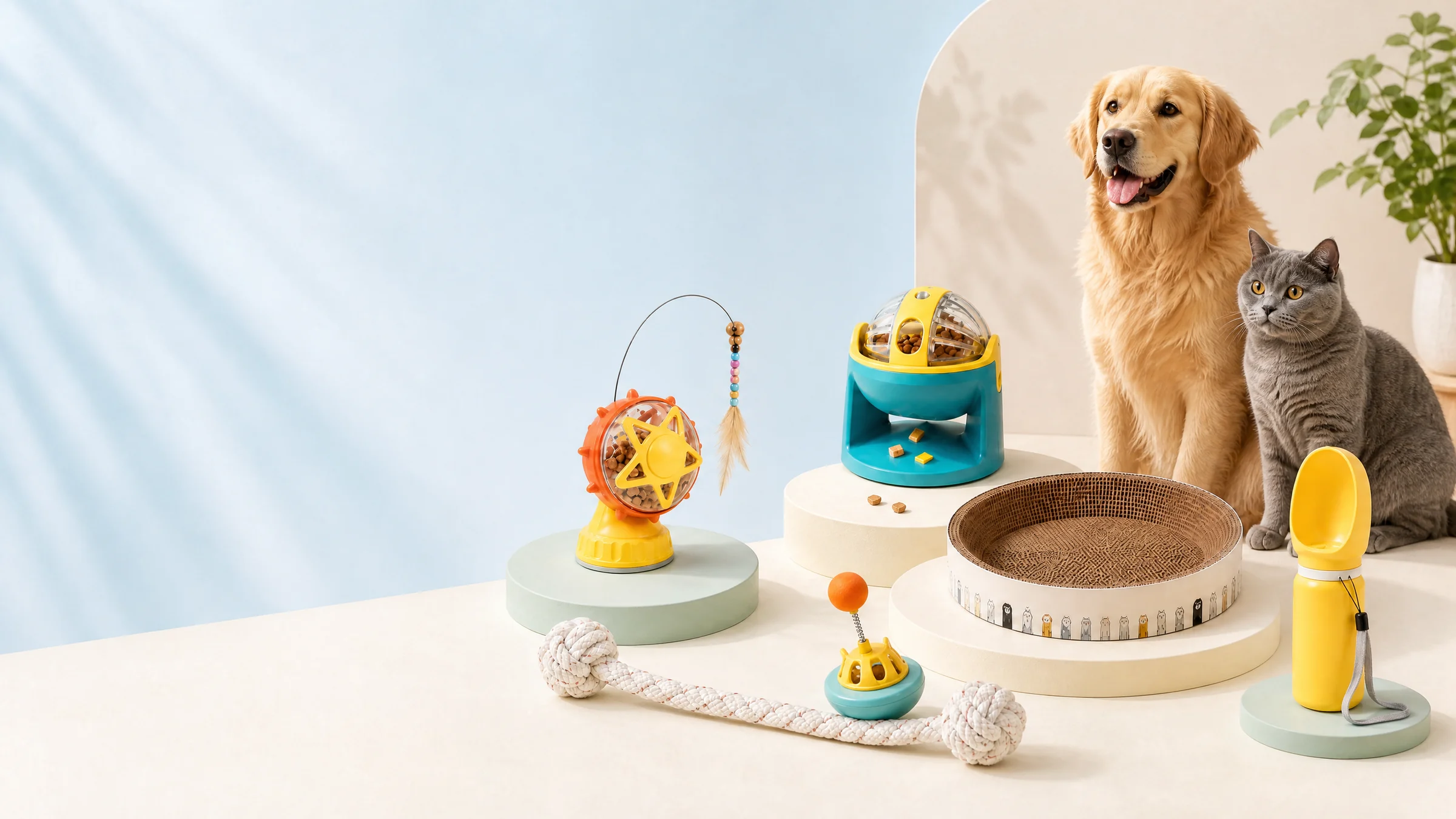
Some pets can use some cat toys without continuous human supervision, but the answer is not a blanket yes. Whether independent play is reasonable depends on the toy’s construction, the pet’s size and behavior, the condition of the item, and the environment. Simple, durable toys with no detachable parts may be appropriate for short periods of monitored independent play. Toys with strings, feathers, elastic, batteries, magnets, small pieces, or easily torn materials generally call for active supervision and prompt storage afterward. 1 2
Inspect the toy before use, introduce it while watching the pet, and reassess it regularly. Product descriptions and packaging should distinguish supervised interactive play from independent-use scenarios. Availability, specifications, materials, pricing, MOQ, lead time, and compliance should be confirmed for the specific enquiry.
Why supervision matters
Cat toys are designed to stimulate behaviors such as chasing, batting, pouncing, carrying, and foraging. Those activities can support enrichment, but normal play can also put stress on seams, attachments, cords, coatings, and plastic components. A toy that appears intact at the start of a session may become damaged after vigorous chewing or pulling. The main concern is how a particular pet interacts with the product: a determined chewer may remove a feather or thread, a kitten may swallow a small item, and a dog may apply more force than expected. The American Society for the Prevention of Cruelty to Animals advises choosing toys that match a cat’s preferences and supervising toys with swallowable parts. 1
Supervision also helps owners notice stress, frustration, overexcitement, or unusual behavior. This article provides general pet-care information, not a diagnosis or a guarantee of safety. If a pet has swallowed part of a toy, is choking, is vomiting, is having difficulty breathing, or shows other concerning signs, contact a veterinarian or qualified emergency animal-care professional promptly.
Which cat toys are more suitable for independent play?
There is no universally risk-free toy. However, some designs may present fewer obvious hazards when used appropriately and checked often. A large, one-piece toy made from a firmly attached, pet-appropriate material may be a more practical candidate for limited independent play than a wand toy with a long trailing line. Even then, the owner should follow the maker’s instructions and remove the toy if it becomes damaged.
Examples that may be considered for independent play, subject to product-specific review, include solid balls too large to swallow, durable molded shapes, and some food-dispensing or puzzle toys designed for the pet’s size. Puzzle products still require attention because a pet may break off a component while seeking a treat.
A toy’s suitability can change with the individual animal. A calm adult cat that bats a toy gently may interact very differently from a young cat that bites and shreds it. Multi-pet households add another variable: competition can lead to pulling, guarding, or more forceful play. The RSPCA describes play as an important part of feline behavior and recommends care with toys that could be dangerous if chewed or swallowed. 2
Toys that generally need active supervision
Interactive wand toys, teaser toys, ribbons, strings, yarn, elastic, and fishing-rod-style products should normally be used only when an adult is present and engaged. Long flexible parts can wrap around a pet’s body or neck, and loose strands can be chewed or swallowed. These toys are often excellent for shared play, but they should be put away in a closed or otherwise inaccessible location after the session.
Toys with feathers, bells, glued decorations, plastic eyes, foam pieces, or other attached components also deserve close monitoring. “Attached” does not mean permanently secure under every use condition. Repeated chewing, washing, scratching, or exposure to heat can change the integrity of an attachment. Battery-powered toys should be checked for secure battery compartments; products containing magnets require particular caution because swallowed magnets can cause serious internal problems. 3
Practical decision checklist
The following table can help an owner or buyer make a preliminary decision. It is a screening aid, not a product certification or safety guarantee.
| Toy feature or use condition | Independent play may be more reasonable when | Active supervision is the better choice when |
|---|---|---|
| Construction | The toy is sturdy, appropriately sized, and has no loose components | Seams, attachments, coatings, or fasteners can be pulled, bitten, or removed |
| Flexible parts | There are no long cords, ribbons, elastic loops, or trailing strands | The toy includes a wand, string, yarn, feather line, or elastic element |
| Size | The item is clearly too large for the pet to swallow and suits the pet’s jaw and body size | The pet is very small, a strong chewer, or able to break the item into pieces |
| Materials and finish | Materials and care instructions are documented for the specific product | Material composition is unclear, the surface flakes, or the product has a strong unexplained odor |
| Electronics | Batteries and compartments are secured according to the product design | A battery, magnet, charging part, or electronic housing may be exposed or damaged |
| Pet behavior | The pet plays gently and can disengage normally | The pet shreds, guards, swallows, becomes overexcited, or plays aggressively |
| Environment | The area is free of hazards and other pets cannot create competition | Multiple pets may fight over the toy, or the item can be caught on furniture |
Buyer and owner decision criteria
Owners should begin with the pet, not the marketing label. Consider species, age, size, chewing intensity, prior toy history, and whether other animals are present. Select a product with clear dimensions and intended use. Examine it before the first session and after use, replacing it when damage appears rather than making an improvised repair.
B2B buyers should request product-specific dimensions, materials, attachment methods, warnings, intended-use guidance, packaging details, and destination-market compliance documents before listing or distributing a toy.
A product page should not imply that a toy is safe for every pet or indefinitely safe to leave out. It should state intended use, identify supervision features, and tie compliance statements to the relevant product and market. General supplier capability is not proof that a particular item has been tested, certified, warranted, or stocked.
How to establish a safer play routine
Introduce a new toy during a short session when the owner can observe the pet closely. Watch how the pet bites, pulls, carries, and responds to the toy. Remove the item if the pet begins tearing, ingesting, or becoming distressed. Store interactive toys after use, and keep damaged products away from animals and children.
Rotate toys to make inspection easier. If a pet has a known behavioral or medical concern, ask a veterinarian or qualified behavior professional for individualized guidance.
Frequently asked questions
Can I leave a plush cat toy out all day?
Possibly, but only if the specific toy remains intact and the pet does not chew or shred it. Inspect it regularly for torn fabric, exposed filling, loose thread, and detached decorations. If any damage appears, remove the toy.
Are cat wand toys safe to leave on the floor?
They are generally better treated as supervised interactive toys. Long strings, rods, elastic, and feather attachments can create entanglement or ingestion concerns. Put the wand away after play rather than leaving it accessible.
Can a dog use a cat toy without supervision?
Do not assume a cat toy is suitable for a dog. Dogs may apply greater bite force or use the toy in ways it was not designed to withstand. Check the product’s intended species, dimensions, and warnings, and supervise the first sessions closely.
How often should cat toys be replaced?
There is no universal replacement interval. Replace a toy whenever it is damaged, contaminated, no longer securely assembled, or no longer appropriate for the pet’s behavior or size. A frequent inspection schedule is more useful than relying on a fixed date.
What should I do if my pet swallowed a toy part?
Contact a veterinarian or qualified emergency animal-care professional promptly, especially if the pet is choking, vomiting, lethargic, painful, or having difficulty breathing. Do not rely on a general toy label to determine whether an ingestion is harmless.
Conclusion
Pets can sometimes use selected cat toys independently, but unsupervised access should be a considered decision rather than a default assumption. Choose sturdy, appropriately sized designs; avoid leaving strings, ribbons, wands, magnets, batteries, or detachable parts accessible; observe the pet’s individual play style; and inspect every toy repeatedly. For B2B purchasing, clear intended-use language and product-specific documentation are essential to responsible merchandising.
For a product enquiry, contact PawViso with the target market, pet species, preferred materials, dimensions, packaging needs, and any required documentation. Product availability, specifications, pricing, MOQ, lead time, and compliance can then be reviewed for the specific enquiry.